Custom CCTV Camera Housing Manufacturer
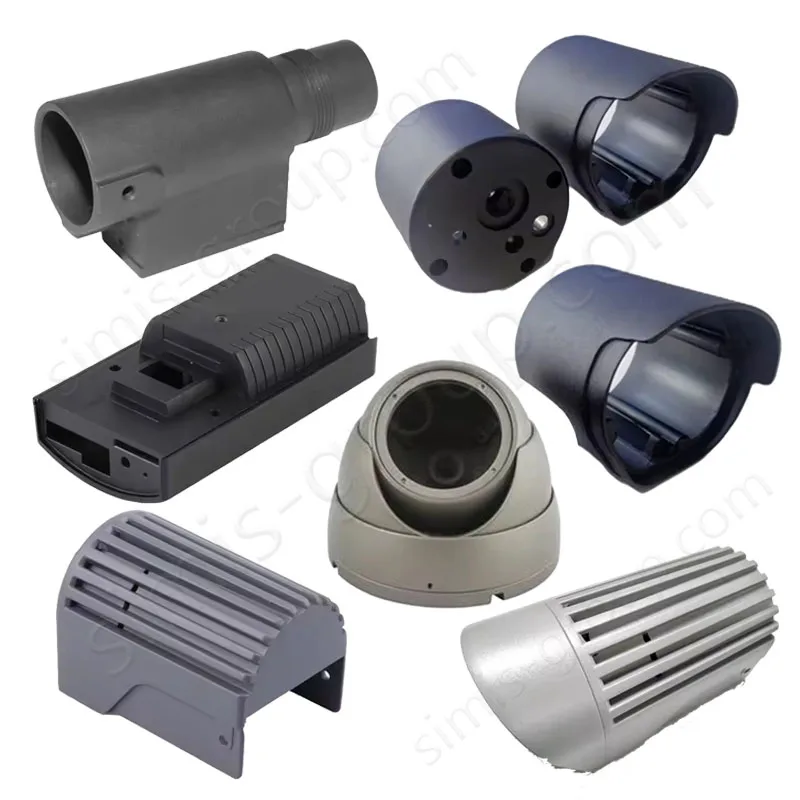


CCTV Camera Housing

Custom CCTV Camera Housing Manufacturing FAQs
Can SIMIS manufacture CCTV camera housings from our 2D drawings or 3D models?
Yes. SIMIS offers drawing-based OEM manufacturing for custom metal camera housings, including dome camera bases, bullet-style enclosures, mounting bodies and related structural components. Our team can review the part geometry, specified material, expected production volume and critical interfaces before proposing a casting and machining route. The housing is manufactured against the agreed drawings and project specifications, rather than sold as a universal off-the-shelf enclosure.
Is aluminum die casting or stainless steel investment casting better for a camera enclosure?
The answer depends on service conditions and geometry. Aluminum die casting is often a practical option for lightweight enclosures with integrated mounting bosses, ribs and heat-dissipation features, particularly at repeat production volumes. Stainless steel investment casting may suit smaller, complex parts where corrosion resistance or mechanical robustness is a priority. For low volumes or simple shapes, CNC machining or fabricated metal construction may be more economical. Final selection requires a drawing review.
Can a custom CCTV housing meet IP66, IP67 or IK10 requirements?
A metal housing can be designed with gasket grooves, mating flanges, protected fasteners and suitable wall thickness to support a target environmental or impact rating. However, IP and IK classifications depend on the complete tested design, including seals, covers, connectors and assembly. A bare casting cannot be assumed to carry an IP66/IP67 or IK10 rating. SIMIS can manufacture parts to the customer’s drawings and agreed inspection plan; any required rating must be verified on the relevant finished assembly.
What information should we send for a CCTV camera housing quotation?
Please send a 3D CAD model and/or dimensioned 2D drawing, the intended material, annual or batch quantity, surface finish, sealing interface details, mounting-hole requirements, target environment and any specified inspection or validation criteria. If the enclosure is part of a PTZ or optical assembly, indicate lens-window position, sensor-mounting datums, cable entry and heat-transfer contact areas.
OEM CCTV Camera Housings Manufactured to Your Drawings
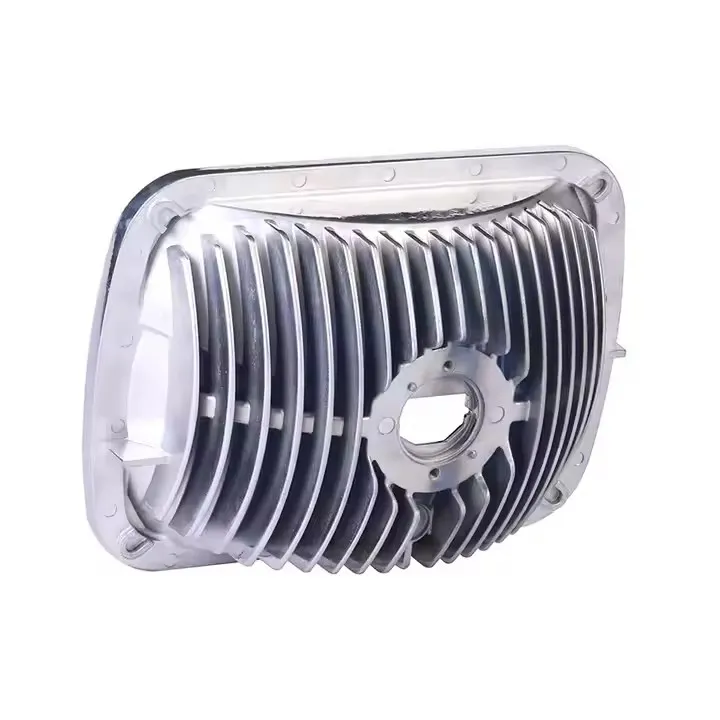
SIMIS provides custom metal manufacturing for CCTV camera housings and protective enclosures used in traffic monitoring, public safety, industrial surveillance and outdoor installations. This page focuses on the metal parts of the enclosure—not cameras, sensors or finished security systems. Typical requests involve dome camera bases, bullet camera bodies, PTZ structural housings, protective covers and mounting interfaces.
A successful camera housing has to do more than fit the electronics. It must locate optical and mechanical components accurately, accommodate seals and cable entries, transfer heat where required and maintain a practical assembly sequence. For an OEM project, these details are established from the customer’s design rather than assumed from a generic specification sheet.


Choosing the Right Manufacturing Process
There is no single best process for every surveillance enclosure. Geometry, required tooling, material properties, internal features and order volume all influence the choice. SIMIS can evaluate a near-net-shape casting followed by selective CNC finishing, or an alternative manufacturing route where the design calls for it.
| Manufacturing route | Typical camera-housing applications | What to evaluate |
|---|---|---|
| Aluminum pressure die casting | Bullet housings, dome bases, enclosures with ribs or mounting bosses | Tooling investment, draft, wall transitions, porosity risk, die access and production volume |
| Stainless steel investment casting | Complex corrosion-resistant metal housings or mounting components | Cast alloy specification, size, machining allowance and as-cast feature limits |
| Gravity permanent mold casting | Selected aluminum housings requiring a different wall or volume balance | Mold feasibility, section thickness, feeding and downstream machining |
| CNC machining | Precision interfaces, low-volume housings, prototypes and finishing operations | Material removal, access to internal cavities, tolerance stack-up and cost |
| Sheet metal fabrication | Mounting brackets, protective sunshields or larger sheet-metal covers | Fold geometry, welds, fasteners, distortion and coating requirements |
For cast enclosures, the design review should identify where machining stock is necessary and where the casting can retain an as-cast surface. Examples include threaded mounting locations, O-ring grooves, inspection datums and tightly controlled mating flanges. A cost-effective design normally avoids machining every surface when only a few features are functionally critical.


Material Selection for Camera Enclosures and Mounting Parts
The listed material must match the manufacturing process as well as the operating environment. For example, die-cast aluminum alloys and heat-treatable gravity-cast aluminum alloys are not interchangeable simply because both are described as “aluminum”. Likewise, wrought 316L and cast stainless grades require their own applicable specifications.
| Material family | Possible application | Main considerations |
|---|---|---|
| Aluminum casting alloys | Lightweight housings and bases where thermal transfer is useful | Alloy and temper, corrosion protection, die-casting suitability, coating adhesion |
| Cast stainless steel | Selected marine, corrosive or rugged mounting components | Specified cast grade, surface finishing, crevice exposure and machining needs |
| Carbon or alloy steel | High-load brackets and support structures | Strength, weight, corrosion protection and assembly interfaces |
| Ductile iron | Selected heavy-duty supports where mass and stiffness are acceptable | Part weight, wall thickness, casting geometry and protective finish |
If a customer specifies “304” or “316L”, the engineering review should confirm whether the requirement refers to wrought material or a corresponding cast specification. Corrosion performance depends on the actual alloy, finish, geometry and environment; no single metal is universally suitable for every offshore or chemical exposure.
Sealing Geometry, Optical Interfaces and CNC Machining
The most important camera-housing dimensions are often found at the interfaces: gasket seats, circular openings, cover flanges, threaded holes, cable ports and internal optical mounts. These features should be dimensioned from functional datums and evaluated as an assembly, not treated as independent cosmetic details.
Gasket grooves and mating faces
The groove profile and gasket compression depend on the selected seal material, mating component and fastening arrangement. Critical dimensions may include groove width, depth, corner radii, flange flatness and bolt distribution. SIMIS can manufacture the metal features to the specified drawing, while enclosure-level sealing performance should be validated on the completed design.
Lens-window, sensor and PTZ mounting interfaces
Lens openings, retaining features and optical-support datums may require controlled concentricity, perpendicularity or position relative to mounting points. PTZ housings can additionally contain bearing seats, pivot locations and motor-attachment features. The drawing should identify the dimensions that control alignment; unnecessarily tight tolerances on nonfunctional surfaces increase cost.
Cable entries, threads and assembly access
Cable glands, connector bores and threaded fastener locations need sufficient access for tools and assembly. Through-holes, blind cavities and fastener bosses should be assessed for wall thickness, breakout risk and service accessibility. For machined castings, tool access and casting porosity near sealing surfaces deserve early attention.


Heat Dissipation, Surface Treatment and Outdoor Durability
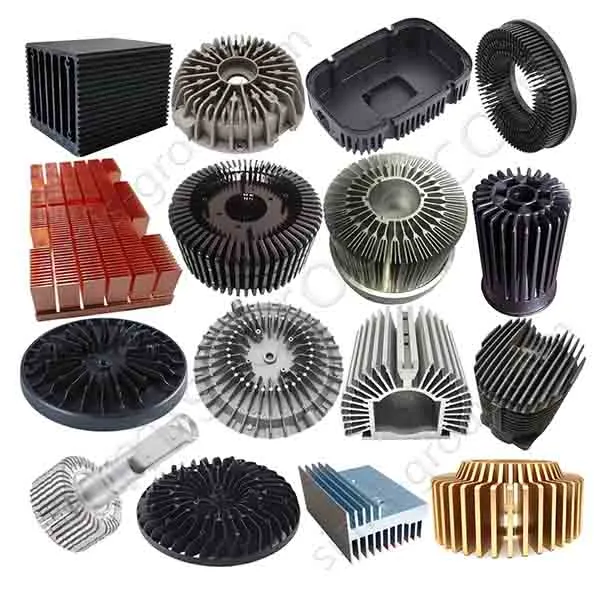
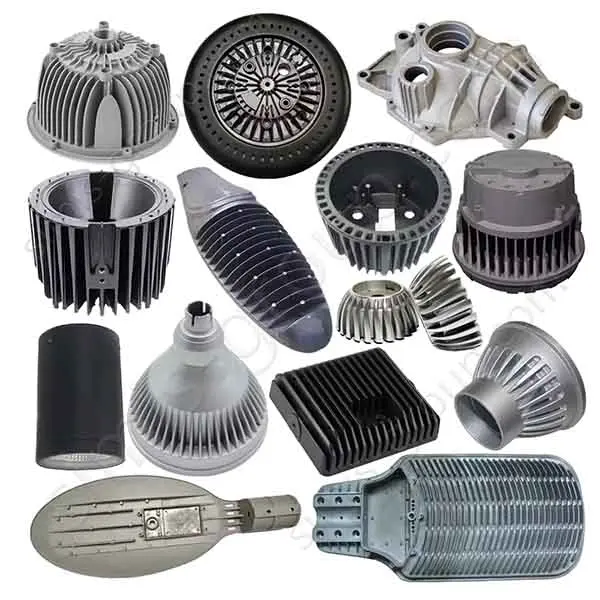
Camera electronics, infrared illumination and power components can create localized heat loads. Aluminum housings may provide a conductive path away from these components, but good thermal performance depends on the entire heat path: contact surfaces, thermal interface materials, wall sections, airflow and the installed environment. External fins alone do not establish that a camera will remain within its operating temperature range.
For outdoor enclosures, finishing is part of the manufacturing specification. Suitable options may include prepared and coated aluminum, powder coating, painting or selected stainless-steel surface finishes. Surface treatment should be selected with attention to salt exposure, UV conditions, coating thickness at assembly interfaces and the appearance requirements of the customer.
Potential corrosion issues also arise at mixed-metal fasteners, exposed edges, cut threads and water-trapping crevices. The product drawing or specification should identify any surfaces that must remain uncoated for grounding, heat transfer or precision assembly.

Quality Control: What Should Be Checked?
Inspection is most effective when tied to the actual functional risks of a housing. SIMIS can review customer-specified acceptance criteria through its quality control process. The exact test methods, sampling level, records and acceptance limits should be agreed for each project.
Dimensional checks: bore sizes, mounting-hole positions, gasket-groove dimensions, flatness and other drawing-defined datums.
Material verification: specified alloy grade, supporting certificates and additional checks when required by the purchase order.
Casting quality: appearance, critical surface integrity and targeted inspection where internal defects could affect a sealing or load-bearing feature.
Surface finish checks: coating coverage, appearance, film thickness and corrosion-related tests when included in the specification.
Assembly-level validation: water/dust ingress, impact, vibration or thermal performance tests arranged for the relevant finished configuration when required.
Important distinction: IP ratings, IK ratings and hazardous-location or explosion-protection approvals are not automatically supplied by a machined casting. Explosion-protected equipment requires appropriate engineering, component selection and certification of the applicable equipment configuration under the relevant standards. Material selection alone does not make an enclosure explosion-proof.
Applications and Related OEM Metal Enclosures
The same basic manufacturing disciplines can support metal housings for fixed bullet cameras, dome-style cameras, PTZ systems, traffic monitoring and selected industrial installations. The detailed design differs by product: a compact dome base may prioritize cosmetic finish and assembly, while a larger outdoor body may emphasize cable routing, heat transfer and structural mounting.
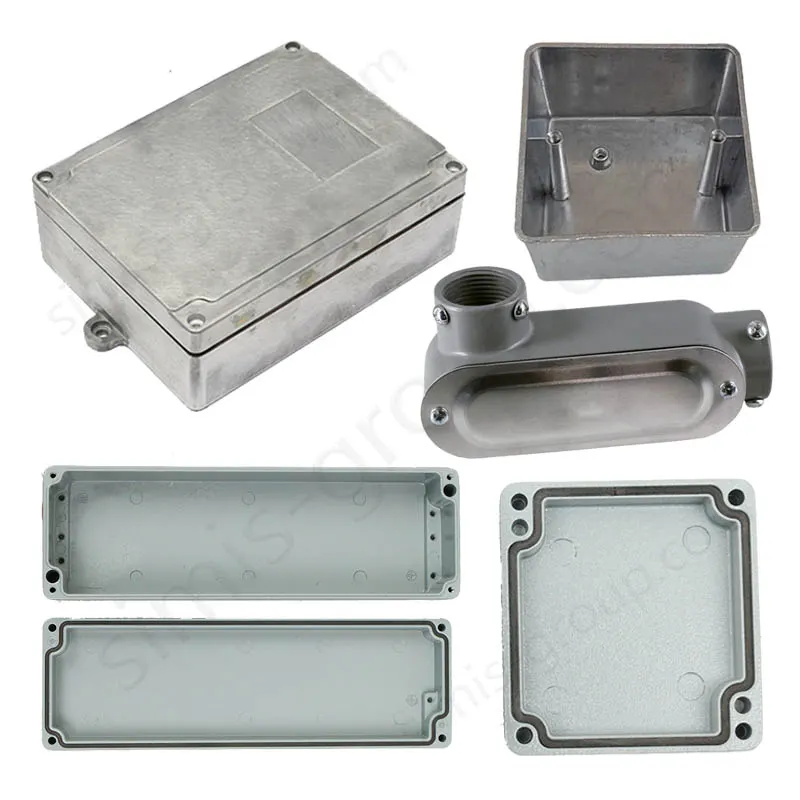
Customers working on neighboring electronic enclosure families may also review our custom junction boxes, ECU housings and photography equipment housings. These are separate component categories, but they often share production issues such as sealing faces, fastener features and machined internal interfaces.

Design for Manufacturing and Cost Considerations
An early design-for-manufacturing review can reduce avoidable tooling changes. For pressure die castings, important topics include consistent wall transitions, fillets, parting-line location, ejection, draft and features that need secondary machining. For investment castings, the review may focus on castability of small details, feeding, surface condition and post-cast machining access.
Manufacturing cost is influenced by the part dimensions and weight, selected alloy, projected volume, tool complexity, machining cycle time, surface finishing, inspection requirements and packaging. A low-volume prototype may favor machining from solid material; a repeat-production housing may justify casting tooling. The lowest piece price is not always the lowest project cost once tooling and change risk are included.
Request a Quote for Custom CCTV Camera Housing Parts
SIMIS supports OEM inquiries for custom metal CCTV camera housings manufactured to customer drawings. To begin a feasibility review, please provide the enclosure’s 2D drawings or 3D files and specify material, quantities, mounting datums, coating, key fits, expected operating conditions and any inspection documents required.
For sealing- or impact-related projects, identify whether you require the metal housing only or a tested finished enclosure assembly, and list the relevant standard and acceptance conditions. This helps clarify the manufacturing scope and avoid assumptions about certification or full-system performance.
Send your drawings and project details to info@simis-group.com or use the inquiry form below to request a manufacturing assessment and quotation.