Custom Lighting & Lamp Housing Manufacturer


Lighting & Lamp Housing

Custom Light Housing Manufacturing FAQs
Can SIMIS manufacture custom lamp housings from our drawings?
Yes. SIMIS provides drawing-based OEM manufacturing for custom metal light housings, mounting structures and enclosure parts. Please share your 2D drawings or 3D CAD models, target material, expected quantity and required interfaces. Our team can review the geometry and discuss a practical manufacturing route before quotation. These are custom-made metal components, not off-the-shelf finished lamps.
Should an LED light housing be die cast, gravity cast or CNC machined?
The choice depends on housing size, wall thickness, cooling-fin geometry, alloy, production quantity and tooling budget. High-pressure die casting is often suitable for repeat production of intricate aluminum housings; gravity permanent mold casting can suit other aluminum designs with different section thicknesses and production needs. CNC machining or sheet-metal fabrication may be preferable for prototypes, smaller batches or simple geometries. A drawing review is needed before selecting the process.
Which features are most important for heat dissipation and assembly?
Engineers should define the LED module contact surface, fin orientation and clearance, driver mounting features, gasket interfaces, lens location and fastener access. Flatness and surface finish of the thermal interface matter where heat must flow from an LED board or heat spreader into the metal housing. The thermal performance of the complete luminaire must be evaluated under its real operating conditions.
Can a custom casting automatically meet IP65, IP66 or IP67 requirements?
No. A casting can incorporate sealing flanges, gasket grooves, drain strategies and cable-entry features designed for a target ingress-protection requirement. However, an IP rating applies to the tested enclosure or assembled product, including covers, gaskets, connectors and assembly procedures. The required rating should be specified by the OEM and verified on the relevant finished configuration.
What information is required for a custom light housing quotation?
Please provide a 3D model and dimensioned 2D drawing, material grade or application environment, target volume, major mating parts, mounting and sealing requirements, surface finish, cosmetic acceptance criteria and any agreed inspection or validation plan. Where thermal performance is critical, include LED power, heat-source locations, allowable temperatures and any available system-level thermal analysis.
OEM Metal Light Housings Made to Your Drawings
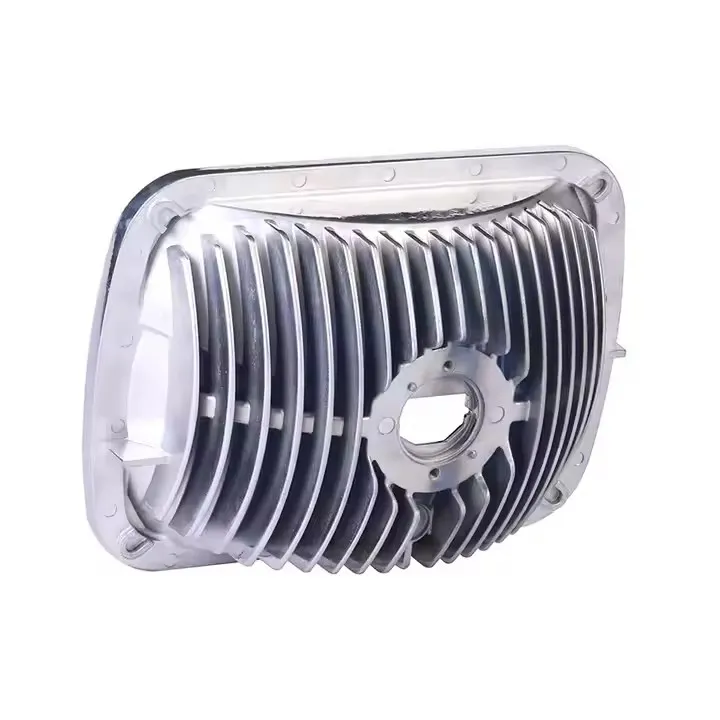
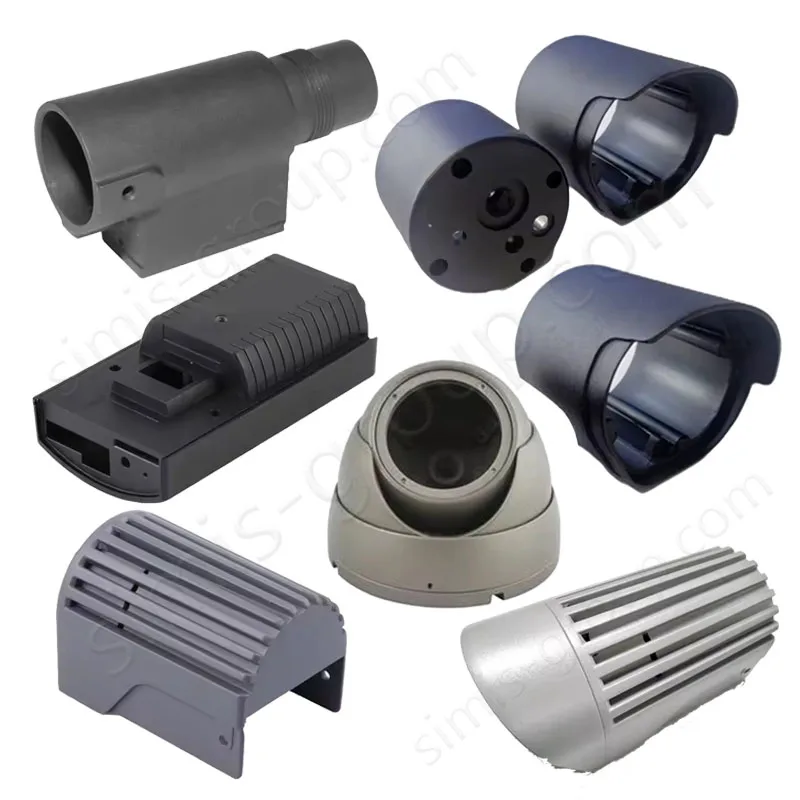
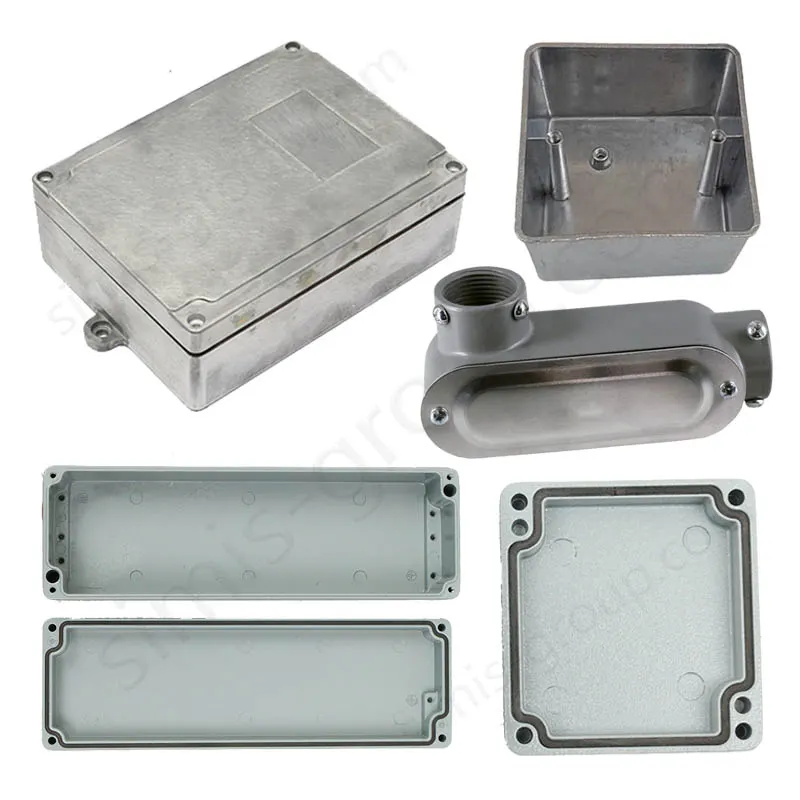
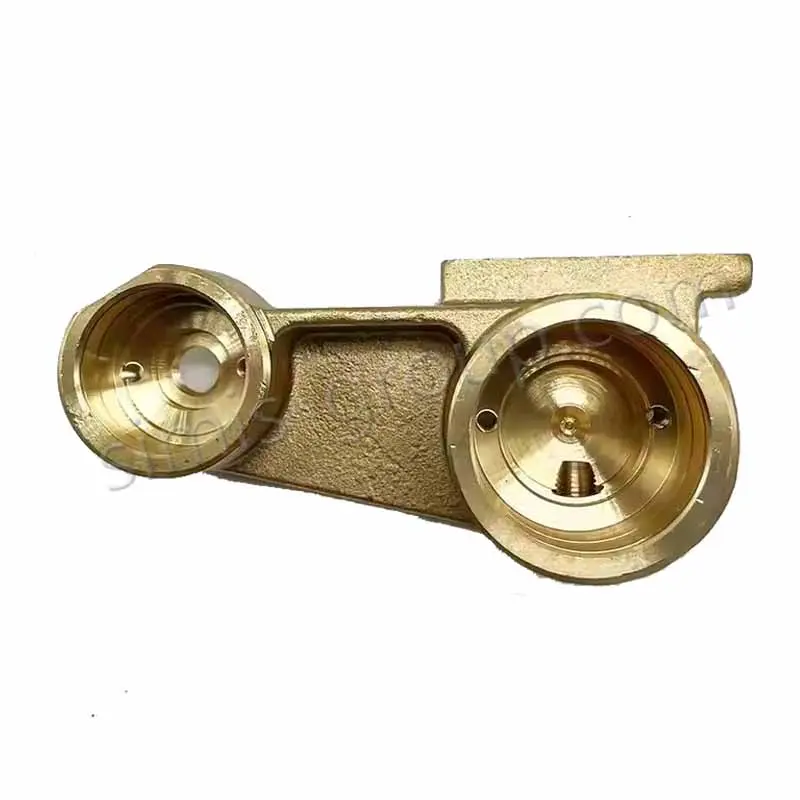
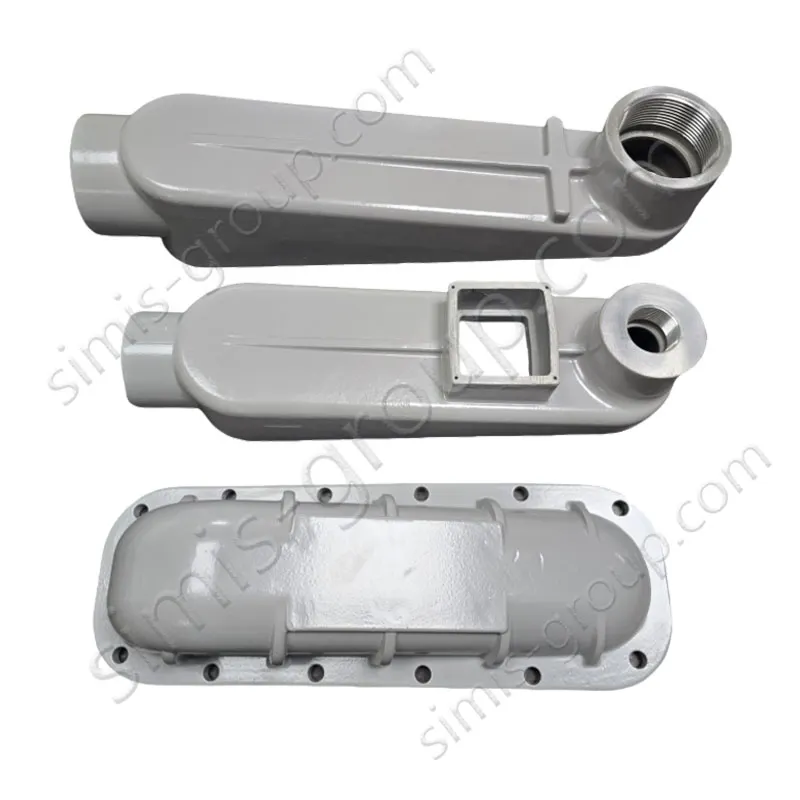
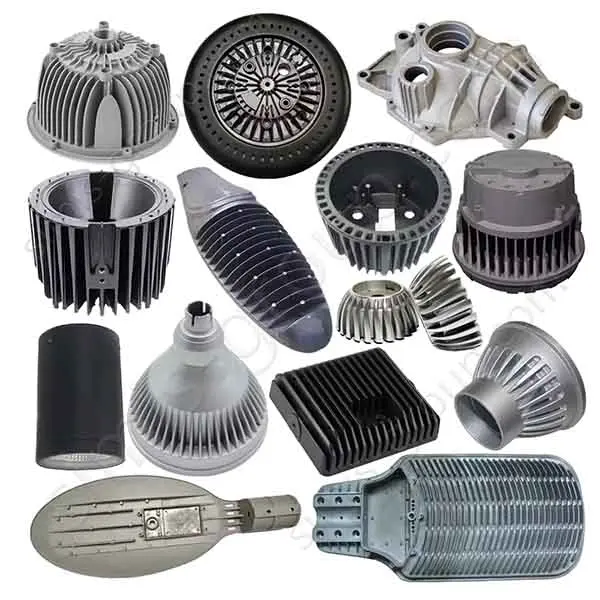
SIMIS supports the custom manufacture of metal enclosures and structural parts for LED streetlights, industrial luminaires, stage and event lighting, commercial fixtures and related electrical equipment. The work can include the housing body, heat-dissipation features, mounting brackets, protective covers and selected machined interfaces. The goal is to make the customer-specified metal component manufacturable while respecting the mounting, optical, thermal and environmental requirements of the finished lamp.
Unlike a catalog lamp body with fixed dimensions, an OEM housing must match the customer’s LED board, driver compartment, lens or glass cover, fasteners and installation method. Those interfaces determine which surfaces should be precision machined, where a casting can remain as-cast, and how production cost is balanced against repeatability. SIMIS can review these requirements alongside the customer’s drawings.


Choosing a Suitable Manufacturing Process for Light Housings
No single process is appropriate for every lighting enclosure. Deep fin arrays, curved ornamental shapes, large lightweight covers and thick structural bases involve different tooling and production decisions. For an OEM project, the selected route should be evaluated against expected part volume, geometric complexity, required surface finish and inspection criteria.
| Process | Typical light-housing use | Key manufacturing consideration |
|---|---|---|
| High-pressure aluminum die casting | LED streetlight bodies, floodlight shells and housings with ribs, bosses or integrated cooling fins | Tooling cost, draft, ejection, thin-wall filling and potential porosity must be considered together. |
| Gravity permanent mold casting | Selected aluminum industrial housings, bases and medium-volume enclosures | Tooling and casting design should account for section thickness, feeding and machining stock. |
| Investment casting | Smaller stainless steel hardware, decorative metal connectors and complex brackets | Often useful for detailed metal hardware; not automatically the best choice for a large LED enclosure. |
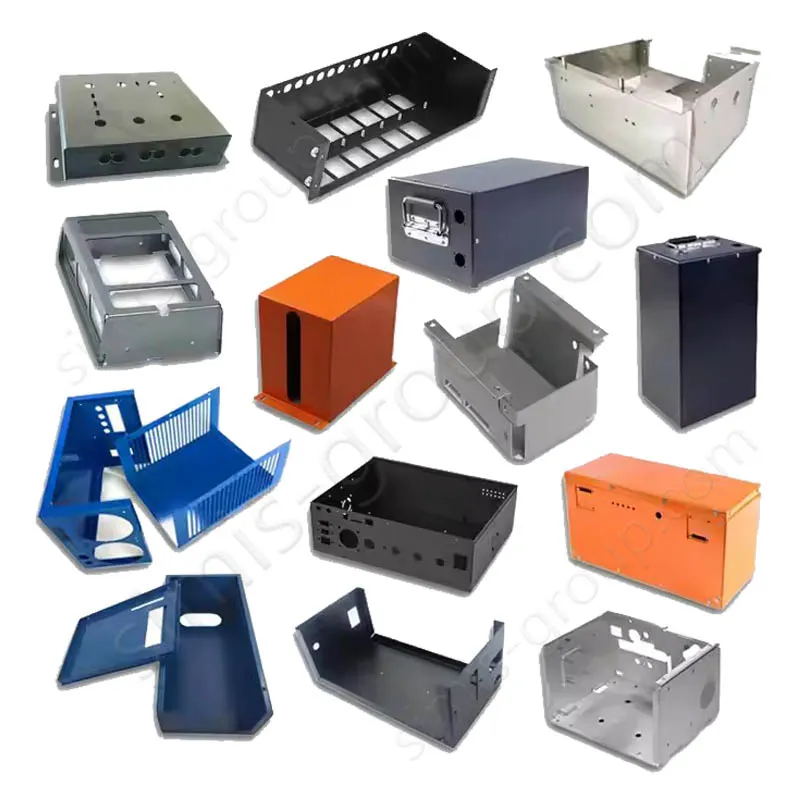
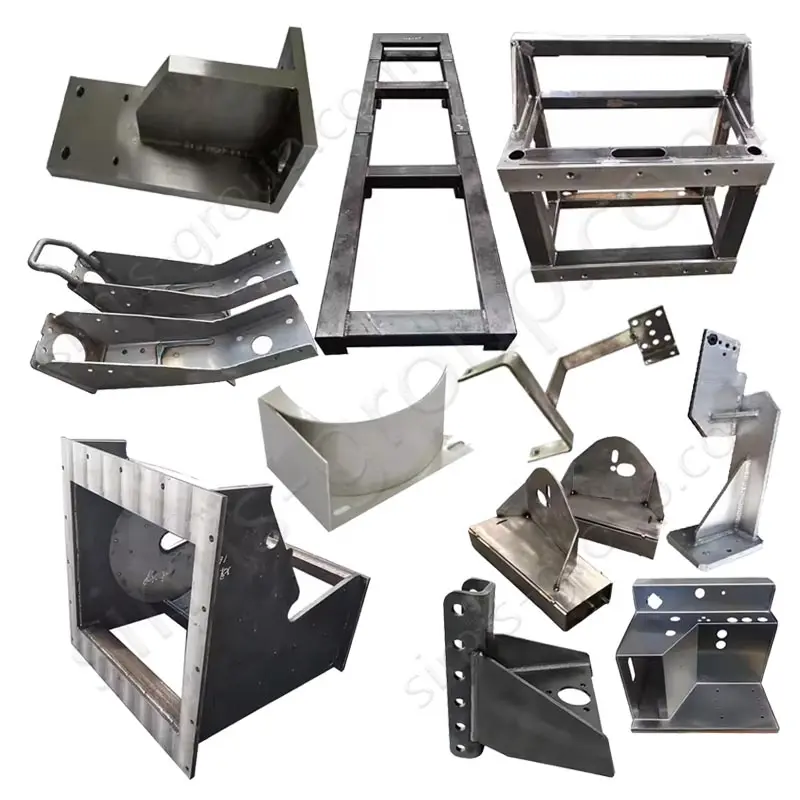
| Sheet-metal fabrication / forming | Lamp covers, reflector supports, panels and simple folded housings | Bend radii, joints, welds and cosmetic finishes influence fit and appearance. |
| CNC machining | Machined sealing flanges, lens mounts, LED thermal pads, mounting bores and prototype bodies | Critical datum relationships and surface finish are defined by the drawing. |
Read more about SIMIS pressure die casting, gravity permanent mold casting, investment casting, sheet-metal fabrication and CNC machining capabilities. These are alternative or complementary routes—not steps that every lamp housing must undergo.


Material Selection and Practical Thermal Design
Aluminum is often favored for LED housings because it combines relatively low weight with useful thermal conductivity and supports cast ribs, bosses and cooling surfaces. However, housing performance cannot be determined by the material name alone. Alloy composition, casting method, wall thickness, coating, thermal-contact area and airflow all affect the result.
| Material / construction | Why an OEM may select it | Engineering note |
|---|---|---|
| Cast aluminum alloys | Lightweight bodies with heat-dissipation and structural features | Die-casting alloys such as ADC12/A380 and gravity-casting alloys such as A356 are not interchangeable without design review. |
| Stainless steel | Corrosion-resistant brackets, guards or decorative accessories | Generally less effective than aluminum for a heat-spreading body; surface appearance and fabrication route matter. |
| Carbon steel / galvanized sheet steel | Formed covers, mounting arms and protective frames | Corrosion protection, mass and thermal performance should be evaluated for the application. |
| Gray or ductile iron | Selected heavy mounting bases or robust support components | Usually considered for support rather than a lightweight LED heat sink. |
Integrated cooling fins and the LED contact surface
Cooling fins should be designed around actual installation orientation, available space and airflow. Extremely thin fins can complicate metal flow, die filling, ejection or finishing. The LED board or thermal module interface may need a specified flatness, roughness and fastener pattern so the intended thermal interface material can work as designed. The complete system—not simply a finned casting—needs thermal validation.
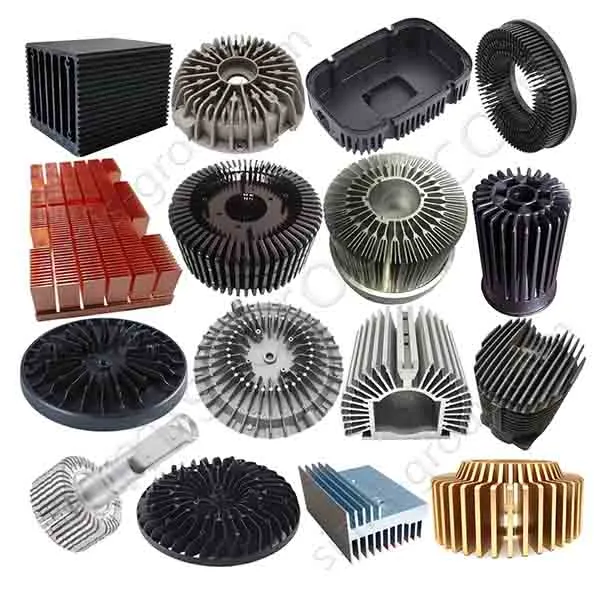
For a more specialized component, see SIMIS custom heat sink manufacturing page. It is relevant when the customer’s principal requirement is a heat sink rather than a full lamp enclosure.

Precision Features: Sealing, Optics and Mounting Interfaces
Many lighting housings have a small number of features that determine whether the final luminaire assembles correctly. The casting may provide the overall shape, while CNC machining establishes the critical fits. Those machining requirements should be defined by functional datums on the customer drawing rather than by an arbitrary “tight tolerance” assigned to every surface.
LED module and driver interfaces
Mounting bosses, tapped holes, heat-transfer pads and cable-routing openings require adequate wall thickness and tool access. Board location may need to be controlled relative to the reflector, lens or optical window. Driver compartments also require space for wiring, fastening and maintenance.
Lens seats, gasket grooves and enclosure joints
Where a glass or polymer cover joins the casting, the sealing land should be designed with the actual gasket section, compression range, screw spacing and assembly process in mind. Surface condition, local porosity and warpage are especially important near the seal. The required machining and any leak test should be agreed during drawing review.
Brackets and external mounting features
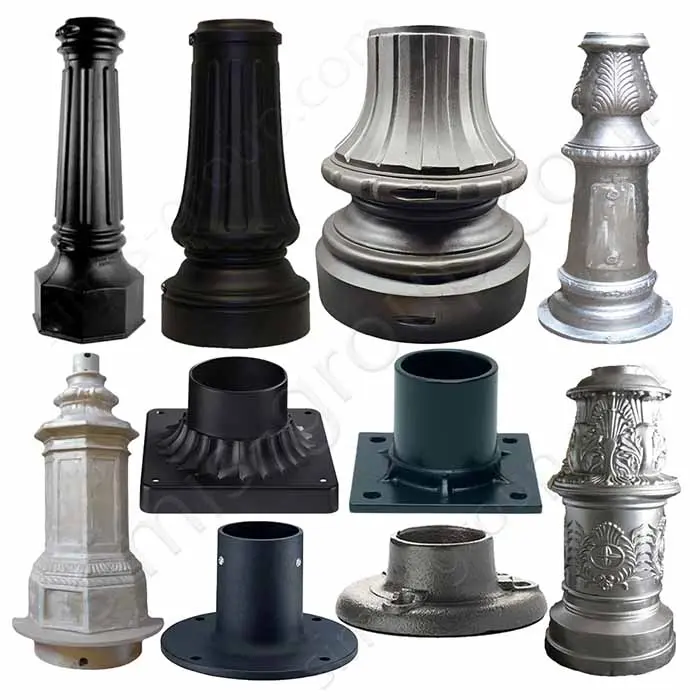
Pole mounts, trunnion joints, hinges and suspended-light interfaces may see wind, vibration or repeated adjustment. Their hole positions, thread engagement, reinforcement and corrosion protection should match the intended support structure and any applicable project specifications. For related structural parts, see the custom street lamp pole base page.
Surface Finishes and Outdoor Service Conditions
Surface finish is selected for the actual environment and appearance requirements, not just decoration. Depending on the alloy and specification, possible treatments include suitable pretreatment and powder coating, anodizing for compatible aluminum alloys, or other protective finishes. Coating type, thickness, masking areas, color consistency and adhesion testing should be agreed with the customer.
Outdoor fixtures may be exposed to ultraviolet radiation, moisture, road salt, airborne contaminants and thermal cycling. A design intended for coastal use or industrial pollution may need a different material and finish from an indoor downlight housing. SIMIS provides related metal surface treatment services to support custom manufacturing projects.
An IP65/IP66/IP67 target, an IK impact requirement or an explosion-protection classification cannot be guaranteed by the raw housing alone. These designations depend on the applicable standards, construction, testing and—in some cases—certification of the complete specified equipment. Any customer-specified validation should be included in the project scope rather than assumed.

Quality Inspection for Custom Lamp Housing Parts
Inspection should follow the part’s actual risks and customer drawing. Cosmetic surfaces, sealing lands and assembly datums often require a different acceptance approach from noncritical external ribs. For complex castings, a drawing-based inspection plan is more useful than a generic promise of “zero defects.”
| Inspection area | Items commonly considered | When to define acceptance criteria |
|---|---|---|
| Material and casting condition | Alloy verification, visual defects, relevant internal discontinuities | Specify material standard and any additional tests for critical applications. |
| Dimensions and assembly | Mounting holes, machining datums, gasket grooves, optical interfaces | Identify critical-to-fit dimensions and the required sampling plan. |
| Thermal interface | Flatness, surface texture and contact-feature position | Use tolerances tied to the LED module or heat-spreader design. |
| Surface finish | Coating appearance, thickness, adhesion and masked areas | Agree cosmetic zones, exposure requirements and inspection method. |
| Sealing and environmental validation | Leak or ingress tests where included in project scope | Test the relevant configured assembly against the specified method. |
For an overview of SIMIS manufacturing inspection methods, visit Quality Control. Specific inspections, documentation and acceptance limits should be confirmed in the OEM quotation and purchase specifications.
Applications: Industrial, Outdoor and Architectural Lighting
The term “light housing” covers several products with different engineering priorities. A streetlight body may prioritize finned aluminum castings and weatherproof assembly; a stage-light body may need lightweight mounting and service access; an indoor architectural fixture may emphasize appearance and installation geometry.
| Application | Example custom metal part | Primary engineering focus |
|---|---|---|
| LED streetlights and floodlights | Cast aluminum body, finned cover, pole mounting interface | Thermal path, weather exposure, wind loading and service access |
| Industrial / high-bay luminaires | Structural housing, guard or mounting bracket | Vibration, mounting security, component protection and maintenance |
| Stage and event lighting | Moving-head body, base housing or support bracket | Weight, repeated handling, alignment and cosmetic finish |
| Commercial and architectural lighting | Trim ring, wall-light housing or metal connector | Appearance, installation fit and finish consistency |
| Automotive lighting | Metal lamp body and heat-transfer component | Packaging, vibration and optical-module location |
Explore related examples such as custom car LED light housings, custom junction boxes and SIMIS electrical and lighting components category. Each application calls for a product-specific drawing review.

Design for Manufacturability and Production Cost
Early design review helps prevent expensive tooling changes. In a casting, abrupt transitions in wall thickness can complicate filling and solidification; insufficient draft can hinder release from the die; and inaccessible cavities may drive additional tooling or machining operations. A well-designed housing separates precision interfaces from surfaces that can remain as-cast.
For lighting enclosures, it is useful to assess: (1) fin thickness and spacing, (2) location of fastener bosses and inserts, (3) casting draft and parting-line placement, (4) gasket-groove machinability, (5) cable-entry details, (6) cosmetic surface classification and (7) assembly access. Material selection, annual quantity, tooling life and finishing specifications also affect the quotation.
For prototypes and lower volumes, machining or a fabricated design may sometimes avoid the initial cost of a production die. For repeat volumes, an appropriately designed casting tool can offer a more economical near-net-shape part. The comparison must use the same drawings and acceptance criteria.

Request an OEM Quote for Custom Light Housing Manufacturing
SIMIS works with customers who need custom metal light housings produced to supplied drawings. To begin an engineering review, send the following information:
2D technical drawings and/or 3D CAD files, with revision details
Required metal alloy, anticipated batch quantity and annual demand
Critical LED/driver contact surfaces, sealing interfaces and mating-part dimensions
Surface treatment, color and cosmetic surface requirements
Target service environment, desired validation standards and inspection documents
Any prototype schedule, tooling requirements and delivery expectations
Send your inquiry to info@simis-group.com. The proposed manufacturing process, tooling strategy, inspection scope and lead time can then be discussed against your actual project requirements. SIMIS supplies the custom metal manufacturing components; performance ratings for a finished luminaire must be demonstrated through the OEM’s applicable design and testing process.