Custom Enclosure Cabinet Box Manufacturer


Enclosure Cabinet Box

Custom Metal Cabinet and Enclosure Manufacturing FAQs
Can SIMIS manufacture a metal cabinet box from our CAD drawings?
Yes. SIMIS supports OEM metal cabinet and enclosure fabrication from customer-supplied 2D drawings, 3D models and assembly requirements. Projects can cover an enclosure body, door, removable panel, mounting backplate or a complete fabricated cabinet structure. Share the intended equipment, quantities, material, finish and assembly interfaces so the proposed manufacturing route can be reviewed.
Which manufacturing processes are used for custom sheet metal cabinets?
A typical route combines laser cutting or punching, CNC press-brake bending, welding or mechanical fastening, surface finishing and fit inspection. Locally machined components can be included when hinges, mounting interfaces or other features need more precise geometry. The sequence depends on the drawings rather than a single fixed cabinet specification.
Can we specify an IP or NEMA enclosure protection rating?
You can provide an intended IP or NEMA protection requirement for design and quotation review. Door gaskets, cable glands, seams, hinges, vents and accessories must be considered together. A metal cabinet alone should not be treated as having a certified rating: the required level of protection must be demonstrated on the relevant completed configuration under the applicable test method.
What tolerances matter most for a cabinet with doors and internal equipment?
Functional dimensions normally include the door opening, gasket contact surfaces, hinge and latch locations, mounting-hole patterns, backplate position, rail spacing and any mating interfaces. General sheet-metal dimensions and critical functional features should be identified separately so tolerances match the fabrication process and actual assembly needs.
What information is needed for an OEM cabinet quotation?
Please provide drawings or CAD files, material grade and thickness, finished dimensions, approximate order quantity, door and hardware specifications, coating details, equipment weight, installation method and any inspection or environmental test requirements. A parts list and assembly drawing are particularly useful for multi-panel enclosures.
OEM Metal Cabinet Boxes Made to Your Drawings
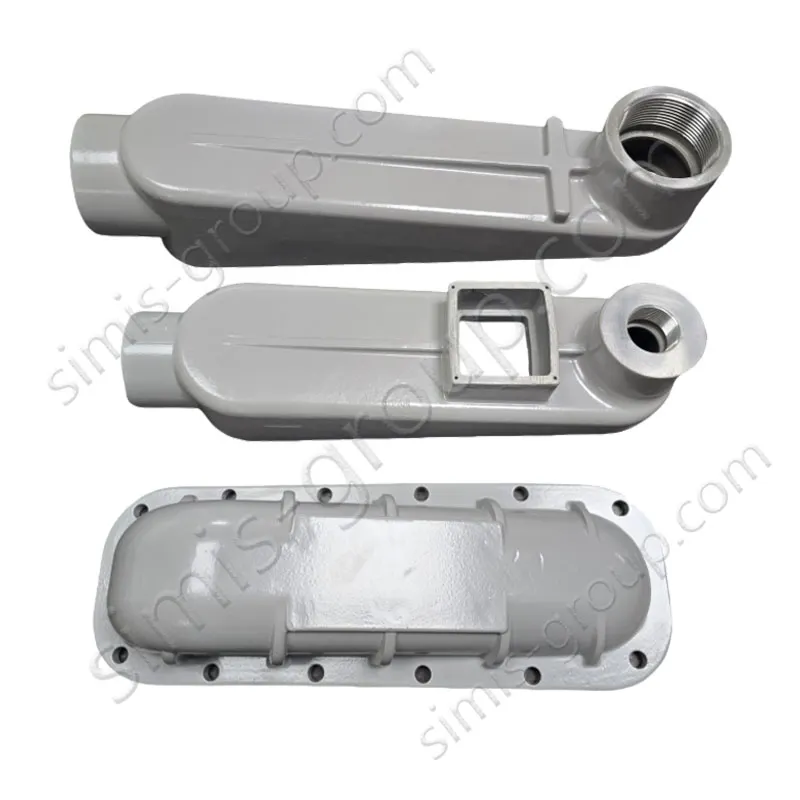
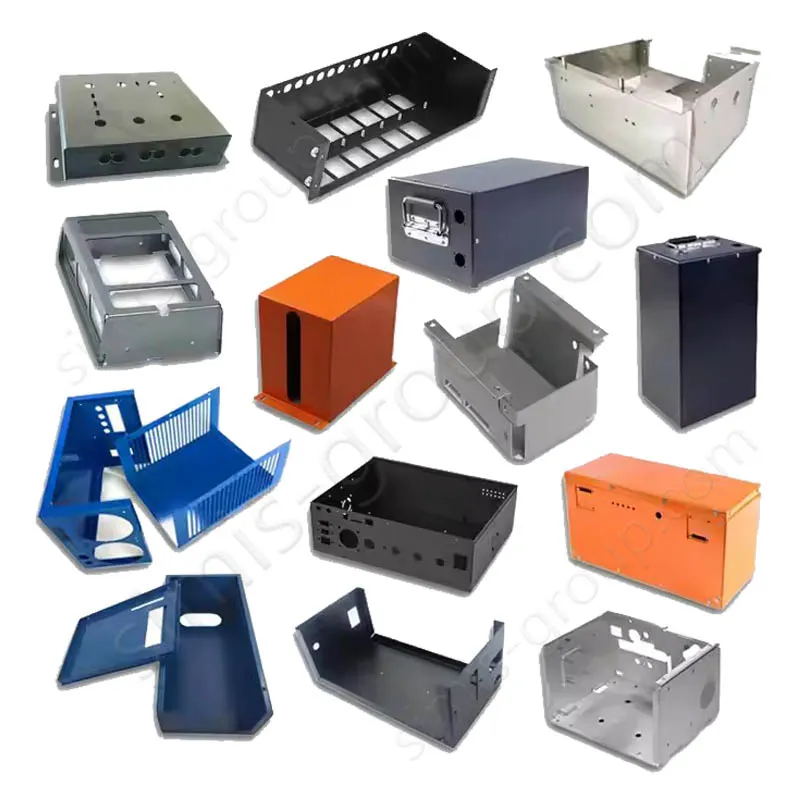
SIMIS manufactures custom sheet metal cabinet boxes and industrial enclosures for customers integrating electrical, electronic, communication and mechanical equipment. Rather than choosing an off-the-shelf case, OEM buyers can specify cabinet proportions, access openings, internal brackets, mounting rails, cable entry points and surface finish to suit the equipment arrangement.
Cabinet design begins with the intended installation and service conditions. A floor-standing control cabinet may require stiffened panels, a reinforced base and removable access panels; a compact wall-mounted box may instead prioritize cable clearance, door sealing and fastener accessibility. These are manufacturing considerations, not assumptions that every enclosure needs the same level of sealing or structural reinforcement.

Metal Cabinet Types and Structural Options
Metal cabinet box is a broad product category. Identifying the cabinet format early helps determine how panels are cut, bent, joined and inspected.
| Cabinet type | Typical fabricated features | Key manufacturing considerations |
|---|---|---|
| Floor-standing control cabinet | Frame, large doors, internal rails, base and access panels | Door sag, rigidity, mounting loads, panel alignment and service access |
| Wall-mounted electrical box | Compact body, hinged or removable cover, brackets and cable entries | Mounting-hole position, gasket land, door clearance and cable routing |
| Telecom or equipment enclosure | Ventilation cutouts, shelves, mounting rails and removable panels | Rail spacing, heat management, serviceability and grounding provisions |
| Special equipment casing | Nonstandard bends, viewing cutouts, formed covers and internal mounts | CAD coordination, visible finish, fit to equipment and repeatable assembly |
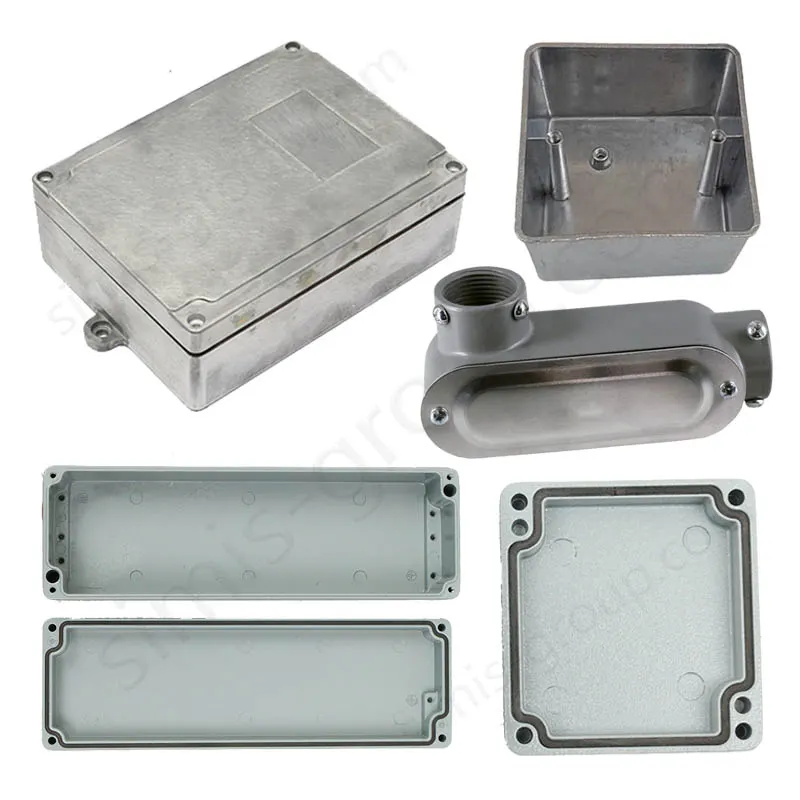
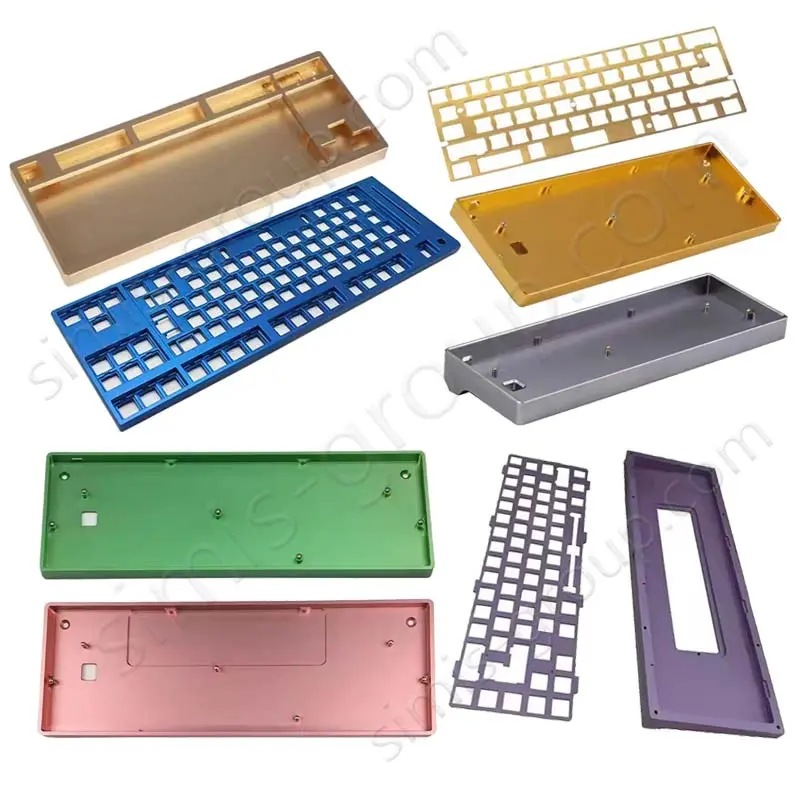
Small electrical connection boxes may use different joining or casting processes. For those applications, see our custom junction boxes page; specialized electronics enclosures can also use principles similar to those applied in custom metal instrument and keyboard cases.
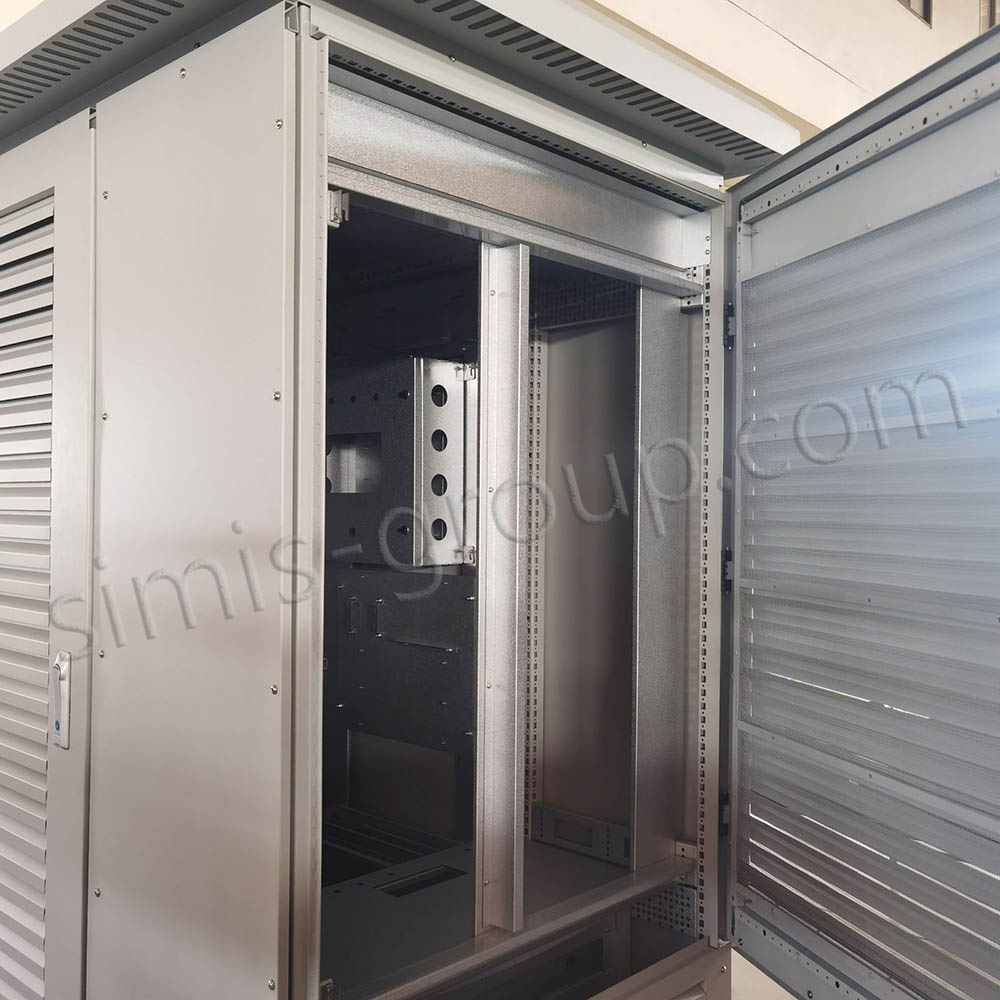
Sheet Metal Fabrication Process for Custom Enclosures
An effective fabrication sequence considers the cabinet as an assembly, not just a collection of flat cut parts. SIMIS supports custom sheet metal fabrication from blank preparation through forming, joining, finishing and project-specific checks.
1. Laser Cutting and CNC Punching
Cut profiles, access slots, ventilation patterns and cable-entry openings are developed from CAD data. Punching can be suitable for repeated hole patterns and formed features; laser cutting offers flexibility for low-volume or frequently revised geometry. Cut-edge quality and the location of openings relative to subsequent bends should be reviewed before manufacturing.
2. Press-Brake Bending and Formed Stiffeners
Bend allowance, inside radius, sheet grain direction and bend sequence influence finished dimensions. Flanges, returns and folded edges can increase panel stiffness and provide fastening surfaces without unnecessarily increasing material thickness. For repeat sheet-metal features, stamping and bending operations may form part of the production plan.
3. Welding, Riveting and Mechanical Assembly
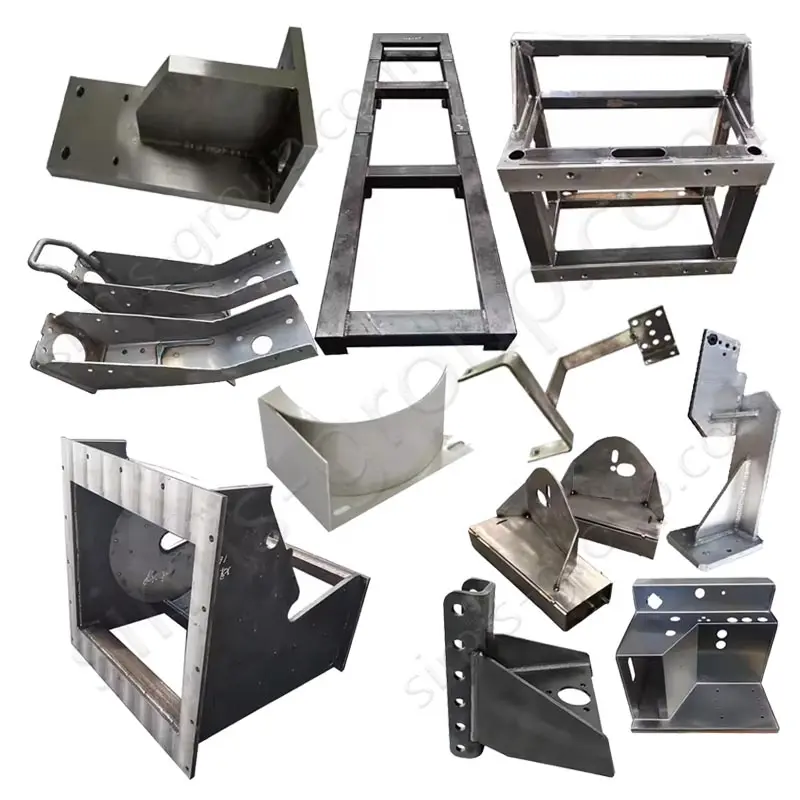
Enclosure corners, supporting frames and brackets may be welded or fastened, depending on access, finish and serviceability. TIG, MIG/MAG and spot-welding approaches have different uses, and a fixture or controlled weld sequence may be required to limit distortion. For projects with visible stainless steel seams, the weld appearance and cleanup criteria should be agreed in advance; see also custom stainless steel welded parts.
4. Machined Interfaces and Trial Assembly
Most cabinet geometry can be produced through sheet metal work; CNC machining is reserved for interfaces that genuinely need it, such as special hinge components, close-fitting inserts or equipment attachment features. Before finishing, trial assembly can identify problems with panel interference, hardware access and fastener positions.
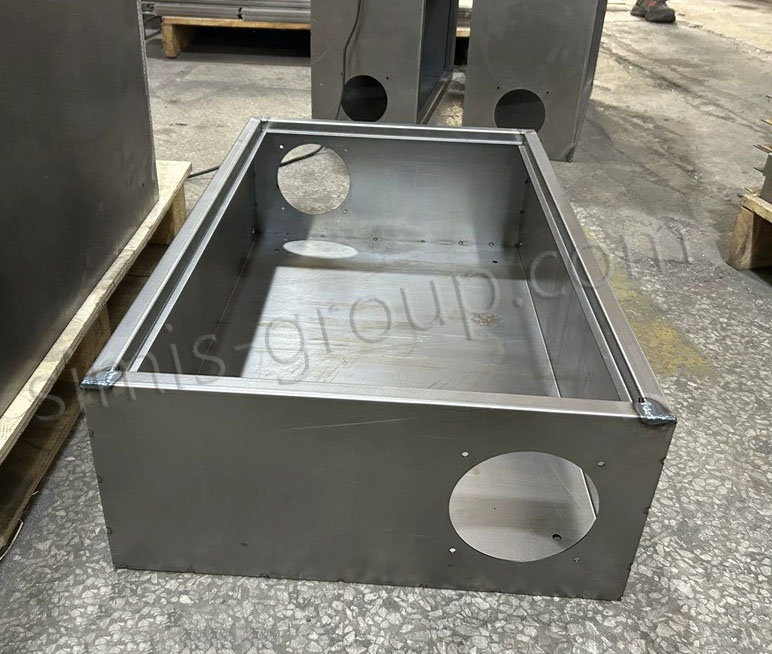
Material Selection: Carbon Steel, Stainless Steel and Aluminum
The enclosure material should match structural loading, operating environment, weight, appearance and finishing needs. The choice of an alloy does not by itself establish the cabinet’s overall corrosion or environmental protection rating.
| Material | Why an OEM may select it | Fabrication / finish considerations |
|---|---|---|
| Cold-rolled carbon steel | Good general-purpose forming and an economical base for indoor equipment cabinets | Commonly powder coated; protect edges, welds and other exposed surfaces appropriately |
| Galvanized steel sheet | Zinc-coated option for selected humid or industrial environments | Cutting, welding and coating repair need consideration at exposed edges and joints |
| 304 / 304L stainless steel | Corrosion resistance and cleanable surfaces in suitable operating environments | Specify weld cleanup, surface texture and any passivation requirements |
| 316 / 316L stainless steel | Considered when more demanding chloride or chemical exposure is expected | Verify compatibility with the actual environment; higher material cost |
| Aluminum sheet, e.g. 5052 | Lower weight, formability and useful heat-transfer characteristics | Bend radius, joining approach and anodized or powder-coated finish depend on alloy and design |
The final material grade and thickness should be taken from the customer’s technical documentation. Stiffer cabinets are not necessarily produced by using the thickest sheet: proper folds, stiffeners and equipment mounting paths may be more effective.

Door Alignment, Hinges, Latches and Gasket Design
For access-door enclosures, the door is one of the most important functional assemblies. Poor panel flatness, incorrect hinge offset or uneven latch compression can cause rattling, rubbing or inconsistent gasket contact. Engineering review should cover how the door behaves throughout its swing and after the enclosure is mounted.
Hinge axis: Define the hinge offset, pin alignment, fastener access and door swing clearance.
Door opening: Control the relationship between the door edge, frame opening, stops and adjacent panels.
Gasket contact: Provide an appropriate continuous contact land and account for compression, corners and hardware interruptions.
Latch engagement: Confirm latch position and closing force without assuming that a latch alone guarantees waterproofing.
Maintenance: Allow access to removable panels, cable glands, internal equipment and replacement hardware.
A ventilated box and a sealed enclosure have different design priorities. Open louvers, fans and large service openings can conflict with an ingress-protection target unless the complete design addresses them.

Mounting Accuracy and Assembly-Critical Tolerances
Cabinet dimensions are often governed by where components must fit. Hole-to-hole position, rear-panel flatness, rail alignment and panel-to-panel squareness can be more important than a tight general tolerance printed across every dimension of the sheet-metal drawing.
Backplates, Rails and Equipment Supports
A mounting backplate may carry terminals, controllers, power supplies and brackets. Its hole pattern, installed height and clearance behind equipment should be coordinated with the equipment drawing. For heavier assemblies, the load path should pass through suitably supported rails or structural members rather than thin unsupported sheet alone.
Datums and Stack-Up Through Multiple Bends
Each cut, bend and joint contributes to the final cabinet geometry. Establishing sensible manufacturing datums helps control hole location and panel fit. Tight positional tolerances should be assigned to mating features and verified at the appropriate production or assembly stage, not inferred from a generic claim of CNC precision.
Earthing, Fastening and Cable Interfaces
Threaded inserts, captive fasteners, welded studs, grounding points and cable entry flanges may be included as specified. Painted or coated interfaces need particular attention where electrical continuity is part of the design; grounding performance is an assembly-level requirement to be specified and checked by the project owner.
Thermal Management and Environmental Protection
A metal cabinet protects internal equipment while also influencing airflow and operating temperature. Possible features include ventilation louvers, fan cutouts, filter frames, heat-spreader contact points and mounting provisions for external cooling components. The selected arrangement depends on equipment heat generation, ambient temperature and intended installation.
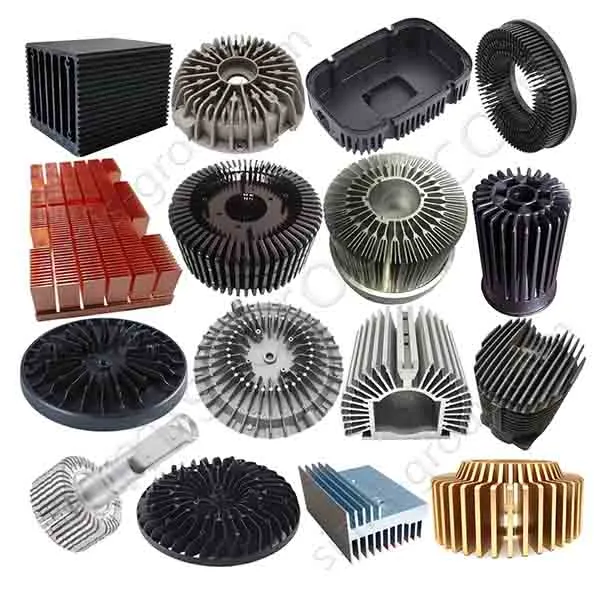
Where a cabinet is intended for outdoor service, consider door seals, roof and joint details, cable glands, drainage strategy, corrosion exposure and condensation control. A fully closed box can reduce free ventilation, so the thermal and sealing requirements must be evaluated together rather than presented as automatically compatible. Projects using dedicated cooling components can refer to custom heat sinks for related manufacturing approaches.
IP codes and NEMA enclosure types are not interchangeable labels. If a particular rating is required, the customer should identify the applicable standard and the assembled product configuration to be verified. Neither metal thickness nor weld appearance on its own proves compliance.
Surface Finishing and Corrosion Protection
Surface finish affects appearance, handling, corrosion performance and assembly. SIMIS supports project-specific surface treatment options such as powder coating for steel, appropriate finishes for aluminum, and surface cleanup or finishing for stainless steel. Coating choice should account for the environment, appearance specification, hardware interfaces and masking needs.
Powder coating: Define color or RAL reference, texture, coating thickness, appearance limits and surfaces that must remain uncoated.
Stainless steel: Specify weld blending, brushed finish, cleaning and any required pickling or passivation separately.
Aluminum: Confirm suitability of the selected alloy and finish; anodizing and powder coating are not interchangeable.
Contact areas: Protect threaded holes, hinge interfaces, grounding pads and critical gasket lands where necessary.
Visual appearance and corrosion exposure testing, when required, should be tied to a written specification rather than assumed from the finish name.
Quality Inspection for OEM Sheet Metal Cabinets
Cabinet quality is evaluated through part fit and the intended function of the assembly. A useful inspection plan identifies critical dimensions and finish criteria before production, including any tests required by the buyer.
| Check | Typical focus | When to define acceptance criteria |
|---|---|---|
| Material verification | Specified sheet grade, thickness and supplied documentation | Before production; project-specific traceability as required |
| Dimensional inspection | Overall envelope, mounting-hole pattern, rails, door opening and backplate | Drawing review and first-article / in-process inspection |
| Weld and assembly review | Seam location, deformation, sharp edges, door fit and hardware function | Prototype or first-article assembly and production checks |
| Finish inspection | Color, appearance, coating coverage, masking and handling damage | Before shipment using agreed finish standards |
| Environmental or load testing | Ingress resistance, structural loading or other specified service conditions | Only when called for by the applicable project requirements |
Depending on the project, dimensional checks may use gauges, calipers, fixtures or coordinate measurements. For more information on our broader approach, see quality control. Testing, certification, inspection reports and approval documentation should be specified rather than assumed to be included with every enclosure.
Industries and Related Custom Equipment Enclosures
Custom cabinets serve industrial automation, electrical distribution, communications, machinery controls and other equipment applications. Each industry has different enclosure details: large control cabinets need access and structural support; outdoor communication boxes must consider cable interfaces and corrosion; equipment casings may place greater emphasis on appearance and repeatable panel fit.
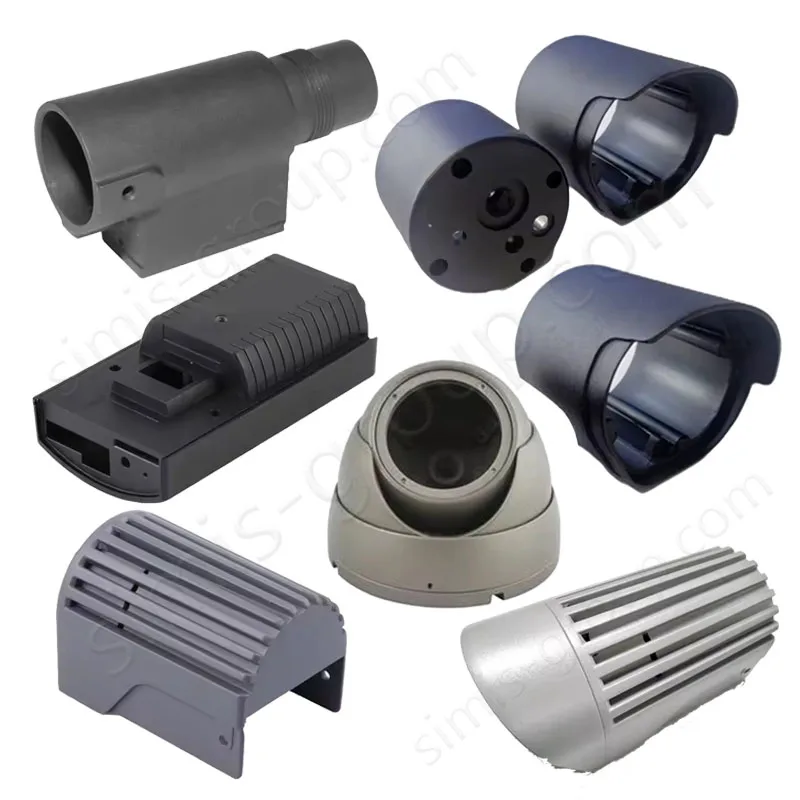
For smaller protective metal parts with camera-specific mounting or weather-exposure requirements, our CCTV camera housing page discusses a related but distinct application. This cabinet page focuses on fabricated sheet metal boxes and enclosure assemblies rather than cast camera housings or standard stocked electrical products.
Request a Quote for Custom Metal Cabinet and Enclosure Boxes
To request a manufacturing review or quotation, email info@simis-group.com with your drawings and intended application. For a multi-part cabinet, please include a bill of materials, assembly views and the preferred supply scope—individual panels, welded cabinet shell or hardware-ready assembly.
Design files: 2D drawings, 3D CAD and an assembly drawing, including clear revisions.
Material and quantity: Alloy or sheet grade, thickness, expected order volume and production schedule.
Functional interfaces: Door hardware, backplate, rails, cable glands, vents, grounding and equipment loads.
Appearance and protection: Color, coating, stainless finish, intended exposure and any specified IP/NEMA verification.
Acceptance: Critical dimensions, inspection records, prototype requirements and any mandatory project tests.
SIMIS can review the technical requirements to discuss a practical fabrication, finishing and inspection approach for your custom enclosure. Quotations and project commitments are based on the supplied specifications and manufacturing feasibility review.