Custom Metal Keyboard Cases & Frames Manufacturer
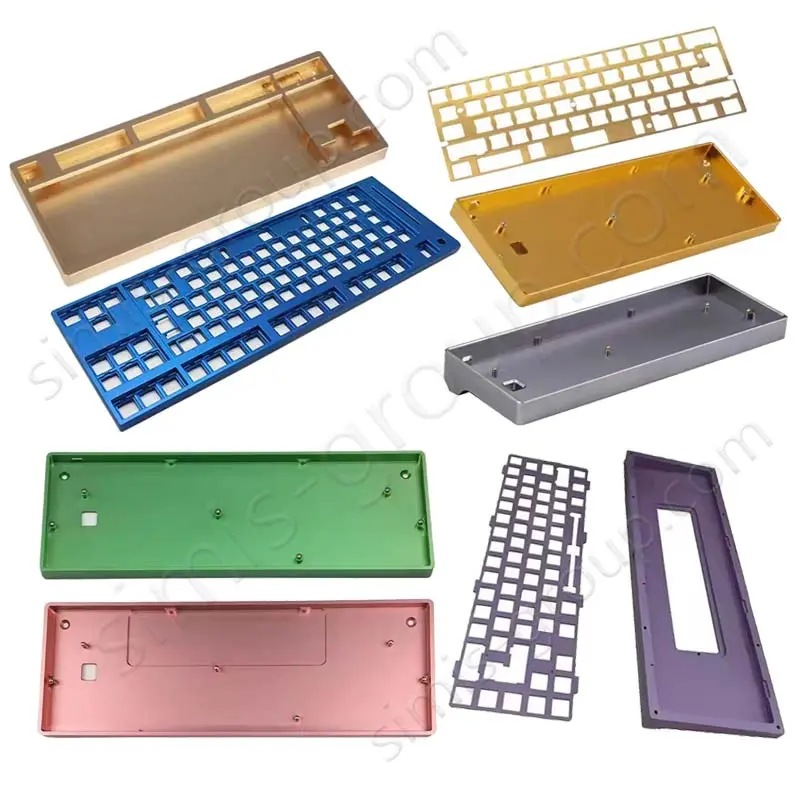


Metal Keyboard Cases & Frames

Custom Metal Keyboard Cases & Frames: OEM Manufacturing FAQs
Can SIMIS manufacture custom keyboard cases from our 2D drawings or 3D CAD models?
Yes. SIMIS supports drawing-based production of metal keyboard housings, top frames, switch plates, bezels and related enclosure components. An RFQ should identify the keyboard layout, material, external dimensions, critical assembly interfaces, surface finish and expected production quantity. We review the geometry before selecting a suitable manufacturing route.
When should a keyboard enclosure be CNC machined rather than fabricated from sheet metal?
CNC milling is often appropriate for deep pockets, integral mounting bosses, precise perimeter profiles and machined aluminum cases. Laser-cut and bent sheet metal is worth evaluating for thinner covers, open frames, industrial keypad panels or cost-sensitive production. The selection depends on part geometry, finish requirements, order volume and assembly details rather than one process being universally superior.
Which dimensions are most important for switch and PCB fit?
Critical features can include switch-opening geometry and spacing, plate thickness, PCB standoff height, mounting-hole positions, stabilizer clearance and connector cutouts. We recommend that the customer identify the exact PCB, switches, fasteners and gaskets so inspection criteria reflect the actual components being installed.
Can anodized colors and decorative surface finishes be specified?
Yes, finish options can be reviewed for a given alloy and project, including brushed, blasted and anodized aluminum, or brushed and passivated stainless steel. Color, texture, visible-surface acceptance, edge appearance and coating thickness should be defined before samples are approved. Color consistency and corrosion performance must be evaluated against the agreed specification.
What information is required for an accurate OEM quotation?
Please provide STEP/IGES or comparable 3D files, dimensioned 2D drawings, the required keyboard layout, material grade and temper, finish samples or references, tolerance and datum requirements, annual quantity, packaging expectations and any fit-test components. We can then review manufacturability, machining operations and project-specific inspection needs.
Custom Metal Keyboard Cases and Frames Made to Your Design
A metal keyboard housing does more than protect electronics. It defines the mounting position of the switch plate and printed circuit board (PCB), provides mechanical clearance around keys and connectors, and controls how the completed product feels and fits together. SIMIS supplies OEM metal components manufactured to customer drawings for mechanical keyboards, industrial keypads, operator panels and equipment interfaces.
The scope may be a one-piece milled case, a machined top and bottom shell, a replaceable switch plate, or a stainless steel faceplate for an industrial keyboard. Production is coordinated with suitable CNC machining and secondary fabrication operations. We manufacture metal parts and interfaces to the agreed design; complete electronic functionality or keyboard acoustic performance is determined by the finished assembly.

How to Choose the Manufacturing Process for a Keyboard Case
Manufacturing should follow the geometry of the part rather than a blanket requirement for five-axis milling. Deep cavities, slender walls, long narrow slots and visible external surfaces have different cost and quality implications. The process review should consider tool access, fixturing, raw material utilization, batch size and the location of cosmetic surfaces.
| Manufacturing route | Suitable component features | Engineering considerations |
|---|---|---|
| CNC milling from metal stock | One-piece aluminum housings, integrated PCB bosses, recessed connector openings and shaped exterior contours | Evaluate pocket depth, wall thickness, cutter access, datum strategy and machining time. |
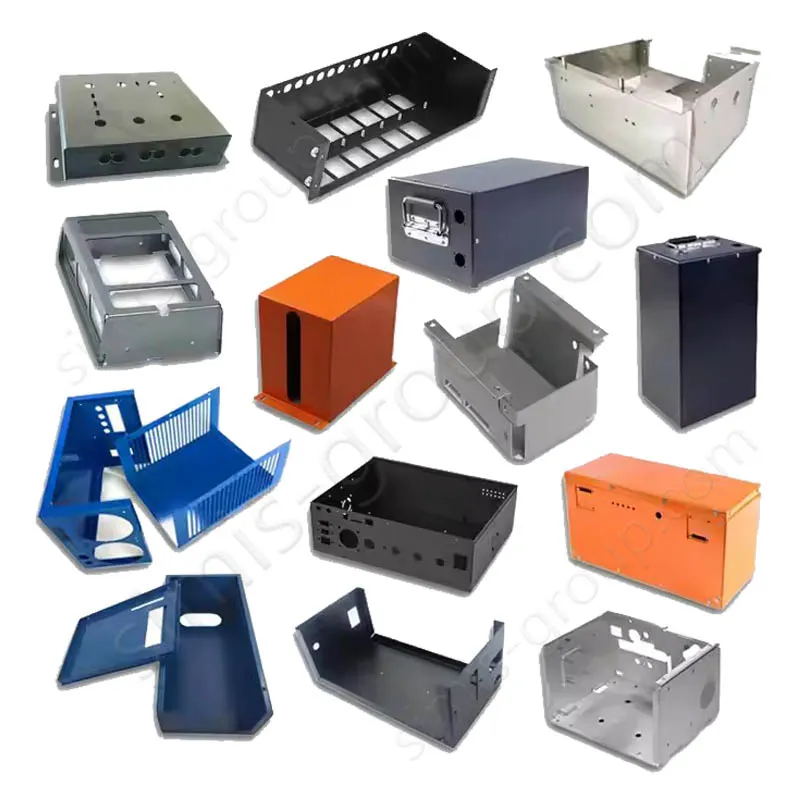
| Laser cutting + bending | Thin steel or aluminum frames, industrial keypad fascia panels and formed covers | Account for bend radius, springback, sheet thickness and fastener placement. |
| Stamping / punching | Repeated switch or ventilation openings, formed plates and higher-volume sheet parts | Review tool investment, hole-to-edge distances, burr direction and production quantity. |
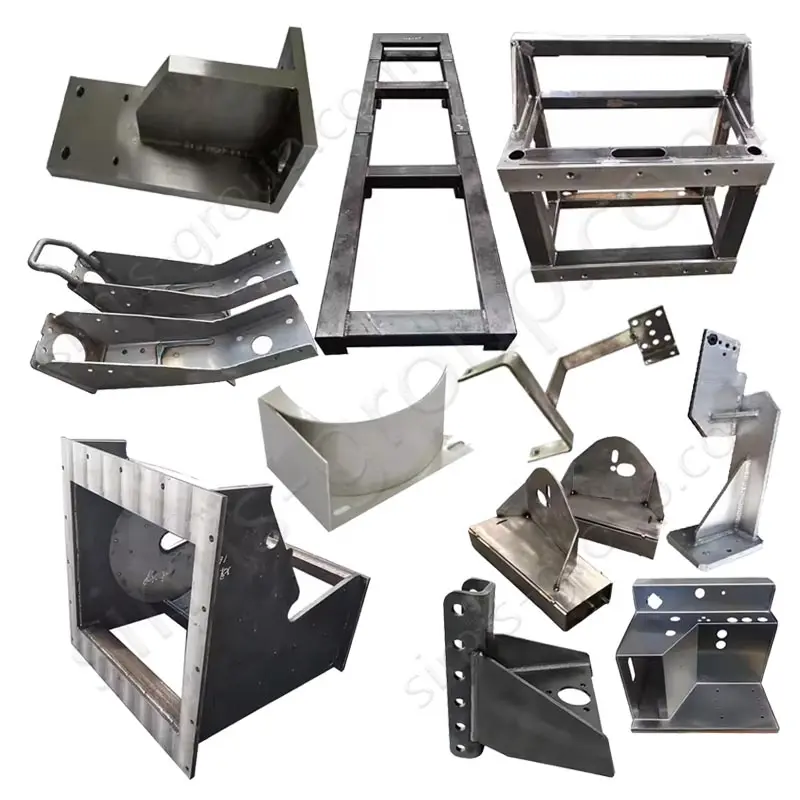
| Welding + finish machining | Multi-piece housings or support frames with joined brackets | Plan weld distortion control and post-weld machining of critical mounting features. |
| Hybrid production | Machined mounting inserts plus fabricated outer panels | Define material interfaces, joining sequence, finish consistency and assembly access. |
For fabricated panels, see our sheet metal fabrication capabilities and custom stamping and bending parts. Complex assemblies may also incorporate stainless steel welded components when the design calls for permanent joints.

Materials for CNC Keyboard Cases, Plates and Industrial Keypad Frames
Material selection affects mass, stiffness, machining cost, corrosion behavior and the available finish. A keyboard plate and its outer housing may use different metals; the material should be selected for each part’s intended function. The grades below are design options rather than a claim that every grade is automatically available for every geometry.
| Material | Why it may be chosen | Design and finishing notes |
|---|---|---|
| 6061 aluminum alloy | A practical option for machined housings with moderate weight and a broad range of appearance finishes | Review temper, wall thickness and cosmetic anodizing requirements. |
| 7075 aluminum alloy | Higher-strength aluminum for applications where its properties are needed | Check grade availability, cost, corrosion and anodizing appearance. |
| 304 / 316 stainless steel | Industrial faceplates, mounting frames and components requiring corrosion resistance | Longer machining time, edge finishing and surface texture need attention. |
| Zinc or copper alloys | Selected weighted inserts, decorative components or particular structural designs | Evaluate density, corrosion protection, machinability and joining method. |
| Carbon or coated steel | Formed industrial keypad plates and mounting frames | Define coating system and exposed-edge corrosion protection. |
We recommend supplying the material standard, grade and any required temper or condition on the drawing. If a part requires a different material for an insert or counterweight, identify it separately rather than treating the case as a single-material component.

Critical Dimensions: Switch Openings, PCB Mounting and Key Clearances
Switch cutouts and plate flatness
Switch cutout shape, plate thickness, key spacing and edge burrs all influence switch seating. The customer drawing should state the required opening tolerances and inspection points, especially where repeated cutouts accumulate positional error. Deburring direction matters because a sharp or rolled edge can interfere with clips or create visible defects.
PCB standoffs, screw bosses and assembly datums
PCB mounting bosses must be positioned relative to the switch layout and housing datum features. Boss height, threaded-hole depth, screw clearance and board support should be checked against the actual PCB stack-up. Overly tight tolerances across every surface add cost without necessarily improving assembly; dimensioning from functional datums is usually more useful.
Connector ports, gasket seats and assembly clearance
USB or cable openings require clearance for connector shells, cables and plug insertion. Industrial keypad housings may additionally have gasket grooves, retained panels or mechanical fastener interfaces. The metal component can be produced to a sealing design, but a claimed IP or NEMA protection rating requires evaluation of the completed assembly, including the installed electronics, buttons, seals and cable entries.

Design for Manufacturability: Walls, Pockets and Tolerance Stack-Up
Deep machined pockets and very thin unsupported walls can increase machining time and distortion risk. Where the intended shape allows, internal corner radii, accessible mounting bosses and a consistent machining reference help make production repeatable. A sheet metal frame instead calls for allowance for bend radii, relief notches, welding access and edge finishing.
A functional drawing should distinguish critical fits from general cosmetic dimensions. For example, PCB mounting-hole position, switch-opening geometry and the plane supporting the switch plate may need specific inspection, while a non-mating decorative wall may allow a broader tolerance. Nominal ±0.05 mm or tighter limits should not be assumed across an entire keyboard case; achievable requirements must be reviewed by feature, material, process and part size.
For assembled products, include the screw-head envelope, cable routes, gasket compression target if relevant, and space for board flex or other components. Where thermal dissipation is a design consideration, the metal housing should be assessed as part of the system; it is not a substitute for a dedicated heat sink when one is required by the electronics.
Surface Finishing and Cosmetic Quality for Metal Keyboard Housings
Aluminum anodizing, blasting and brushing
Visible housings may require uniform bead-blasted or brushed preparation followed by anodizing. Cosmetic expectations should define the viewing distance, acceptable tool marks, color target, masked areas and permissible variation between batches. Anodizing appearance depends on alloy, material history, pretreatment and coating process; a RAL paint color cannot be assumed to translate directly into an anodized color.
Stainless steel finishes and coated steel
Stainless steel faceplates can be brushed or polished as specified, with cleaning and passivation considered where the application requires it. Carbon steel keyboard frames may use powder coating or another agreed corrosion-protection treatment. Edges, recesses and threaded areas must be considered so the finish does not compromise fit or assembly.
Our surface treatment service supports discussions about the practical finish route, inspection criteria and protective packaging. For premium consumer products, an approved physical finish sample is often more valuable than a generic phrase such as “flawless appearance.”
Applications: Mechanical Keyboards and Industrial Control Interfaces
Custom mechanical keyboard cases and switch plates
A 60%, 65%, tenkeyless or full-size keyboard case may have different external proportions, mounting schemes, switch plates and internal acoustic components. We can review the case and frame as separate drawings or as a coordinated metal parts package. Whether a particular layout is supported is determined by the supplied geometry, not the marketing name of the keyboard size.
Industrial stainless steel keypads and operator panels
Industrial keypad faceplates prioritize mounting fit, long-term surface condition and compatibility with switches, fasteners and seals. Components may be intended for factory automation, equipment consoles or instrument panels. Corrosion resistance or washdown suitability must be tied to the selected material, complete design and any specified tests, not inferred solely from the presence of stainless steel.
Keyboard-related components for larger enclosures
Keyboard panels also mount into consoles or larger equipment boxes. Projects requiring related fabricated structures may draw on our experience with custom metal cabinets and enclosures and custom junction boxes. These linked examples are related metal enclosure manufacturing references; a new keyboard project still requires its own technical review.

Inspection and Assembly Verification for Custom Keyboard Metal Parts
The inspection plan should prioritize dimensions and surfaces that affect switch insertion, PCB positioning, final assembly and visible quality. Depending on the customer drawing, checks may involve calipers, gauges, coordinate measurement and sample assembly. There is no universal requirement that every keyboard component be measured with the same instrument or held to the same tolerance.
| Inspection area | Typical checkpoints | Information to agree with the buyer |
|---|---|---|
| Functional geometry | Switch openings, hole positions, plate thickness, PCB supports, datums | Drawing tolerances and an inspection sampling plan. |
| Assembly fit | PCB/switch alignment, fastener engagement, connector access, cover gap | Customer-supplied reference components or assembly files. |
| Cosmetic finish | Visible tool marks, edge burrs, finish color, scratches, coating condition | Approved appearance samples and acceptance criteria. |
| Material and traceability | Specified alloy or steel grade and relevant manufacturing records | Project-required documentation and identification method. |
| Special requirements | Sealing interface, corrosion test, coating thickness or impact verification | Applicable test method, assembly boundary and agreed standard. |
SIMIS can discuss project-specific checks through its quality control process. If the customer requests regulatory compliance, drop resistance, ingress protection or use in hazardous environments, the exact applicable standards and testing scope must be separately defined and demonstrated.
What to Send for an OEM Custom Keyboard Case Quotation
For a useful technical review, send a 3D CAD model and a dimensioned 2D drawing showing case sections, switch layout, PCB standoffs and connector locations. Include the required material grade, finish and color reference, estimated quantity, target schedule and any critical acceptance criteria. For a multi-piece assembly, identify which screws, inserts, gaskets, PCB and switches are provided by the buyer and which components are to be manufactured.
Our review can then focus on manufacturability, the relative cost of CNC milling versus fabricated construction, inspection points and finish compatibility. We work from your requirements rather than offering a generic stock keyboard shell. Email your drawings to info@simis-group.com to discuss custom metal keyboard cases, frames and precision metal components.