Custom Boat Cleats Manufacturer


Boat Cleats

Custom Stainless Steel Boat Cleats: OEM Manufacturing FAQs
Can SIMIS manufacture custom stainless steel boat cleats from our drawings?
Yes. SIMIS supports drawing-based OEM manufacturing of stainless steel boat cleats, marine horn cleats, deck-mounted mooring fittings and selected related metal hardware. Depending on the specified alloy, cleat geometry and production quantity, manufacturing may involve precision investment casting, CNC machining, polishing, surface treatment and project-specific inspection. We review the horn profile, base structure, mounting interface, material grade, intended mooring loads and quality requirements before proposing a manufacturing route.
Is 316 stainless steel better than 304 stainless steel for boat cleats?
316-type stainless steel contains molybdenum and can provide better resistance to certain chloride-related corrosion mechanisms than comparable 304-type stainless steel under suitable conditions. It is often considered for marine hardware exposed to coastal atmospheres and salt spray. However, neither grade is immune to pitting, crevice corrosion or staining. For investment-cast cleats, a suitable cast grade such as CF8M or CF8 should be specified instead of assuming that a wrought 316 or 304 designation automatically defines the casting material.
Can the mounting holes, base dimensions and horn shape be customized?
Yes. Drawing-defined features can include cleat length, horn diameter, end radius, base width, mounting-hole spacing, countersunk holes, threaded studs, base thickness and the geometry around the horn-to-post transition. The final design must match the intended rope size, line direction and deck or dock installation. Existing hole patterns can be considered for replacement projects, but fit and structural suitability require verification.
Can SIMIS provide a certified working load limit for a boat cleat?
A working load limit or proof-load requirement must be established through the approved design, defined loading directions, appropriate tests and agreed acceptance criteria. A material certificate or a successful inspection of the cast cleat does not independently establish the strength of the installed mooring point. Bolts, backing plates, deck construction and load direction must also be considered. Where a particular load qualification is required, the complete testing and documentation scope should be specified before production.
What information is required for a custom boat cleat quotation?
Please provide 2D engineering drawings and available STEP or other 3D models, the intended cleat type, exact metal grade, overall dimensions, horn and base geometry, mounting-hole or stud details, required finish, anticipated order quantity and inspection requirements. If a design load is specified, include the load directions, test arrangement and acceptance criteria. Information about the vessel or dock structure, rope size and saltwater or freshwater exposure can support the manufacturing review.
OEM Custom Boat Cleats for Marine Mooring and Docking Applications
Boat cleats are marine deck and dock fittings used to secure suitably sized mooring lines. A cleat provides a shaped contact surface around which a line can be arranged using an appropriate securing method. Its geometry must accommodate the intended rope, installation location and expected loading without creating unacceptable sharp contact points or interference with other equipment.
Common boat cleat features include an elongated horn or crossbar, supporting posts, a mounting base and holes or studs for attachment. Some designs use an integrated cast body, while others employ welded, machined or assembled construction. The structural path from the rope-contact area through the supports and base to the mounting fasteners is important to the entire installation.
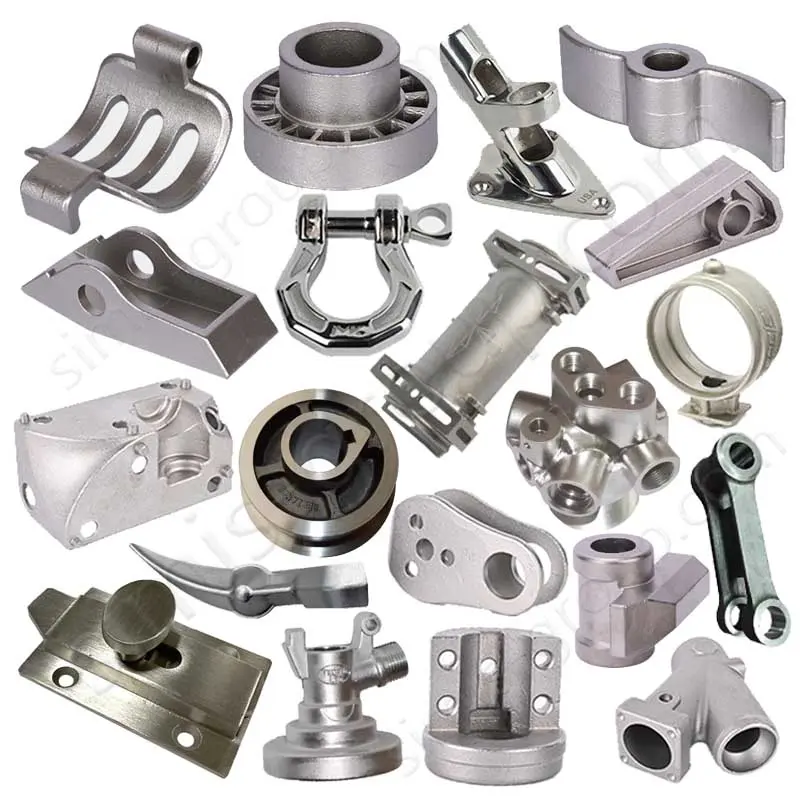
SIMIS manufactures custom metal parts according to customer-approved drawings. For suitable yacht and marine hardware, stainless steel investment casting can form a complex cleat body with curved horn ends, integrated supports and a defined mounting plate. Critical mounting features can be machined, and the visible surfaces finished to the agreed appearance standard.
For further information about the available materials and manufacturing methods, see SIMIS custom stainless steel castings. Component manufacturing should be distinguished from design approval of the complete deck or dock mooring system.

Types of Custom Marine Cleats and Mooring Hardware
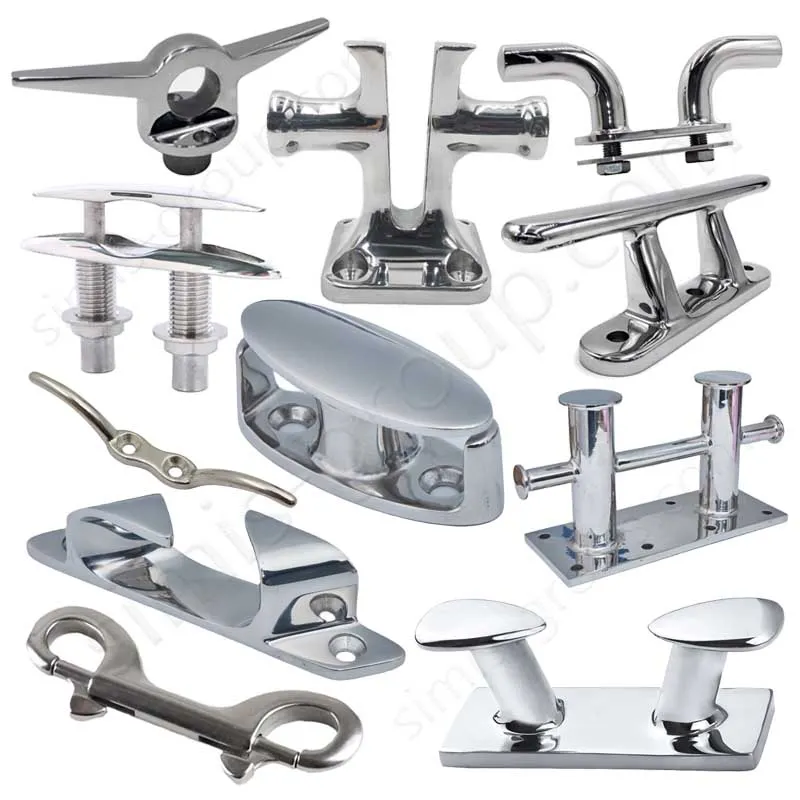
Marine cleats are available in different shapes to suit particular mounting locations and line-handling arrangements. A straight horn cleat, a T-shaped fitting and a flush-mounted retractable cleat do not necessarily have the same structural design or manufacturing requirements. The correct choice should follow the vessel manufacturer's or marine engineer's approved specification.
Straight horn cleats and open-base deck cleats
Straight horn cleats commonly use an elongated crossbar supported by two posts or a similar arrangement. Their horn length, support spacing and clearance below the crossbar influence how a mooring line can be wrapped around the fitting. The ends should have the specified curvature and finishing condition to avoid unintended sharp contact with the rope.
T-shaped and cross-style marine mooring fittings
T-shaped fittings have a transverse line-retaining element supported by a central post or a related structural arrangement. Their form may resemble a small mooring bitt. Load transfer at the post-to-base junction and the intended line directions should be reviewed. Such fittings should not be assumed to have the same capacity as a similarly sized two-post horn cleat.
Stud-mounted and through-bolted boat cleats
Some boat cleats are secured using fasteners passing through mounting holes in a visible base. Other designs incorporate threaded studs extending below the base. Both configurations must match the approved deck thickness, fastening system and access beneath the installation surface. A concealed stud arrangement can improve appearance, but does not remove the need to evaluate the supporting structure.
Pop-up, folding and flush-mount cleats
Retractable or folding cleats can reduce protrusions when not in use. These designs require additional moving, locking or guiding components and a specific installation arrangement. A simple investment-cast horn body is not equivalent to a complete qualified retractable mechanism. SIMIS can review applicable metal components from drawings where the required geometry and assembly responsibilities are defined.
Boat cleats versus large commercial mooring bollards
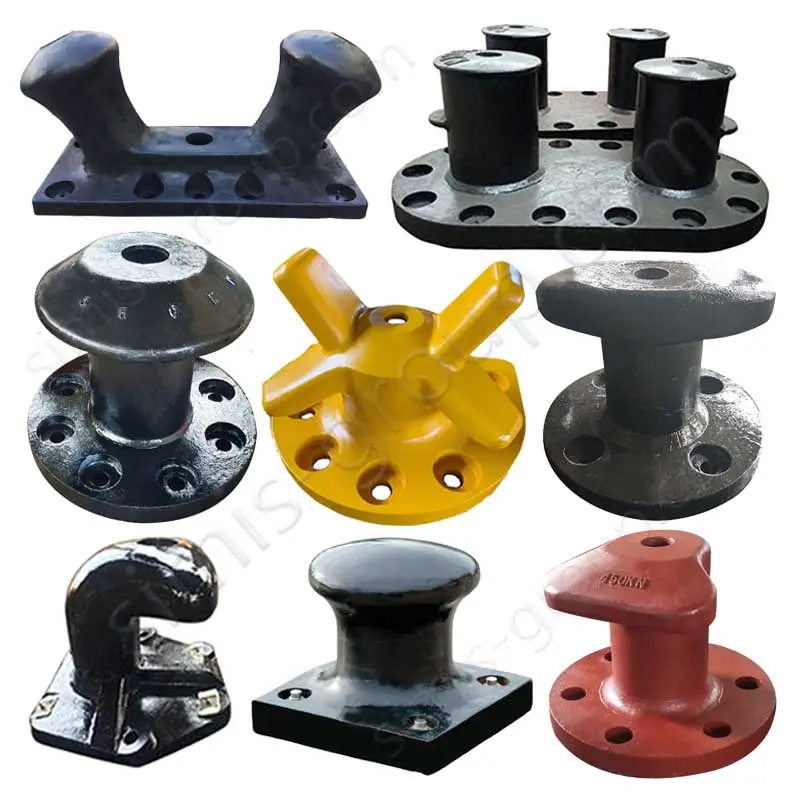
Boat cleats typically serve vessel or smaller dock installations, while large mooring bollards are designed for different vessel sizes, foundations and line loads. Their size, anchorage and inspection requirements should not be treated as interchangeable. For large shore-based mooring fittings, see SIMIS custom mooring bollards.
| Cleat Type | Configuration | Important Design Data |
|---|---|---|
| Straight Horn Cleat | Long crossbar with two supporting posts or equivalent supports | Horn length, support spacing, line clearance and mounting pattern |
| T-Head Cleat / Small Mooring Bitt | Transverse head supported by a central post | Head diameter, post section, base geometry and line direction |
| Through-Bolted Cleat | Mounting holes in an exposed base plate | Bolt spacing, hole diameter, base seating and backing structure |
| Stud-Mount Cleat | Threaded mounting studs beneath the fitting | Stud size, center spacing, embedment or engagement and installation access |
| Retractable or Folding Cleat | Multi-component flush or low-profile mechanism | Travel, locking arrangement, drainage, material compatibility and assembly validation |

Boat Cleat Materials: Cast Stainless Steel, Bronze and Aluminum
Marine cleat material selection must consider strength, casting feasibility, saltwater exposure, surface appearance, fastener compatibility and the required service environment. No single material performs best in every vessel or dock installation. A material described as marine grade must still be specified by an actual alloy designation and applicable manufacturing standard.
316-type stainless steel for coastal and salt-spray exposure
316-type stainless steel contains molybdenum and is commonly considered for selected marine hardware because it can provide improved resistance to some localized corrosion mechanisms compared with 304-type stainless steel. However, crevices beneath bases, salt accumulation, stagnant seawater and insufficient maintenance can still contribute to corrosion. Material selection must reflect whether the cleat is exposed to occasional spray, frequent wetting or prolonged immersion.
CF8M and CF8 stainless steel casting grades
For stainless steel investment castings, CF8M is a commonly used 316-type cast alloy and CF8 is a commonly used 304-type cast alloy. These are comparisons between alloy families, not declarations that the cast and wrought material specifications are identical. ASTM A743/A743M is relevant to specified corrosion-resistant stainless steel castings for general applications. The purchase order should identify the exact casting grade, applicable standard, material condition and required mechanical properties.
304-type stainless steel for selected less aggressive conditions
304-type stainless steel may be considered for suitable freshwater or less severe atmospheric exposures. It should not be presented as having the same resistance to chloride-related pitting as every molybdenum-bearing alloy. In coastal applications, the required grade should be selected after considering exposure severity, cleaning accessibility and the approved engineering specification.
Bronze and other copper alloys for traditional marine hardware
Certain bronze alloys have a long history in marine hardware, including deck fittings and mooring components. However, copper-alloy suitability depends on exact composition, strength, seawater chemistry, corrosion mechanisms and the casting process. Ordinary brass is not interchangeable with every marine bronze alloy. SIMIS can review appropriate copper alloy casting options when required by the customer's design.
Aluminum alloy for specified lightweight fittings
Aluminum alloys may be considered for selected lightweight marine fittings. The specified alloy, casting condition, protective treatment and galvanic compatibility are important. Direct contact between dissimilar metals in a wet, conductive environment can create corrosion risks. Aluminum should not be substituted for stainless steel without reviewing structural properties and the entire fastening system. Learn more about SIMIS aluminum casting manufacturing capabilities.
| Material Family | Potential Application | What to Verify |
|---|---|---|
| CF8M / 316-Type Cast Stainless | Selected coastal yacht and marine deck fittings | Exact cast grade, strength, crevice exposure and finishing |
| CF8 / 304-Type Cast Stainless | Suitable freshwater and less aggressive environments | Chloride exposure, grade compliance and maintenance conditions |
| Specified Marine Bronze | Traditional or specialized marine deck fittings | Alloy designation, strength and seawater corrosion behavior |
| Aluminum Alloy | Selected lightweight hardware designs | Casting properties, protective finish, fasteners and galvanic isolation |
| Wrought or Forged Stainless Steel | Suitable machined or forged mooring components | Correct wrought grade, process, load requirements and machining |

Investment Casting and Other Manufacturing Processes for Boat Cleats
Marine cleats may be produced through investment casting, machining, forging or fabrication depending on the approved shape and material. The process should reproduce the intended line-contact geometry and mounting features while meeting the required mechanical and surface acceptance criteria.
Lost-wax investment casting for complex stainless steel cleats
Precision investment casting uses a wax pattern and refractory ceramic shell to produce detailed metal parts. It is a candidate for one-piece boat cleats with curved horns, integrated support posts, rounded base transitions and decorative contours. Near-net casting can reduce stock removal on suitable surfaces while preserving flexibility in the external shape.
Foundry planning should account for gating, feeding, shrinkage, section thickness and surface discontinuities around highly stressed horn-to-post and post-to-base transitions. Investment casting does not guarantee that a casting is free from every internal defect. SIMIS supports appropriate designs through its stainless steel investment casting capabilities.
CNC machining of mounting bases and holes
Casting creates the main cleat body, but functional dimensions may require secondary machining. Depending on the drawing, operations can include base-face machining, drilling, counterboring, thread machining and controlled positioning of mounting holes. The process plan should distinguish surfaces that can remain as cast from those requiring a specified finish or tolerance.
Forging and machining from wrought stock
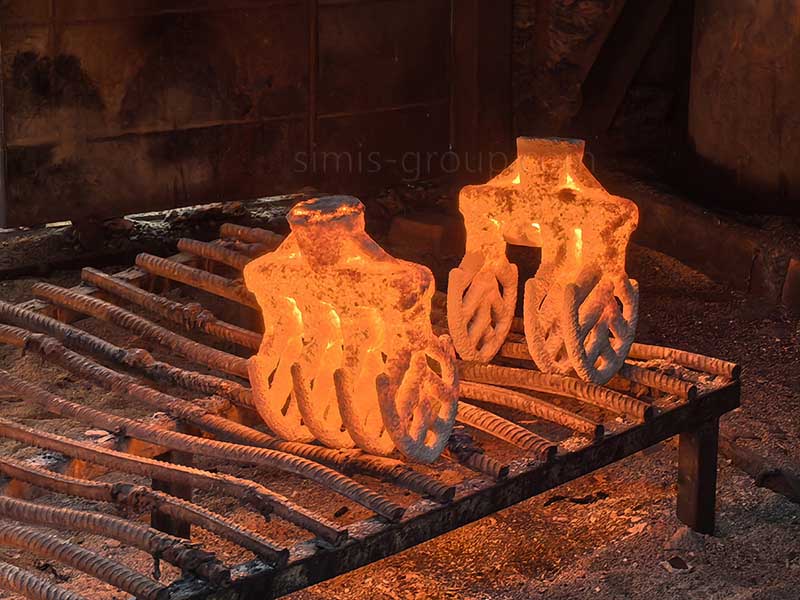
Selected cleat designs or heavily loaded components may be candidates for forging or machining from suitable wrought stock. The mechanical benefits depend on the actual alloy, part geometry and processing condition. Forging does not automatically eliminate all discontinuities or ensure a certified working load limit. SIMIS can review relevant closed-die forging requirements for appropriate components.
Welded and assembled stainless steel cleats
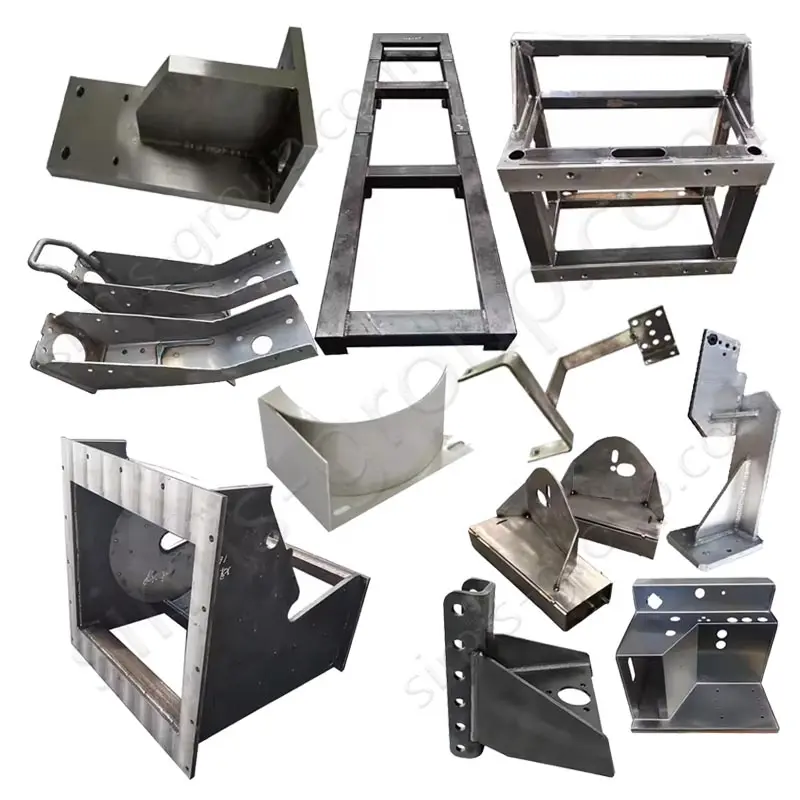
Some marine cleats use fabricated or welded construction rather than a one-piece casting. Such designs require evaluation of joint geometry, welding procedures, heat-affected material, distortion and post-weld finishing. The load path through each joint must be included in the approved design. Related fabrication capabilities are described on our custom stainless steel welded parts page.
| Process | Potential Use | Key Considerations |
|---|---|---|
| Investment Casting | Integrated horn, post and base cleat bodies | Tooling, solidification, local casting integrity and finishing allowance |
| CNC Machining | Mounting faces, holes, stud interfaces and threads | Datum position, hole pattern, surface condition and tolerances |
| Forging / Wrought Machining | Selected machined or highly loaded cleat components | Material specification, tooling, load path and final properties |
| Fabrication and Welding | Approved multi-piece marine fittings | Joint design, weld acceptance, distortion and corrosion finishing |
| Polishing / Surface Treatment | Visible and rope-contact surfaces | Appearance, burr removal, dimensions and contamination control |
Rope-Friendly Cleat Geometry: Horn Radii, Supports and Line Clearance
Boat cleat geometry should provide a suitable contact surface for the intended mooring line while transferring the applied forces through the supporting structure. A polished appearance is useful for decorative marine hardware, but the cleat's load path and rope-contact geometry are separate engineering requirements.
Horn length, end radii and rope accommodation
Horn length and available clearance influence how a mooring line can be secured around the cleat. Rounded ends and appropriate transitions can reduce unintended sharp contact with rope fibers. The dimensions should correspond to the intended line diameter and approved securing method. A smooth horn alone cannot eliminate rope abrasion under unfavorable loading, chafe conditions or repeated movement.
Post diameter and horn-to-support fillets
The connection between the cleat horn and supporting posts carries forces from the mooring line. Local section thickness, fillet radii and casting quality may therefore be important to structural performance. Any change to these regions should be reviewed against the customer's load requirements rather than introduced solely for manufacturing convenience.
Base geometry and deck contact
The base transfers cleat loads to the deck or mounting structure. Base thickness, contact area, hole locations and local reinforcement must be evaluated together with the fastening system. A perfectly polished mounting face is not a substitute for adequate structural support, correct bedding or an appropriate backing plate.
Line lead direction and upward pulling forces
Mooring lines may approach a cleat horizontally, upward or at an angle depending on the vessel and dock arrangement. The line lead changes the combination of shear, bending and uplift forces acting on the cleat and its anchorage. The approved design and any load testing should therefore specify the relevant directions rather than assume that one horizontal pull represents every possible condition.
Polishing without weakening critical sections
Grinding and polishing remove material from the casting surface. Excessive finishing near the bases of the posts or other stressed regions can alter the design thickness and geometry. A finishing specification should identify acceptable appearance and remaining dimensions, particularly when a cleat requires substantial local grinding after casting.

Deck Mounting, Studs, Fasteners and Backing Plates
The installed strength of a boat cleat depends on more than the metal body. Fasteners, backing plates, deck thickness, substrate properties and installation details all affect how loads are transferred into the vessel or dock structure. The cleat should therefore be evaluated as part of the complete mooring strong point.
Bolt-hole spacing and retrofit compatibility
For replacement hardware, mounting-hole spacing and the overall base envelope should match the approved installation. Relevant dimensions can include hole diameter, countersink or counterbore geometry, hole-to-edge distance and the distance between the mounting surface and rope-contact region. A matching bolt pattern does not automatically prove that the replacement cleat has the same strength as the original.
Threaded studs and fastener material compatibility
Stud-mounted cleats require control of stud diameter, thread specification, center spacing and the connection between the stud and cleat body. The selected nut and washer arrangement also matters. Fasteners must be appropriate for the intended loading and corrosion exposure. Where dissimilar metals are used, their galvanic compatibility and potential contact with seawater should be considered.
Backing plates and load distribution
A suitably engineered backing plate or reinforcing structure may be required to distribute loads beneath the cleat. This is particularly relevant where a deck has limited local stiffness or uses a composite sandwich construction. The plate size, fastener arrangement, core material and supporting structure must be evaluated by the vessel or installation designer. The cleat manufacturer's material certificate cannot establish the strength of the deck beneath it.
Bedding, sealing and water ingress prevention
Deck-mounted hardware often requires a suitable bedding or sealing arrangement to limit water entry through mounting holes. The sealant, gasket and preparation method should be compatible with the deck, fasteners and cleat material. Poorly controlled crevices may retain saltwater and complicate cleaning. Installation procedures should be provided by the responsible vessel or equipment supplier.
CNC machining and dimensional verification of mounting interfaces
Where the drawing specifies machined base surfaces or precision hole patterns, SIMIS can review appropriate CNC machining operations. The inspection plan may cover mounting-face flatness, hole diameter, center spacing, thread fit and other functional dimensions. Not every cleat requires an identical machining allowance or tolerance class.
Mooring Loads, Working Load Limits and Structural Validation
Mooring fittings may be exposed to loads caused by vessel movement, wind, waves, current, line tension and berth geometry. Their actual loading can include changes in direction and repeated cycles. A design evaluation must therefore address the intended operating conditions and not simply the tensile strength of the selected steel grade.
Working load, proof load and breaking load are different quantities
A specified allowable working load is not the same as the applied proof-test load or the force at which a component ultimately fails. Their relationship depends on the applicable engineering rules, design basis and acceptance procedure. If a buyer requires a rated cleat, the rated loading direction, required test setup and acceptance criteria must be clearly defined. An isolated static tensile test does not establish unlimited resistance to dynamic mooring loads or fatigue.
Horn bending and post-to-base stresses
Loads applied to the horn generate local bending and forces in the supporting posts and mounting base. Casting discontinuities, section transitions and the position of the applied line may affect structural performance. Where the application requires a defined design load, the buyer should provide the relevant load cases and any required structural calculations, proof testing or fatigue evaluation.
ISO 15084 and small-craft mooring strong points
ISO 15084 addresses anchoring, mooring and towing strong points for small craft within its defined scope. Its relevance depends on the particular vessel and applicable edition or national adoption. The engineering assessment concerns the strong point and its attachment to the vessel, not solely the casting of the cleat itself. The customer should identify the applicable requirements and how compliance will be verified for the complete installation.
Limits of mooring and towing interchangeability
A fitting intended for ordinary docking or mooring should not automatically be used for towing, lifting or another higher-risk operation. The load direction and magnitude may be different. A cleat must only be assigned to applications covered by its approved design and installation requirements. A polished stainless steel appearance is not evidence of suitability for emergency towing or lifting.
Component testing versus installed strong-point approval
A cleat can be inspected and tested as an individual part using an agreed fixture and loading procedure. Such testing can provide useful information about the metal component. However, final installation performance also depends on the fasteners, deck or dock structure, backing plate, installation quality and line lead. The responsible system designer must determine the complete approval and test scope.
Mirror Polishing, Satin Finishing and Marine Corrosion Control
Surface appearance is an important requirement for many yacht and leisure-boat cleats. Mirror and satin finishes provide different visual effects, but neither should be described as a permanent guarantee against saltwater corrosion. The metal grade, finishing process, surface condition, installation details and maintenance environment must be considered together.
Mirror-polished stainless steel cleats
A reflective polished finish may be specified for visible yacht hardware. Production can involve progressive grinding and polishing steps to reach an agreed appearance. A polishing-abrasive designation such as P800 does not by itself guarantee an exact surface roughness or defect-free visual finish. Critical appearance requirements should be defined through approved samples or measurable acceptance criteria.
Satin and brushed marine finishes
Satin or brushed finishes may be appropriate for selected commercial and leisure marine applications. The visible texture, directional pattern and consistency should match the agreed specification. Finishing requirements must account for rounded horns and other curved surfaces, where achieving a uniform directional appearance can be more challenging than on flat plate.
Pickling, cleaning and stainless steel passivation
Cleaning and chemical passivation may be specified to address free-iron contamination or obtain a required stainless steel surface condition. ASTM A967/A967M provides requirements for certain chemical passivation treatments and associated effectiveness testing. The process should be selected for the exact alloy and finish. Passivation cannot compensate for an unsuitable material grade or permanently prevent corrosion in every crevice or seawater environment.
Galvanic corrosion and mounting interfaces
When dissimilar metals are electrically connected in the presence of an electrolyte, galvanic corrosion may occur under suitable conditions. The potential risk depends on the materials, exposed area ratio, wetting and electrical continuity. Stainless steel cleats mounted to aluminum structures or combined with different fastener materials may require appropriate design measures, including compatible fasteners and isolation where specified.
Surface finishing without changing structural geometry
Grinding and polishing must be managed so that the horn diameter, fillet radii, post thickness and mounting features remain within drawing requirements. Removal of casting imperfections should follow an agreed acceptance or repair procedure. SIMIS can review suitable surface treatment and polishing requirements for marine metal components.
Quality Inspection for Custom Stainless Steel Boat Cleats
A suitable inspection plan should verify the cleat's material, geometry, casting or fabrication condition and required surface finish. Where the project involves structural load qualification, appropriate testing and documentation must also be defined. No single inspection method can establish every property of the finished mooring system.
| Inspection Item | Project-Specific Verification |
|---|---|
| Material Grade | Specified casting or wrought alloy chemistry and relevant material records |
| Mechanical Properties | Grade-specific tensile or other mechanical requirements and approved sampling |
| Horn Geometry | Overall length, diameter, end radius and rope-contact contour |
| Supporting Posts | Spacing, section dimensions and approved horn-to-base geometry |
| Mounting Base | Base thickness, seating face, bolt-hole or stud dimensions and positions |
| Casting Integrity | Visual inspection and specified NDT with agreed examination coverage and acceptance criteria |
| Surface Finish | Approved mirror or satin appearance, edge condition and specified cleanliness |
| Component Load Test | Defined fixture, loading direction, proof load and acceptance criteria where required |
| Installed Strong Point | Separate evaluation of fasteners, backing structure and installation under the applicable design requirements |
| Documentation | Material certificates, dimensional reports, test records and traceability as agreed |
Chemical composition and cast grade verification
Chemical analysis can be used to verify specified alloying elements, including chromium, nickel and molybdenum where relevant. The testing method must be suitable for the required composition limits. A material report confirming the specified grade does not independently establish marine corrosion life or the load rating of the cleat installation.
Liquid penetrant examination of stainless steel castings
Liquid penetrant testing may be used to identify certain surface-breaking discontinuities in stainless steel castings. The customer should specify the examination locations, method and acceptable indications. Liquid penetrant testing does not detect every internal defect or guarantee complete freedom from porosity. Surface quality should also be evaluated with the required polishing acceptance criteria.
Dimensional inspection of mounting and rope-contact features
Suitable gauges, calipers, CMM equipment and custom fixtures may be used to inspect the finished cleat. Important measurements can include horn span, support spacing, mounting-hole locations and base flatness where specified. The method should reflect the actual tolerance requirements rather than impose the same inspection equipment on every cleat design.
Load testing and permanent deformation
Where component proof-load testing is required, the test specification should define the line or fixture contact, load direction, test force, duration and permitted permanent deformation. A single-direction pull test cannot automatically validate every multi-directional load case. If a rated installed mooring point is required, additional evaluation of the connection and supporting structure may be necessary.
First-article approval and production traceability
For new investment casting tooling, first-article inspection can help verify the cleat geometry and finish before repeat production. Inspection records, heat identification, material certificates and specific test reports may be included according to the purchase specification. SIMIS can review these requirements through its quality control processes.

Applications of Custom Marine Boat Cleats
Yachts and recreational powerboats
Yacht and recreational boat builders may specify polished stainless steel cleats to combine a consistent deck appearance with the required line-handling geometry. Custom horn shape, mounting pattern and finish can be manufactured to the approved design. The vessel builder remains responsible for confirming the suitability of the complete strong-point installation.
Sailing yachts and sailboats
Sailboats use mooring lines and other deck-handling arrangements that may require carefully positioned cleats. The geometry should accommodate the intended lines and avoid interference with surrounding equipment. A cleat intended for ordinary mooring should not automatically be approved for unrelated high-load rigging or towing functions without a separate engineering assessment.
Fishing vessels and workboats
Fishing vessels and workboats may require robust cleat geometries with suitable rope clearance, surface finishes and attachment features. Loading and corrosion conditions can vary substantially between vessels. The selected material and design must reflect the approved operational requirements rather than assume that all commercial marine fittings share one working load limit.
Marinas, pontoons and floating docks
Dockside cleats may be installed on timber, aluminum, concrete or composite structures. Their fastening details and load distribution can differ from those used on a boat deck. Where the cleat is mounted to a floating pontoon or marina structure, the owner or designer should confirm the required loading and substrate connection. Marine corrosion compatibility and access for inspection are also relevant.
Coastal and freshwater leisure facilities
The environment may range from sheltered freshwater marinas to highly exposed coastal locations. Stainless steel selection, cleaning access and mounting details should correspond to the actual conditions. A material that performs acceptably in occasional freshwater exposure may require different evaluation under salt spray and seawater wetting cycles.
Custom marine equipment and specialized fittings
Specialized marine equipment can require non-standard rope-contact fittings, compact mounting hardware or integrated attachment features. Their materials and geometry may resemble conventional boat cleats, but the approved load cases and installation requirements determine their suitability. A custom metal part should not be assigned a lifting, towing or life-safety function without the necessary design verification.
Request a Quote for Custom Stainless Steel Boat Cleats
SIMIS supports OEM manufacturing of custom stainless steel boat cleats and related marine metal hardware according to approved engineering drawings. Our manufacturing review can cover investment casting, material selection, critical CNC machining, mounting features, mirror or satin polishing, surface treatment and project-specific component inspection.
For a detailed RFQ, please provide: 2D drawings and STEP or other available 3D models; the required cleat type and overall dimensions; horn diameter, length and radii; mounting-hole or stud configuration; exact cast or wrought material grade and standard; required surface finish; planned batch and annual quantities; intended rope size; installation environment; and any required inspection documents.
If the application requires a working load limit, proof-load test or qualification of the complete mooring point, please also specify the applicable engineering standard, load directions, force levels, test procedure, fastener requirements, backing structure and acceptance criteria. The customer or responsible marine engineer should approve any changes to the metal grade, horn profile, mounting configuration or other critical load-bearing features before production.
Send your custom boat cleat drawings and purchasing specifications to info@simis-group.com for a manufacturing feasibility review and quotation.