Custom Trailer Hitch Ball Mount Manufacturer


Trailer Hitch Ball Mount

Frequently Asked Questions About Custom Trailer Hitch Ball Mounts
1. What trailer hitch ball mount parts can SIMIS manufacture?
SIMIS manufactures custom trailer hitch ball mounts and related metal towing components to OEM drawings. Products may include forged steel ball mount bodies, receiver shanks, drop and rise brackets, forged aluminum mount components, compatible cast metal mounting bodies and separate towing connection parts. The exact deliverable can be a forged or cast blank, a finished metal part or a customer-defined assembly. A ball mount is not automatically the same as a complete vehicle hitch receiver, a tow ball or a certified towing system.
2. Can SIMIS make closed-die forged steel ball mounts?
Yes. Closed-die forging is an important SIMIS process for suitable solid carbon steel and alloy steel towing components. Heated steel billets are formed between shaped dies to create compatible shanks, angled sections, connecting bosses and other exterior profiles. Depending on customer requirements, materials may include AISI 1045, 4140 or comparable specified forging steels. The receiver connection, ball mounting hole and final supply condition follow the approved drawings and purchasing documents.
3. Are aluminum forged and cast trailer ball mounts available?
SIMIS offers aluminum alloy forging and casting services for suitable customer-defined towing components. Wrought aluminum alloys such as 6061, 6082 and selected 7075 grades may be considered for appropriate forged parts, with the temper and product specification identified on the drawing. Aluminum-silicon casting alloys such as A356 are different materials and may be considered for approved cast parts. Aluminum is not automatically an acceptable substitute for steel at a particular towing rating.
4. Does SIMIS produce ductile iron or fabricated steel hitch mount components?
Yes, subject to the specific design and customer approval. Ductile iron sand casting can manufacture compatible mounting bodies or brackets where the material grade is authorized for the intended duty. Certain ball mount constructions also use formed steel plate, hollow or solid shanks and welded sections. These fabricated constructions differ from one-piece steel forgings and from cast iron parts; the manufacturing route must match the ordered component and its required verification.
5. What information is needed to quote an OEM ball mount?
Please supply 2D drawings or available 3D CAD models, the product configuration, specified material, principal receiver and ball interfaces, and the planned order quantity. Where applicable, state the drop or rise, hitch pin location and customer-defined gross trailer weight (GTW) and tongue weight (TW) requirements. SIMIS quotes the metal component and agreed supply scope from these documents. Any necessary testing or regulatory qualification must be separately stated in the purchase specification. Email info@simis-group.com.
OEM Custom Trailer Hitch Ball Mount Manufacturer
Custom trailer hitch ball mounts are towing connection components fitted between a vehicle-mounted hitch receiver and a trailer coupler through an appropriate hitch ball. In a conventional receiver-style arrangement, a ball mount has a shank that fits the receiver and a platform or mounting location for a separately specified towing ball. The ball is secured to the platform where the design permits.
SIMIS manufactures OEM forged steel trailer hitch ball mounts, forged receiver shanks, drop and rise ball mount components, custom towing brackets, aluminum alloy forgings and suitable cast metal towing parts according to customer drawings. We focus on manufacturing metal castings, forgings and compatible fabricated structures rather than selling a universal complete tow package.
Ball mounts vary in overall shape and installation geometry. A straight mount has an approximately aligned ball platform and shank. Drop and rise types place the ball mounting location below or above the receiver centerline. Other configurations contain a removable or adjustable mounting arrangement, with their constituent metal parts supplied according to the OEM specification.
A hitch ball, ball mount, receiver, hitch pin and trailer coupler are separate items that must be compatible in the completed towing assembly. The capacity of that assembly cannot be inferred from the ball mount material or nominal receiver size alone. The allowable towing and tongue loads must be established by the responsible manufacturer and relevant verification procedure.
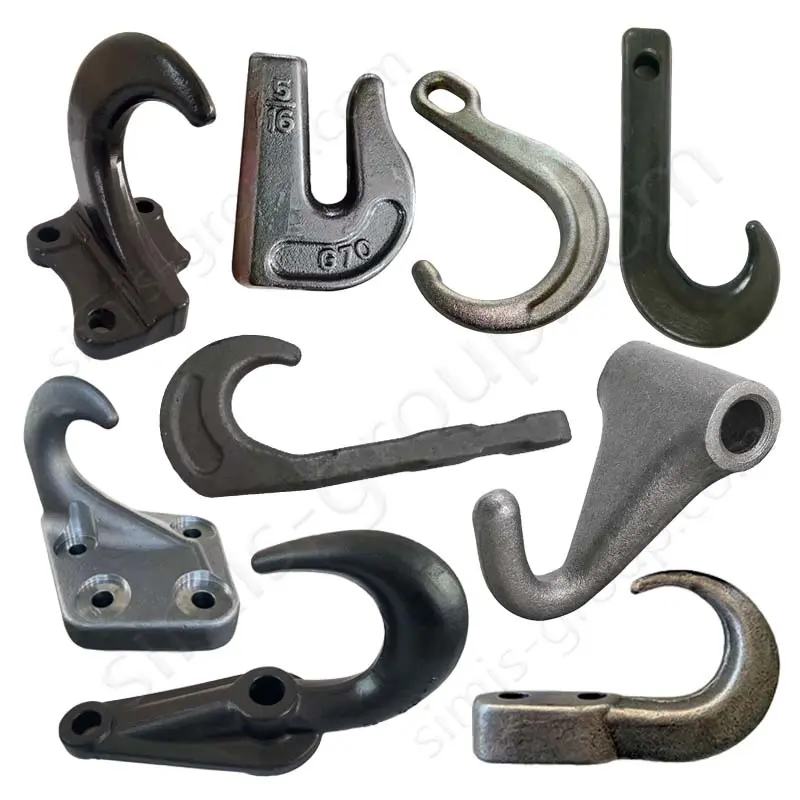
SIMIS also supplies related custom tow hooks and metal brackets and connectors for approved applications. Those products are distinct from a receiver-type ball mount and use their own drawings and material requirements.

The installed towing-hitch image above illustrates the relationship between a receiver-style ball mount and a hitch ball. The image does not establish that every SIMIS order includes the ball, hitch pin, receiver or a fully rated assembly.
Types of Custom Ball Mounts, Receiver Shanks and Towing Brackets
SIMIS can manufacture different metal configurations for vehicle and equipment manufacturers. The appropriate blank-forming process depends on the geometry, material grade, required volume and customer-approved application.
| Product Type | Typical Metal Features | OEM Manufacturing Considerations |
|---|---|---|
| Straight Ball Mount Bodies | Receiver-type shank and ball attachment platform with minimal vertical offset. | Solid forged steel bodies or customer-defined fabricated steel constructions. |
| Drop and Rise Ball Mounts | Angled or offset metal connection between the receiver shank and ball platform. | Suitable closed-die forged shapes or approved formed-and-welded steel parts. |
| Forged Receiver Shanks | Rectangular or square-section metal shank with defined hitch pin location. | Customer-specified steel or wrought aluminum forging, subject to the actual design. |
| Adjustable Mount Metal Components | Individual mounting heads, support arms and connection blocks for adjustable arrangements. | Separate forged, cast or fabricated parts, not assumed to be a complete adjustment assembly. |
| Heavy-Duty Towing Brackets | Substantial mounting bodies, plate-supported attachment sections or forged connections. | Forged alloy steel or approved structural fabrication with project-defined load requirements. |
| Approved Cast Towing Components | Mounting brackets or specially shaped body components using authorized casting grades. | Ductile iron or cast aluminum only when the customer approves the relevant material and service conditions. |
Forged Steel Drop and Rise Ball Mounts
Drop and rise ball mounts contain an offset section that changes the vertical position of the ball attachment relative to the hitch receiver. Some designs use a solid forged body; others are produced from formed steel and welded connections. Forging dies are selected for the approved shape, while plate and shank fabrication is used where the drawing calls for a fabricated product.
SIMIS produces suitable steel forging blanks with customer-specified receiver and attachment geometry. Finished hole dimensions, fastening features and corrosion protection are provided within the agreed scope rather than treated as one standard configuration for all towing products.
Forged Shanks, Eyes and Special Towing Connections
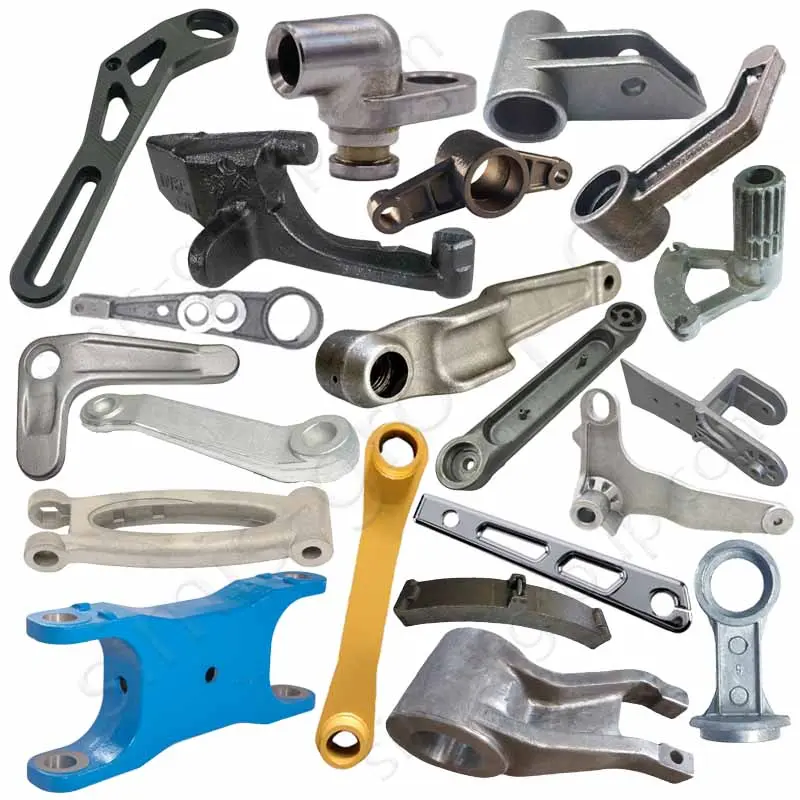
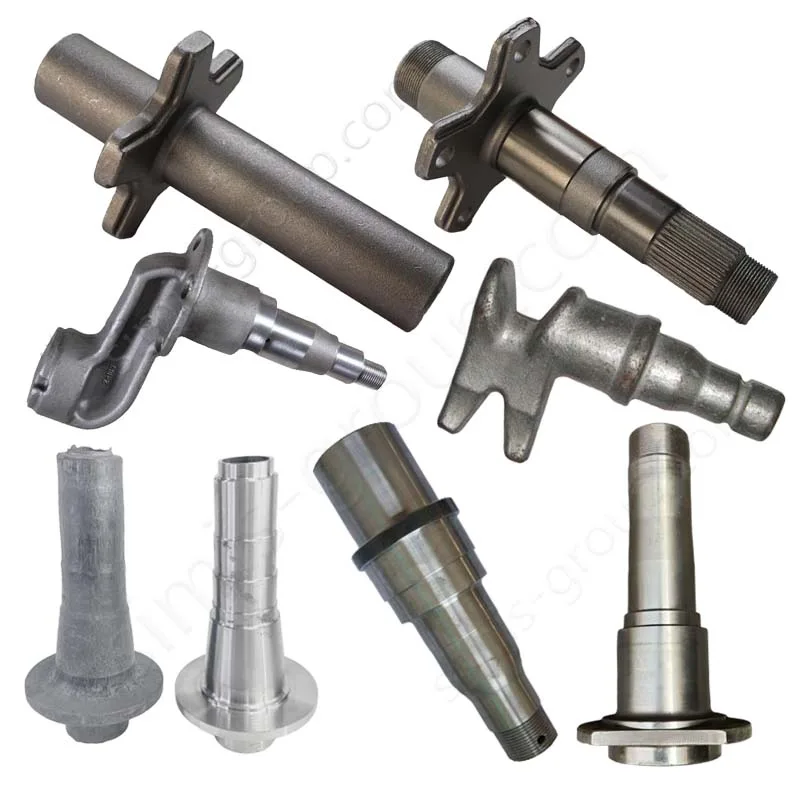
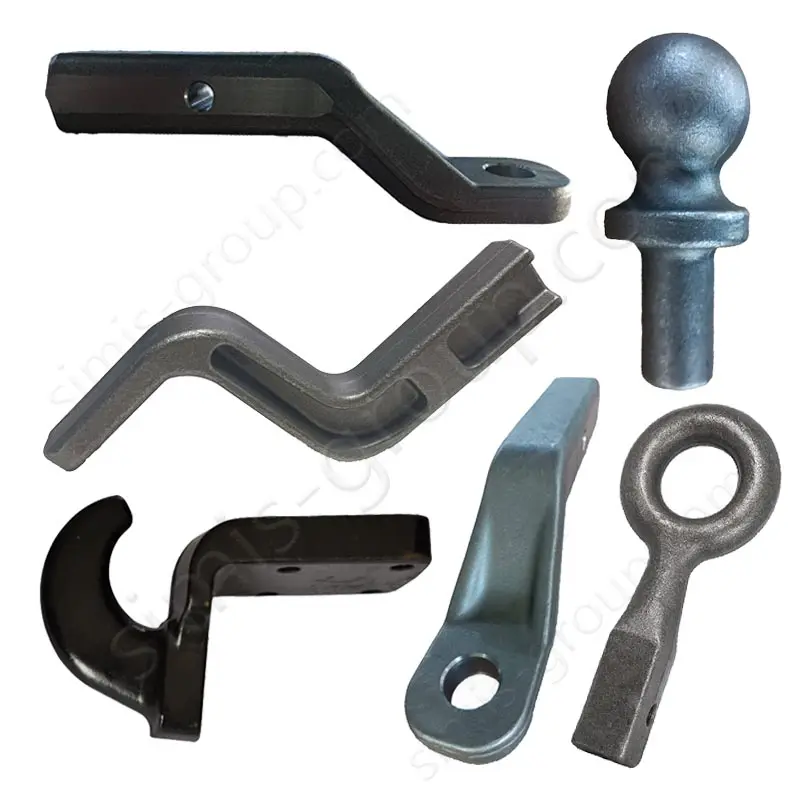
Towing equipment also uses forged eye-ended links, connection elements and other components that may resemble portions of a ball mount but serve a different purpose. The manufacturing images retained from the source page include batches of hot-forged blanks and eye-ended metal parts. These photographs illustrate steel forming capability; they should not be treated as evidence that each pictured blank is a finished, load-rated trailer hitch ball mount.

The batch of steel blanks above is retained as an original manufacturing photograph. It depicts unfinished forged metal components rather than a completed towing assembly.
Closed-Die Forging, Aluminum Forging and Casting Processes for Hitch Ball Mounts
SIMIS provides several manufacturing routes for customer-specific hitch and towing components. Closed-die steel forging is the principal route for suitable one-piece solid mount bodies and forged shanks. Aluminum forging, selected metal casting and steel fabrication are additional options for components whose drawings and required qualification permit those processes.
| Manufacturing Process | Suitable Components | Manufacturing Characteristics |
|---|---|---|
| Steel Closed-Die Forging | Solid steel shanks, offset bodies, towing connection arms and integral bosses. | Heated wrought steel is shaped between dedicated dies to produce a near-net-shape blank. |
| Wrought Aluminum Closed-Die Forging | Approved lightweight shanks and aluminum ball mount bodies. | Compatible wrought aluminum alloys are deformed in dies; alloy and temper must be specified. |
| Ductile Iron Sand Casting | Customer-authorized mounting brackets and complex cast bodies. | Molten ductile iron solidifies in a sand mold; the product is a casting, not a forged steel part. |
| Aluminum Gravity Permanent Mold Casting | Approved aluminum mount-related bodies and brackets with suitable geometries. | Molten casting alloy is poured into reusable metal molds; not a universal towing-rating solution. |
| Steel Plate Forming and Fabrication | Certain bent or welded shank-platform mount configurations. | Steel stock and plate components are formed and joined to the customer-approved construction. |
| Shell Mold Casting | Selected smaller compatible cast iron or cast steel brackets and fittings. | Resin-bonded sand shells form detailed cast shapes; feasibility depends on material and size. |
Closed-Die Steel Forging for Solid Ball Mounts
In closed-die forging, a steel billet is heated and placed between shaped forging dies. The material is compressed into the required external component shape, such as a shank with an integral angled or enlarged connection section. Flash removal and any further specified work prepare the blank for its final supply condition.
This method is relevant to suitable carbon steel and alloy steel towing components where the customer has specified a forged construction. SIMIS provides custom closed-die drop forging and steel forging services for OEM metal parts. Forging does not, by itself, establish a towing load class, fatigue endurance or compliance with a vehicle equipment standard.

Aluminum Alloy Forging for Approved Lightweight Mounts
Certain lightweight towing parts may be manufactured from wrought aluminum alloys using closed-die forging. Suitable alloys can include specified 6061 or 6082 grades, while other high-strength wrought alloys are considered when the drawing and manufacturing requirements permit. Alloy selection, required temper, surface condition and attachment configuration must follow the customer specification.
SIMIS offers custom aluminum alloy forging for suitable structural metal parts. A forged wrought aluminum blank must not be confused with a cast aluminum product, and neither should be described as suitable for every receiver size or trailer weight classification.
Ductile Iron Sand Casting and Shell Mold Casting
Sand casting can produce complex metal shapes with integrated ribs, bosses and attachment features. For an approved ductile iron towing component, molten iron is poured into a prepared mold and solidifies into the required casting. The selected mechanical grade and casting condition are defined by the purchase order.
SIMIS provides sand casting, ductile iron casting and shell mold casting services. Ductile iron is distinct from gray cast iron and from forged steel. Use of any iron casting in a towing load path requires explicit customer approval and the applicable component validation.
Gravity Permanent Mold Casting for Aluminum Components
Gravity permanent mold casting uses a reusable metal mold to form suitable aluminum casting alloys. It can be considered for compatible aluminum mounting parts with customer-approved wall thicknesses, shapes and mechanical properties. A356-type aluminum casting alloys and wrought 6061 or 6082 forging alloys have different product standards and should not be substituted for one another.
SIMIS offers gravity permanent mold casting for suitable OEM metal parts. Production feasibility and the final towing application must be assessed for the actual drawing; the process is not automatically qualified for a particular ball mount load rating.
Steel Plate Fabrication and Welded Mount Constructions
Some ball mounts are fabricated instead of being one-piece forgings. A typical fabricated configuration may use a receiver shank, shaped steel plate or structural section, and a ball attachment platform joined according to the approved drawing. Such products must be identified as fabricated components rather than as castings or monolithic forged bodies.
SIMIS provides metal fabrication for suitable customer-defined brackets and related parts. Welding, finishing and any required verification are included only when specified by the customer.

Carbon Steel, Alloy Steel, Aluminum and Ductile Iron Materials for Ball Mounts
SIMIS manufactures metal towing components in specified wrought and cast materials. A forged steel shank, cast ductile iron bracket, forged aluminum body and cast aluminum mounting part are different products with different manufacturing specifications. The customer determines which material is approved for each load-bearing application.
| Material / Grade | Relevant Characteristics | Possible OEM Use |
|---|---|---|
| AISI 1045 / C45 Forging Steel | Medium-carbon wrought steel used for suitable structural and mechanical forgings. | Customer-specified forged mount bodies and related towing connections. |
| AISI 4140 / 42CrMo4 Alloy Steel | Related chromium-molybdenum forging steel grades with separate standards. | Suitable alloy steel shanks, solid forged mount bodies and connection components. |
| Other Specified Carbon or Alloy Steels | Wrought steel grades supplied under the applicable purchase specification. | Forged or fabricated towing components selected by the OEM. |
| 6061 / 6082 Wrought Aluminum | Wrought aluminum alloys used for compatible forgings; temper and product form matter. | Customer-authorized lightweight ball mount bodies and shanks. |
| 7075 Wrought Aluminum | High-strength aluminum forging alloy with specified temper and environment limitations. | Selected special towing components where the OEM expressly specifies the alloy. |
| A356 Aluminum Casting Alloy | Aluminum-silicon-magnesium casting alloy, distinct from wrought forging grades. | Approved gravity mold or sand-cast mount-related parts. |
| ASTM A536 Ductile Iron | Spheroidal graphite cast iron with grade-dependent mechanical requirements. | Customer-approved cast mounting bodies and brackets, not universal towing components. |
| Specified Cast Steel / Stainless Steel | Casting materials have separate specifications from wrought carbon steel and 304/316 stainless. | Specially approved cast brackets or corrosion-exposed fittings. |
Forged Carbon Steel and Chromium-Molybdenum Alloy Steel
Carbon steel forgings are relevant to solid towing components with compatible dimensions and shaping requirements. AISI 1045 and C45 are commonly referenced medium-carbon steel grades, while AISI 4140 and 42CrMo4 represent related chromium-molybdenum low-alloy steel families. These grade pairs must be checked against their actual governing standards, not treated as universally identical.
SIMIS manufactures appropriate steel parts to the grade and condition specified on the drawing. A material name alone does not determine receiver fit, allowable tongue weight or finished component rating.
Wrought Aluminum Forgings Versus Cast Aluminum Alloys
Wrought aluminum products such as 6061 and 6082 forgings are made from metal stock shaped by deformation. By contrast, A356 aluminum casting alloy is poured in molten form into a mold. The production route affects the material specification and the properties that must be verified for the completed component.
Where an OEM selects forged aluminum for weight reduction, the actual alloy, temper, finished configuration and required qualification should be stated in the purchase documents. Aluminum castings should not be advertised as interchangeable with aluminum forgings or steel ball mounts simply because all are metal towing components.
Ductile Iron and Corrosion-Resistant Metal Options
Ductile iron is a cast iron family with spheroidal graphite, available in different mechanical grades under standards including ASTM A536. It can be used for some structural castings but should not be presented as approved for every trailer hitch application. Gray iron is not an automatic substitute for ductile iron.
Stainless steels or specified corrosion-resistant finishes may be used for selected trailer-related fittings. Wrought 316 stainless steel and cast CF8M stainless steel are different material grades. The material and environmental requirements are determined by the customer, and corrosion resistance alone does not establish towing capacity.

The original photograph above shows forged eye-ended metal blanks. It documents the forming process, not a complete assembled receiver ball mount or an independently verified towing rating.
Applications of Custom Trailer Hitch Ball Mount Components
Passenger Vehicles, SUVs and Recreational Trailers
Receiver-style ball mounts are used with compatible passenger vehicles and SUVs towing recreational or utility trailers. Their geometry depends on the approved receiver interface, required ball position and towing assembly configuration. SIMIS manufactures suitable steel and aluminum metal parts for OEM and trailer equipment customers according to their drawings.
Pickup Trucks, Utility Vehicles and Commercial Fleets
Pickup trucks and utility fleets may require a variety of ball mount shanks, drop or rise configurations and related mounting components. Some products are forged, while others use fabricated steel constructions. SIMIS supplies suitable custom automotive and truck metal parts in the specified material and supply condition.
Agricultural and Off-Road Towing Equipment
Farm vehicles, utility machinery and other off-road equipment may use custom towing connections for transport and equipment movement. A ball mount and a tow hook or drawbar eye are different connection systems; each must be manufactured to the correct customer drawing and intended operating specification.
Boat Trailers and Corrosion-Exposed Applications
Marine-adjacent towing equipment may require additional corrosion protection or specified corrosion-resistant metal materials. SIMIS manufactures suitable mount and connection parts according to the approved alloy, coating and assembly interface requirements. A standard coating does not independently establish suitability for prolonged saltwater exposure or vehicle towing compliance.
Custom Trailer Hitch Ball Mount Forgings and Castings to OEM Drawings
SIMIS supplies drawing-based metal manufacturing for forged trailer hitch mount bodies, receiver shanks, compatible aluminum forgings, authorized ductile iron castings and custom fabricated towing brackets. Projects may be supplied as raw blanks or as finished metal parts with the specified attachment features.
The main manufacturing priority is the forming route and the correct material grade. Where ordered, final machining, heat treatment, corrosion protection, material documentation and component inspection are carried out according to the customer-approved technical requirements. These additional operations are not the focus of the product offering.
Trailer hitch ball mounts are safety-relevant towing components. Gross trailer weight (GTW), tongue weight (TW) and any applicable standard or legal requirements must be established for the specific part and completed towing assembly. SIMIS does not assume that a product meets all towing classes or has passed a particular certification merely because it was forged or cast.
Photographs of forged blanks and sample connections are provided to illustrate available metal forming work. The actual delivered part and its validated configuration are determined by the approved OEM drawing and purchase agreement.
Request a Quote for Custom Trailer Hitch Ball Mounts
SIMIS welcomes OEM inquiries for forged steel ball mounts, custom receiver shanks, drop and rise brackets, approved aluminum alloy parts and related cast or fabricated towing components. For a quotation, please provide the following information where available:
Product drawings: 2D production drawings or available 3D CAD models.
Mount configuration: Straight, drop/rise, adjustable-component or separate shank/bracket part; include whether the towing ball is part of the ordered scope.
Specified material: Forging or casting alloy/grade, and the required material condition where relevant.
Connection dimensions: Receiver shank size and length, hitch pin hole, ball mounting hole and drop/rise offset where applicable.
Order and application: Estimated quantity, vehicle or equipment use, required customer-defined GTW/TW limits and whether raw blanks or finished metal components are required.
Any specific towing-standard verification, approved test requirements, coating or additional inspection conditions can be included in the purchase specification. SIMIS will quote only the agreed manufacturing and delivery scope.
Send your custom trailer hitch ball mount drawings and OEM inquiry to SIMIS: info@simis-group.com