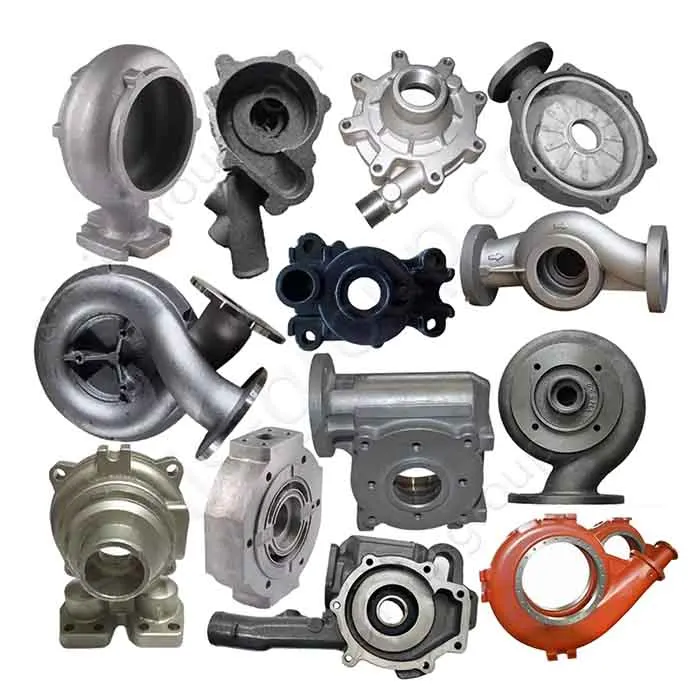
Custom Harvester Swing Arm Bracket Manufacturer
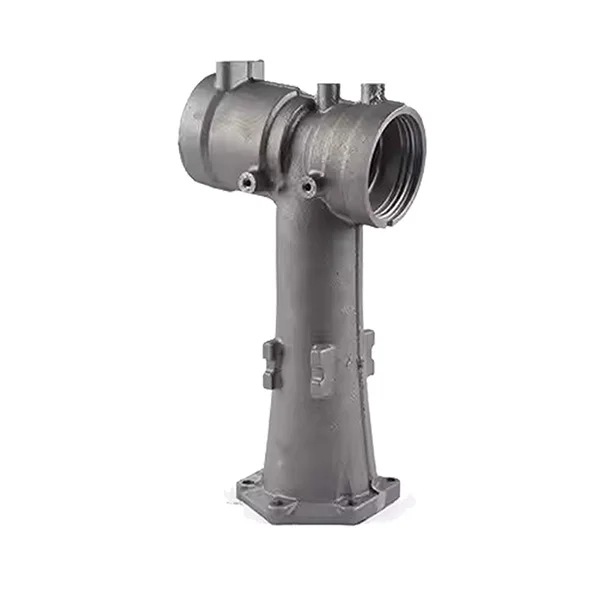
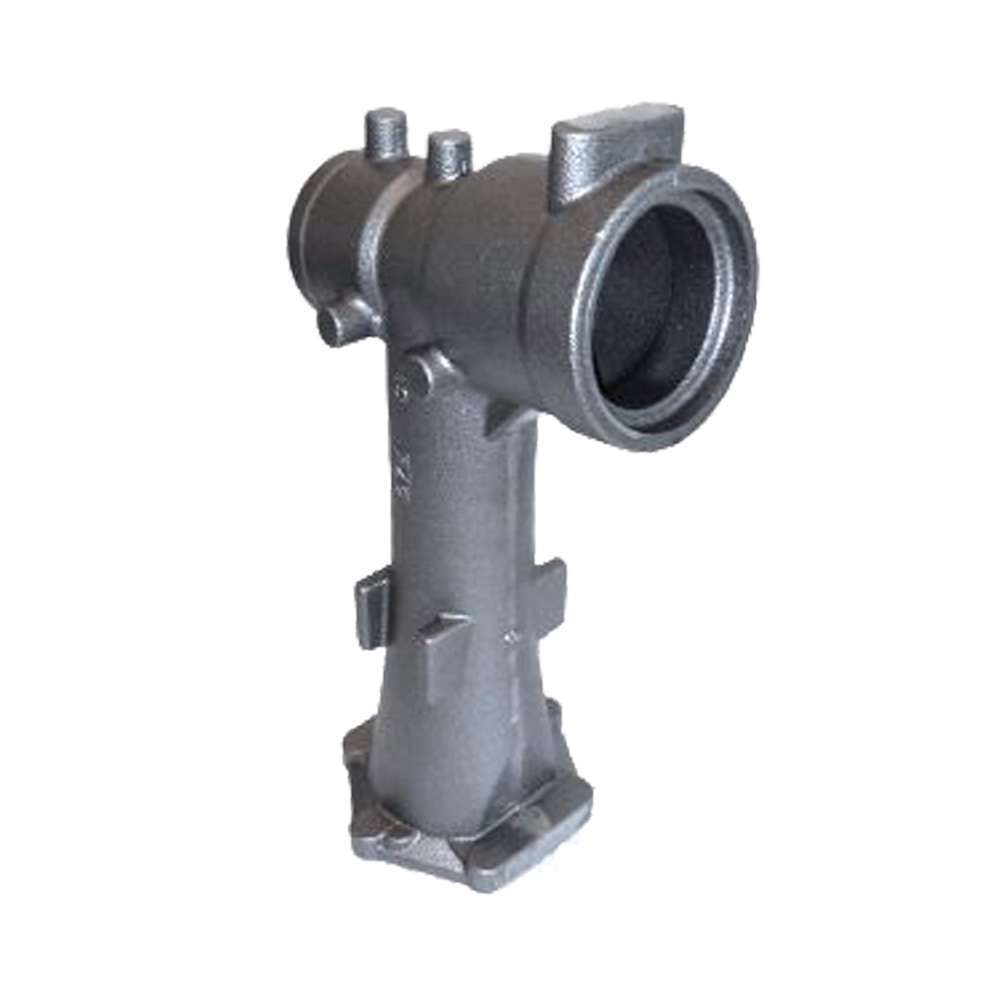
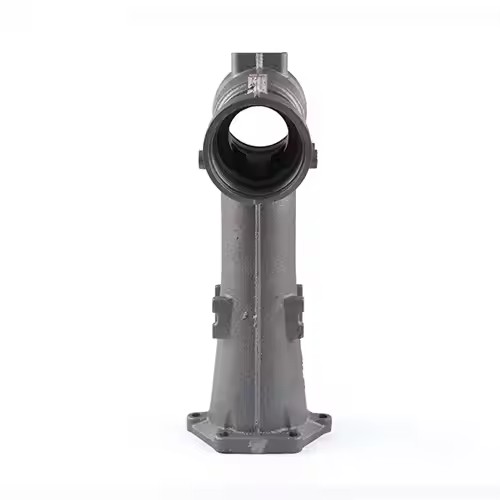
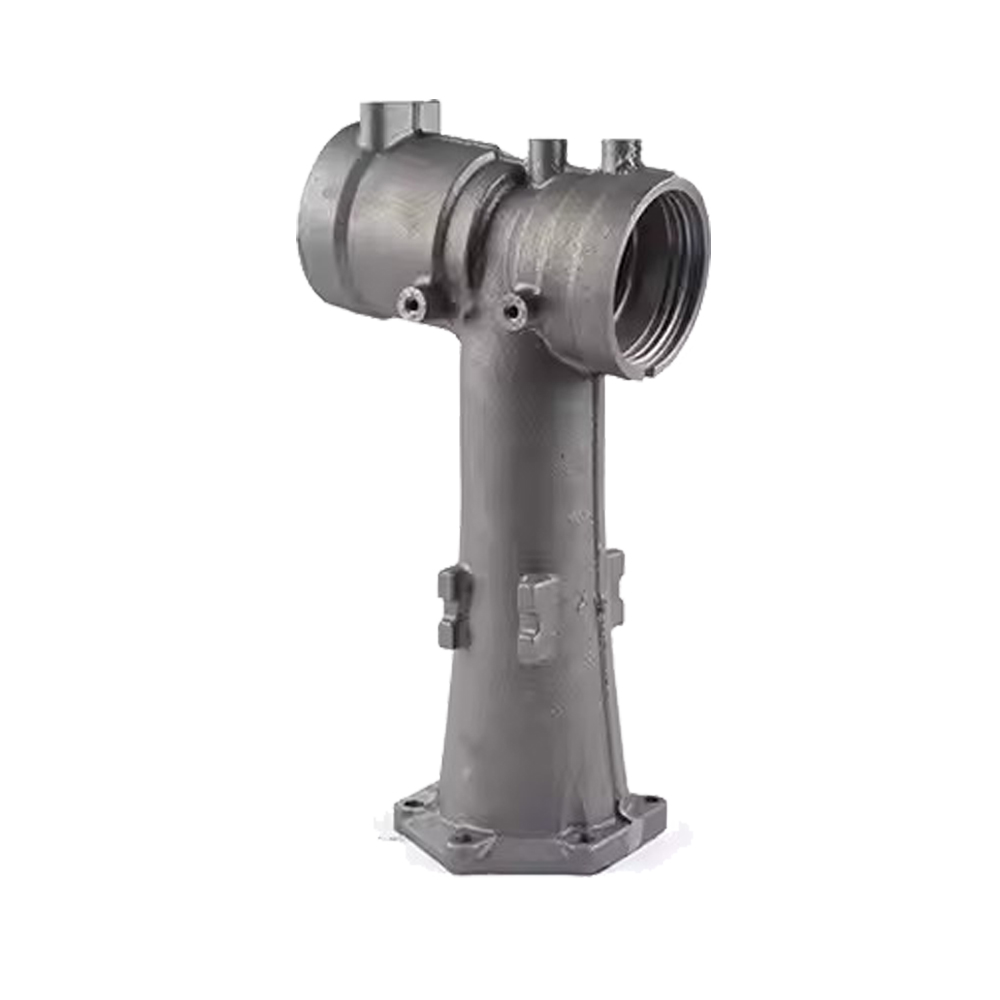
Harvester Swing Arm Bracket

Custom Harvester Swing Arm Brackets: OEM Manufacturing FAQs
Can SIMIS manufacture cast iron harvester swing arm brackets from our drawings?
Yes. SIMIS supports drawing-based OEM manufacturing of cast iron harvester swing arm brackets and agricultural machinery pivot supports. Depending on the design, production can involve ductile iron or gray iron casting, CNC machining, heat treatment and protective finishing. We review the pivot bore, mounting geometry, material requirements, anticipated loads and order quantity before proposing a manufacturing route.
Is ductile iron or gray iron more suitable for a harvester pivot bracket?
Ductile iron is often the stronger candidate when the bracket transfers substantial alternating, bending or impact loads because suitable grades provide specified tensile properties and elongation. Gray iron may be considered for less demanding support structures where its material characteristics are appropriate. Neither choice should be made from appearance alone: grade selection requires the actual load case, geometry and applicable engineering specification.
Can the pivot pin holes and bushing seats be precision machined?
Yes. After casting, functional features can be CNC machined according to customer drawings. These may include pivot bores, bushing seats, mounting faces, bolt holes and locating bosses. Where two supporting ears share a pivot pin, their bore alignment and spacing can be especially important. Final fits and geometric tolerances depend on the specified pin, bushing, lubrication arrangement and assembly design.
How are fatigue and impact requirements evaluated?
A harvester bracket can experience changing loads as a cutting platform, reel mechanism or other attached assembly moves across uneven terrain. Material grade, wall thickness, fillets, bore positions and casting integrity all influence the design. When fatigue or proof-load testing is necessary, the customer should define the load spectrum, test arrangement, acceptance limits and required documentation. Casting quality alone does not establish a guaranteed fatigue life.
What information should we provide for a harvester bracket quotation?
Please provide a 2D drawing and available 3D model, specified material grade, overall dimensions, estimated part weight, pivot pin or bushing details, mounting-hole pattern, critical tolerances, operating loads and estimated order quantities. Include the required coating, heat treatment, inspection reports and any relevant fatigue or impact criteria. These inputs allow the proposed casting and machining process to be reviewed against the actual agricultural machinery application.
OEM Cast Iron Swing Arm Brackets for Agricultural Harvesters
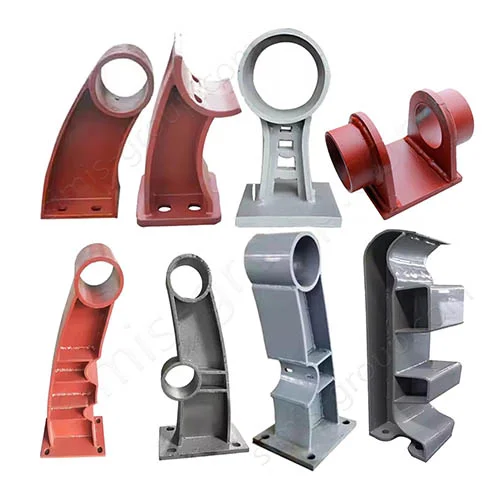
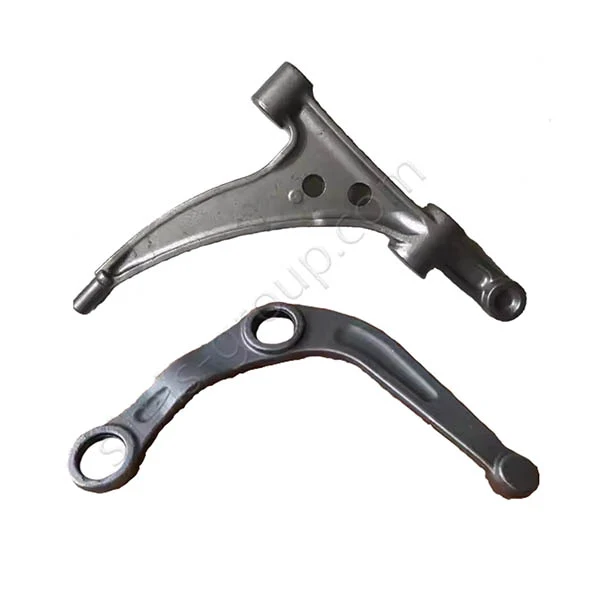
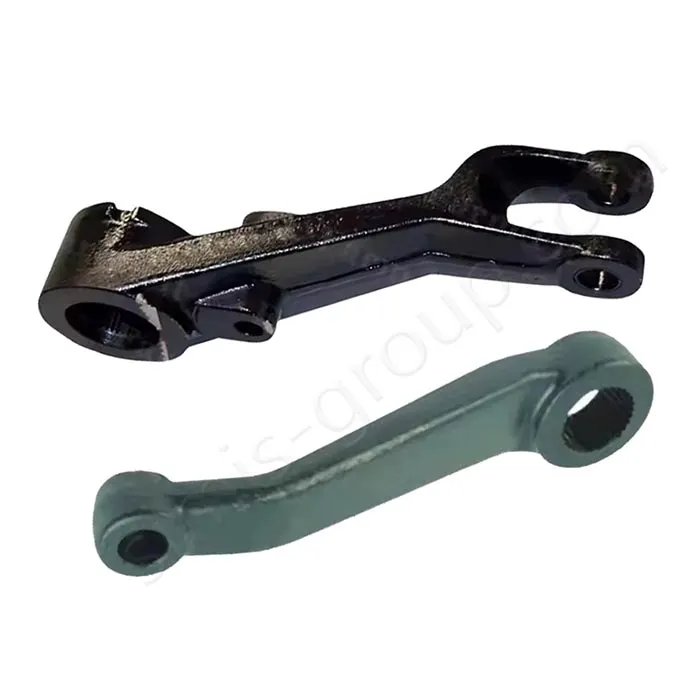
A harvester swing arm bracket is a structural support or connection component within an agricultural machine's moving mechanism. Depending on the equipment design, it may locate a pivot pin, support an articulated arm, provide a mounting point for an actuator or connect a moving attachment to the main frame. The bracket's function is to maintain the specified connection geometry while transmitting forces into the supporting structure.
The bracket must be distinguished from the swing arm itself. The arm typically links moving parts and determines part of the mechanism's motion, while a mounting bracket may remain fixed to the machine frame. Some cast components combine both functions, so the customer's drawing and assembly model are essential for identifying the actual load path and critical dimensions.
SIMIS supports custom iron casting and machining for these drawing-defined agricultural components. Related equipment can require different support arrangements, from header adjustment mechanisms to reel supports and pivoting attachments. For broader component categories, see our agricultural machinery castings and forgings.
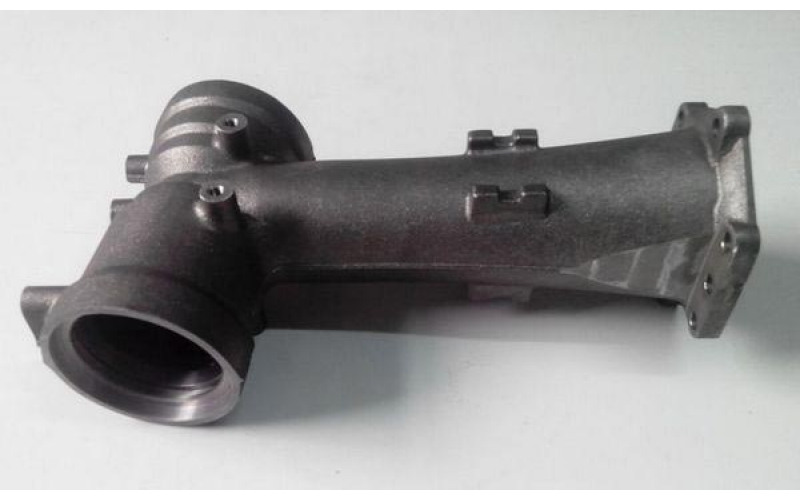
Casting Processes for Harvester Swing Arm Supports
Manufacturing starts with the bracket's geometry, material specification and production volume. A suitable casting method must provide the required external shape, appropriate casting quality and sufficient machining stock around the pivot and mounting interfaces. Complex geometry does not automatically justify a more expensive molding process.
Sand casting for heavy agricultural brackets
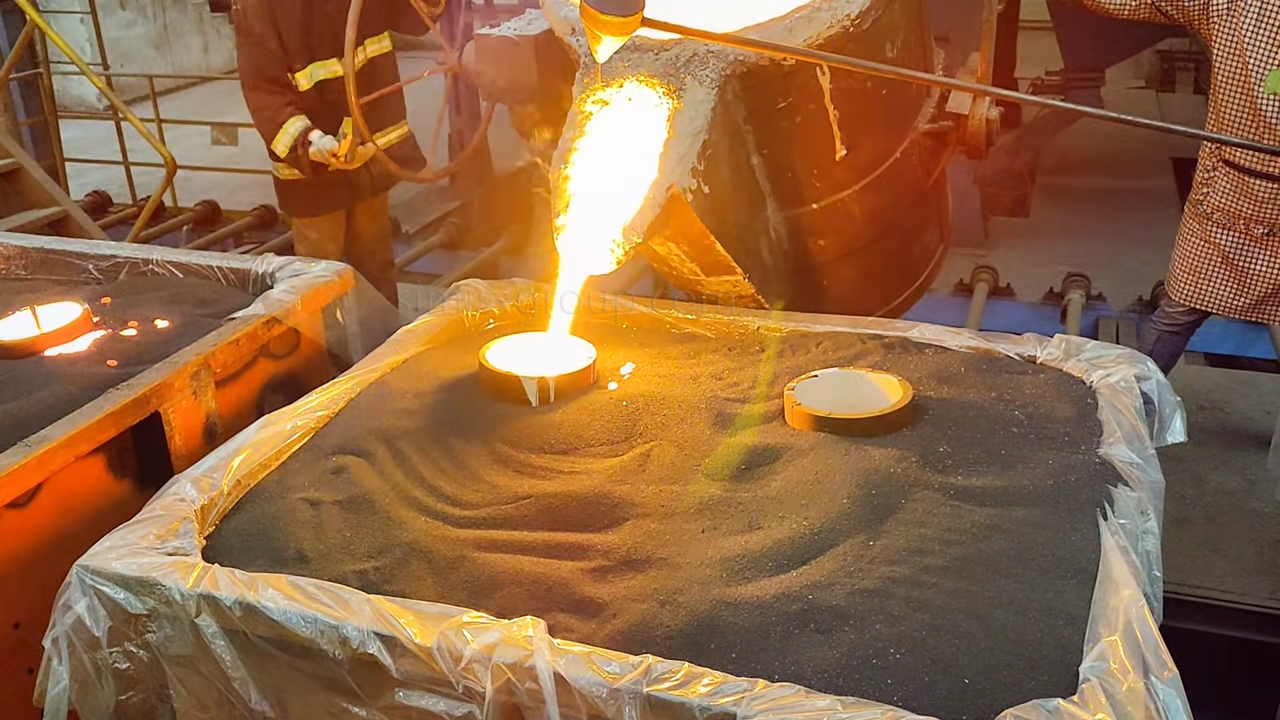
Sand casting is a candidate for cast iron brackets with integrated ribs, thick mounting bosses, elongated support sections and non-standard profiles. Pattern design must consider draft, parting lines, feeding and the transition between heavy pivot regions and thinner walls. SIMIS can evaluate these requirements through its sand casting foundry.
Shell mold casting for suitable repeat-production parts
For smaller or medium-sized brackets produced in repeated batches, shell mold casting may offer useful dimensional consistency and surface definition. This does not eliminate the need to machine critical pin bores or mounting faces. Tooling economics, material requirements and part size must be reviewed before selecting the process.
Lost foam casting for selected complex geometries
Some cast brackets containing integrated webs, unusual recesses or complicated contours may be considered for lost foam casting. However, pattern stability, material suitability, gas control and the quality of critical load-bearing sections need assessment. This process does not inherently guarantee improved fatigue strength or freedom from internal defects.
| Process | Potential Fit | Key Considerations |
|---|---|---|
| Sand Casting | Medium and large iron brackets with ribs and bosses | Feeding, soundness, section thickness and machining allowance |
| Shell Mold Casting | Suitable repeat-production bracket geometries | Tooling, dimensional repeatability and casting size |
| Lost Foam Casting | Selected complex cast features | Pattern quality, process control and structural integrity |
| CNC Finish Machining | Pivot bores, bushing seats and mounting interfaces | Datum strategy, bore alignment and specified fits |
Ductile Iron vs. Gray Iron for Harvester Brackets
The material must match the bracket's actual mechanical function. Agricultural machinery may encounter vibration, impacts, repeated movement and uneven loading, but not every bracket experiences the same forces. The choice between gray iron and ductile iron should follow the specified strength, elongation, loading and casting requirements.
Ductile iron for selected loaded pivot supports
Ductile iron contains graphite predominantly in nodular form and can offer useful combinations of tensile strength and elongation. It may be considered where a bracket is subject to substantial changing loads or where the drawing specifies a ductile iron grade. Common grade systems include ASTM A536 and EN-GJS designations under applicable standards. The required mechanical properties, section thickness and testing must be confirmed for the individual casting. See our custom ductile iron parts capabilities.
Gray iron for appropriate support applications
Gray iron can provide castability, machinability and useful damping characteristics for suitable support structures. However, its flake graphite structure results in comparatively limited tensile ductility. It should not be described as automatically suitable for high-impact or fatigue-critical pivots. Projects considering this material can review SIMIS custom gray iron castings.
| Material | Potential Advantages | Important Limitations |
|---|---|---|
| Ductile Iron | Specified strength and elongation grades for engineered cast structures | Nodularity, local properties, fatigue conditions and impact requirements |
| Gray Iron | Machinability and damping for suitable support components | Limited ductility and reduced suitability for certain impact-loaded designs |
| Cast Steel | Alternative material route for selected structural geometries | Different casting, heat-treatment and inspection requirements |
| Forged Steel | Potential option for approved highly loaded components | Geometry, tooling, machining and application validation |
Changing an existing steel bracket to cast iron can affect geometry, stiffness, fatigue response and attachment details. Such substitutions must be reviewed and approved by the agricultural equipment manufacturer. A material data sheet alone is not evidence that a redesigned bracket will achieve the required service life.
Load Paths, Fatigue-Sensitive Features and Casting Design
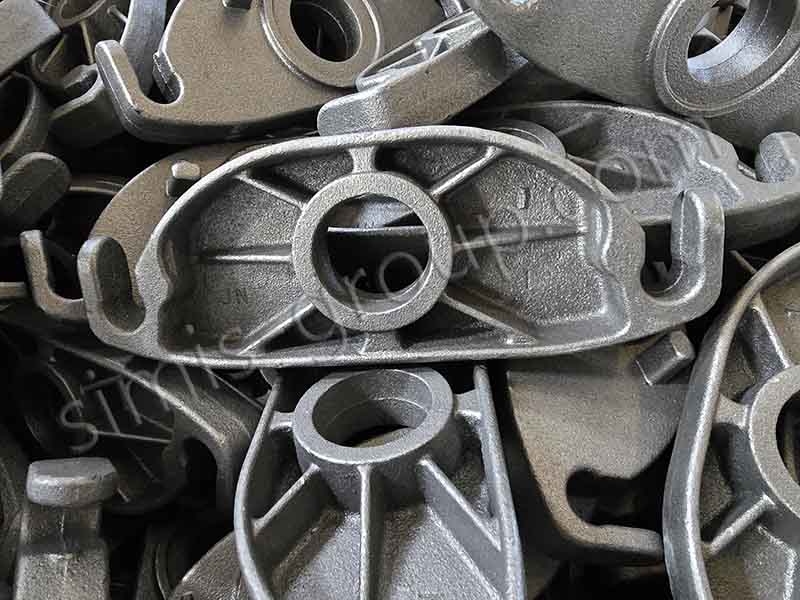
A swing arm bracket transfers loads through its pivot and mounting interfaces. Depending on the mechanism, these loads may include shear, bending, torsion and moments caused by an offset force. The bracket's local geometry must therefore be evaluated using the actual machine arrangement, rather than assuming all agricultural brackets experience the same loading direction.
Pivot bosses and reinforcement ribs
Thickened pivot bosses and reinforcing ribs may be used to support the designed load path. Their dimensions should be coordinated with the pin or bushing, required bearing area and casting process. Excessive local thickness can create feeding and shrinkage challenges, while overly thin webs may be unsuitable for the specified loads.
Fillet radii and changes in section
Sharp transitions around bolt bosses, ribs and pivot eyes can produce local stress concentrations. Appropriate radii and gradual section changes may improve manufacturability and structural behavior when they are compatible with the approved design. Any geometry change affecting assembly clearance or strength must be approved by the customer's responsible engineer.
Casting integrity in critical sections
Shrinkage, inclusions, inappropriate graphite structure or other casting conditions may influence mechanical performance. Process planning should address critical thick sections and their inspection access. Although manufacturing controls can reduce defect risks, they cannot guarantee that every cast bracket is free from all internal discontinuities.
Precision CNC Machining of Pivot Bores and Mounting Faces
After casting and cleaning, selected features may require machining to achieve the drawing's functional tolerances. SIMIS can review CNC machining of cast iron components for pivot holes, bushing seats, locating bosses, bolt patterns and mounting surfaces.
Pivot bore diameter and cylindrical accuracy
A pivot bore may receive a plain bushing, rolling bearing or direct pin connection. Bore diameter, roundness, cylindricity, surface roughness and fit should be specified for the chosen arrangement. A generic tolerance such as H7 should not be assumed without reference to the mating component and the customer's design.
Alignment of double-ear pivot supports
Where two fork-like ears support a common pin, the relative alignment of their bores and the gap between the ears are important. Depending on geometry and machining access, line boring or a coordinated machining setup may be considered. The drawing should specify the bore-axis relationship and relevant datums rather than relying on an undefined requirement for perfect coaxiality.
Mounting-hole position and chassis interfaces
The mounting-hole pattern, support face and any locating features must position the bracket correctly on the harvester frame. Flatness, hole position and perpendicularity should be controlled where functional. An as-cast surface may be acceptable in some applications, while a precision locating face may require machining in others.
Pivot Pins, Bushings and Field-Service Considerations
The bracket and pivot hardware operate as part of a mechanical joint. A dimensionally accurate bracket alone cannot guarantee smooth motion or minimal wear without the correct pin, bushing, lubrication and assembly conditions. These items should be identified during the engineering review.
Press-fit bushings and replaceable wear elements
Some pivot brackets use replaceable bushings to separate the wear interface from the cast body. The required interference fit, bushing material, installation method and resulting inside diameter must be defined by the customer. Excessive interference may stress a thin boss, while insufficient retention may allow unwanted bushing movement.
Pin retention and assembly clearances
Pivot pins may use shoulders, retaining rings, bolts or other locking arrangements. The bracket must provide access for installation and maintenance without interfering with the movement of adjacent components. Adequate clearance should be evaluated throughout the approved swing range.
Dust, crop residue and lubrication access
Harvesting environments can expose joints to dust, mud, moisture and crop residue. Grease passages, seals, shields and accessible maintenance features may therefore be important. Their necessity and design depend on the bearing arrangement and the equipment manufacturer's service plan. A cast bracket cannot independently prevent contamination of the complete pivot assembly.
For manufacturing of the actual articulating member rather than its fixed support, SIMIS also offers custom link arm manufacturing, where center-to-center joint spacing and moving-link geometry are primary considerations.
Heat Treatment, Protective Coatings and Corrosion Control
Heat treatment may be specified to obtain particular ductile iron matrix properties, manage hardness or reduce residual stresses. The actual process depends on the selected grade, casting section and required mechanical condition. Not every harvester bracket requires the same heat treatment, and thermal processing does not correct an unsound casting. SIMIS can discuss appropriate heat-treatment options when defined by the project.
Surface preparation and agricultural coatings
Harvester brackets may require blasting, cleaning, priming and industrial painting to protect exposed surfaces. The selected system should reflect outdoor storage, moisture, fertilizer contact, cleaning chemicals and abrasion. E-coating, powder coating or other finishes may be considered where compatible with the material and customer requirements. See SIMIS surface treatment capabilities.
Protecting machined bores and functional interfaces
Coating thickness can change bore and mounting dimensions, particularly where a bushing or close-fit pin must be installed. Masking, selective coating or post-coating finishing should be considered according to the assembly plan. Surface protection does not establish a guaranteed corrosion-free service period, especially where coatings are damaged by repeated use.
Quality Inspection for Harvester Swing Arm Brackets
Inspection should cover both the casting material and the critical assembly features. The appropriate scope depends on the bracket's load case, applicable material grade, functional dimensions and any customer-specific validation requirements. It is important to distinguish material and dimensional inspection from proof of complete-machine fatigue performance.
| Inspection Item | Project-Specific Verification |
|---|---|
| Material Grade | Specified chemistry, mechanical properties and material reports |
| Graphite Structure | Nodularity or other metallographic checks where required by the grade |
| Pivot Bores | Diameter, roundness, alignment and bushing-seat dimensions |
| Mounting Features | Hole position, face geometry, bosses and functional datums |
| Casting Integrity | Visual acceptance and suitable NDT in specified regions |
| Surface Finish | Cleaning, coating condition and protected functional surfaces |
| Structural Testing | Defined proof-load or fatigue tests only when required by the project |
| Documentation | First-article reports, batch identification and agreed traceability |
Dimensional inspection and functional datums
CMM measurement, bore gauges or dedicated fixtures may be used to evaluate specified pivot and mounting dimensions. Inspection should follow the drawing's datum system so that the measured results reflect how the bracket fits the actual assembly. First-article inspection may be agreed for new tooling or revised designs.
Non-destructive examination and acceptance criteria
Magnetic-particle inspection or ultrasonic testing may be specified for suitable iron casting materials and locations. Each method has detection limits, and the procedure must establish examination coverage and defect acceptance criteria. Passing an inspection does not mean that every internal discontinuity has been detected or that fatigue life is guaranteed.
Fatigue validation and assembly-level responsibility
Fatigue behavior depends on the actual load history, geometry, local casting properties and joint assembly. Finite element analysis and fatigue testing may support an engineering validation program, but neither should be claimed without project-specific work and documented results. The agricultural machinery manufacturer remains responsible for evaluating the complete mechanism.
SIMIS can review agreed component inspection requirements and production documentation through its quality control process.
Applications in Harvesters and Agricultural Machinery
Combine harvester header mechanisms
Combine harvesters can use pivot supports in the mechanisms that position, guide or support the cutting header and associated moving structures. A bracket may require accurate pin locations and suitable clearance throughout the intended motion. The actual design must follow the combine manufacturer's approved load and kinematic requirements.
Reel support and adjustment assemblies
Harvesting reel support and adjustment systems may contain pivoting arms, fixed brackets and actuator connections. The functional requirements can include bore positioning, frame interface dimensions, repeated loading and environmental protection. A bracket should be evaluated with its mating pins, bearings and structural members.
Tractors and agricultural implements
Other agricultural machinery may require cast pivot supports for linkages, lifting mechanisms and implement adjustment systems. These applications can share manufacturing features with harvester brackets, but different operating loads and maintenance conditions may call for different material grades, geometry and inspection.
Heavy equipment with similar pivot supports
Construction and industrial equipment may also employ cast supports with reinforced bosses and machined pivot interfaces. Similar geometry does not establish interchangeability. Each application requires its own component drawing, material specification, installation arrangement and load validation.
Request a Quote for Custom Harvester Swing Arm Brackets
SIMIS supports drawing-based manufacturing of custom cast iron harvester swing arm brackets and related agricultural machinery components. Our manufacturing review can address casting feasibility, specified material grade, machining datums, heat treatment, protective finishing and an appropriate inspection plan.
For a detailed OEM quotation, please provide: 2D drawings and STEP or other available 3D files; required material grade and standard; overall dimensions and estimated casting weight; pivot pin or bushing specifications; mounting-hole positions; critical geometric tolerances; expected operating and shock loads; surface-treatment requirements; inspection documents; and estimated batch and annual quantities.
For brackets involved in safety-critical or fatigue-sensitive mechanisms, please identify the applicable testing requirements and the customer's design-validation responsibilities. Any change to the pivot geometry, load-bearing sections or material must be approved by the responsible equipment engineer before production.
Send your harvester swing arm bracket drawings and purchasing requirements to info@simis-group.com for a manufacturing feasibility review and quotation.