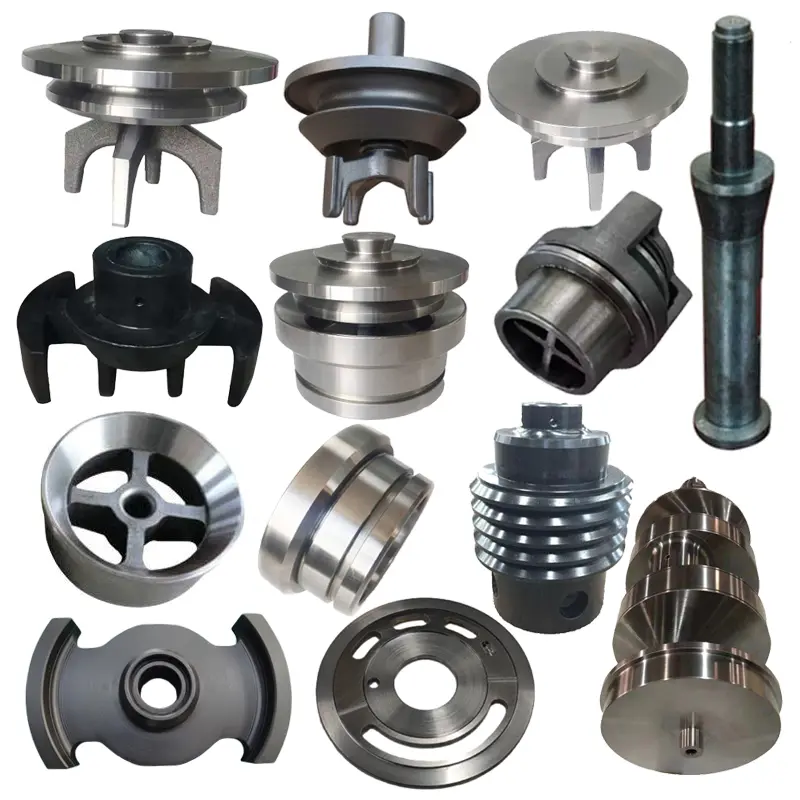
Custom Pump Housing Manufacturer
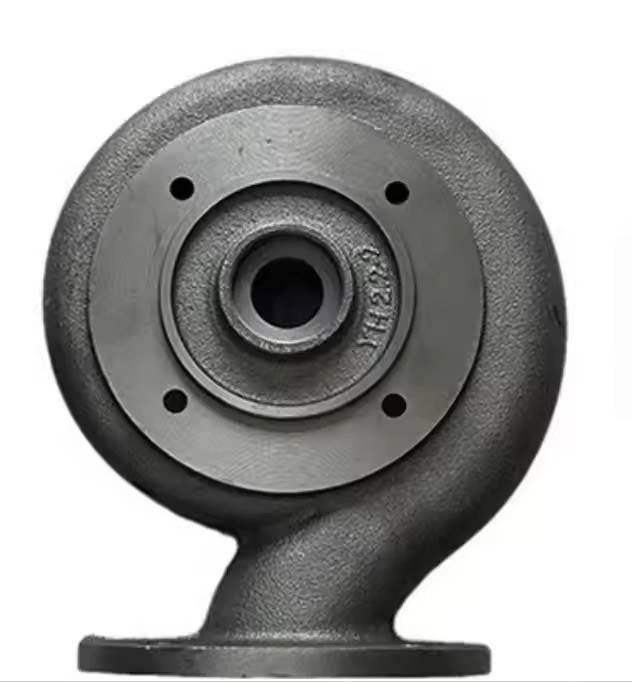
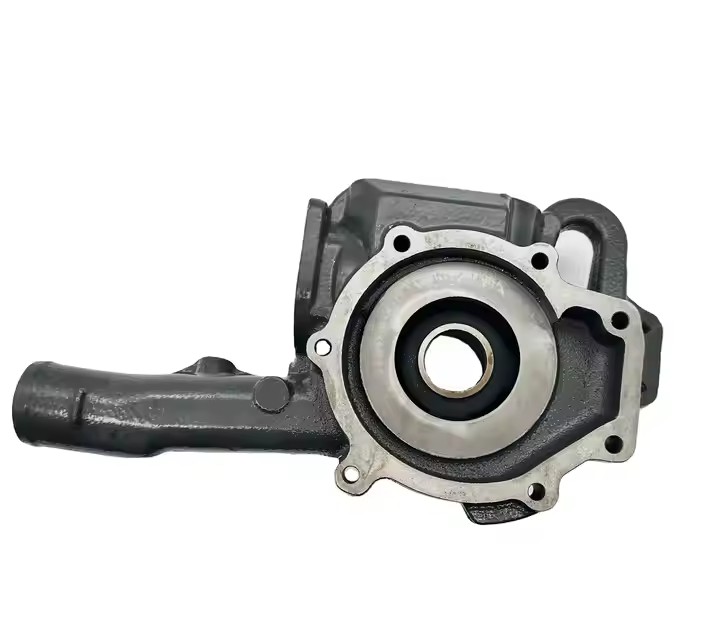
Pump Housing

Custom Pump Housing Manufacturing: OEM Frequently Asked Questions
1. Can SIMIS manufacture a pump housing from our 2D drawings or 3D CAD model?
Yes. SIMIS supports made-to-drawing pump housing and pump body projects rather than a fixed catalog of interchangeable pump casings. Share your casting model, machined drawing, section views of the internal flow passage, material specification and production quantity. Our team can review casting feasibility, machining access, reference datums and an appropriate inspection plan before quotation.
2. Which casting process is best for a custom pump casing?
The answer depends on the material, casing size, wall thickness, volute or chamber geometry, expected annual volume and pressure-boundary requirements. Sand casting is often appropriate for large iron and steel pump bodies; investment casting may suit smaller complex stainless steel components; aluminum die casting can be considered for certain high-volume, relatively compact housings. Process selection follows the drawing, not a one-process-for-every-pump rule.
3. Which pump housing dimensions require precision CNC machining?
Common controlled features include the impeller chamber and wear-ring seat, shaft or bearing-related locating bores where they form part of the housing, mechanical-seal interfaces, suction and discharge flanges, gasket lands, mounting feet and dowel holes. Their tolerances and datum relationships should come from the pump assembly design and the approved manufacturing drawing.
4. Can you manufacture pressure-containing pump casings and provide inspection records?
Projects can specify casting examination, material traceability, dimensional reports and hydrostatic or leak testing as appropriate. Test pressure, holding time, acceptance limits and any API, ASME, ISO or other requirements must be agreed for the particular casing. A machined casting is not automatically a certified or pressure-tested complete pump.
5. What information is needed for an OEM pump housing quotation?
Please provide STEP or other 3D CAD data, dimensioned 2D drawings, casting and machining scope, material grade, fluid medium, operating pressure and temperature, corrosion or abrasion conditions, annual demand, surface finish requirements and applicable tests. Mark critical fits, sealing areas and any surfaces that must remain as-cast.
Made-to-Drawing Pump Housings and Pump Bodies
SIMIS manufactures custom cast and machined metal components for pump OEMs, equipment builders and industrial maintenance projects. A pump housing may provide the main pressure-containing envelope, support the internal hydraulic geometry, locate mating pump components and connect to inlet and outlet piping. Actual functions vary: a centrifugal volute casing is different from an axial-flow housing, a split-case body or the casing of a positive-displacement pump.
For centrifugal designs, the volute profile, cutwater region, impeller clearance and suction/discharge transition require attention during casting design and finish machining. For other pump types, shaft support, sealing arrangements, internal chamber layout and connecting faces may take priority. SIMIS can discuss casting and subsequent CNC machining as linked manufacturing steps, with customer-approved drawings governing finished dimensions and acceptance.
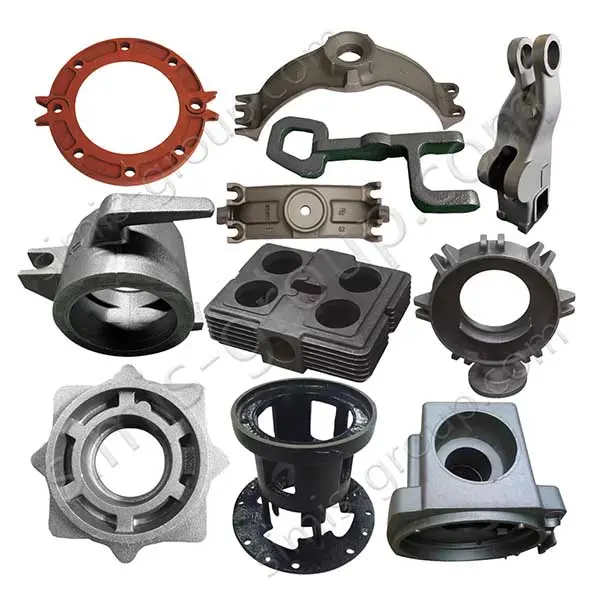
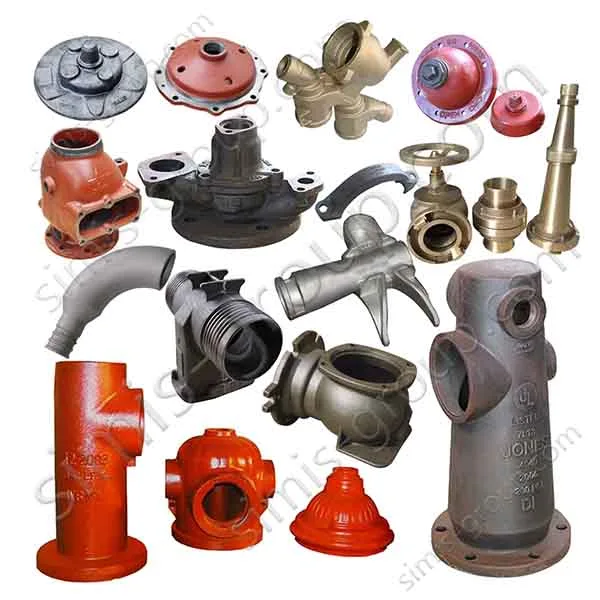
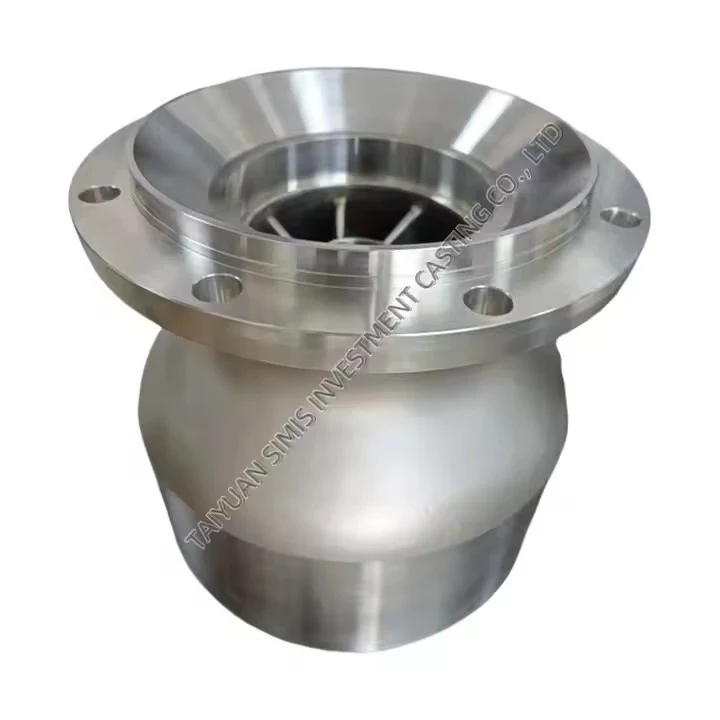
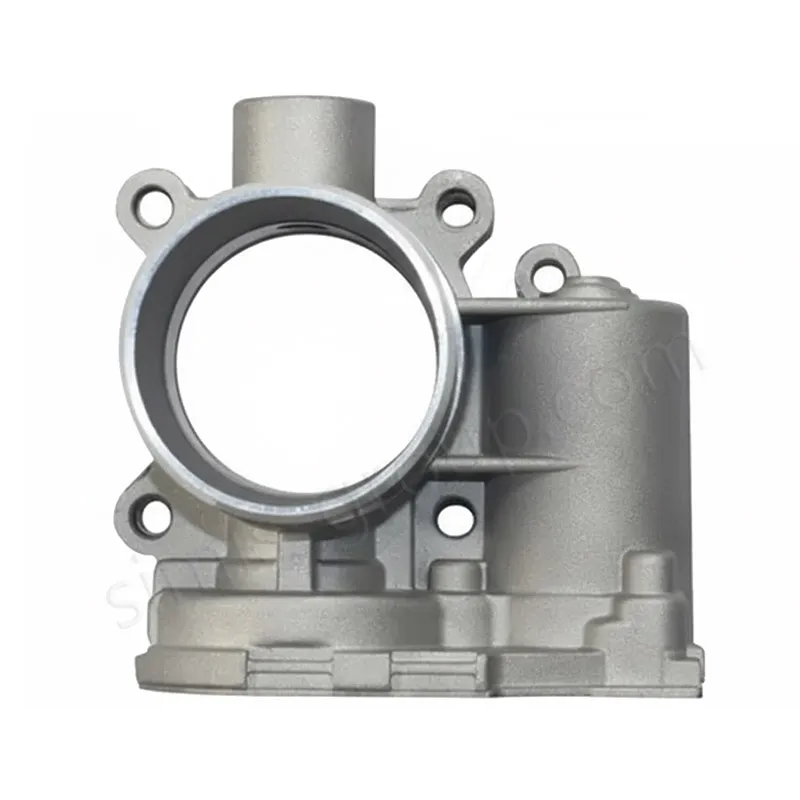
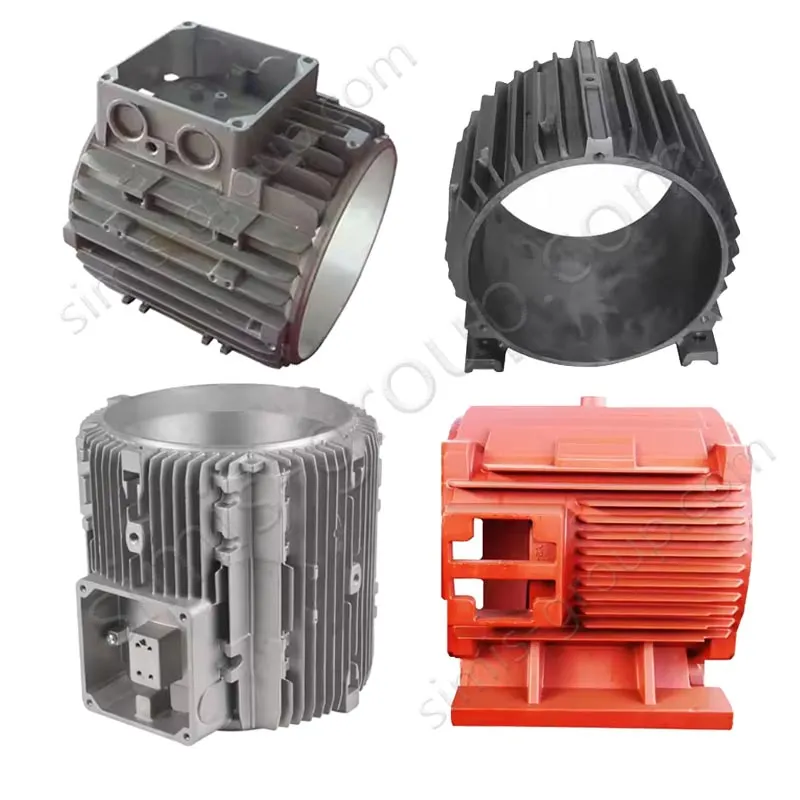
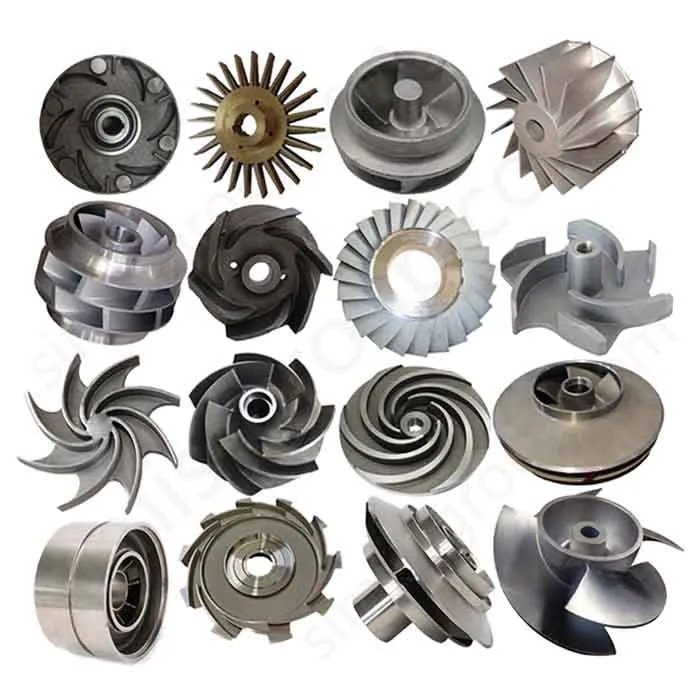
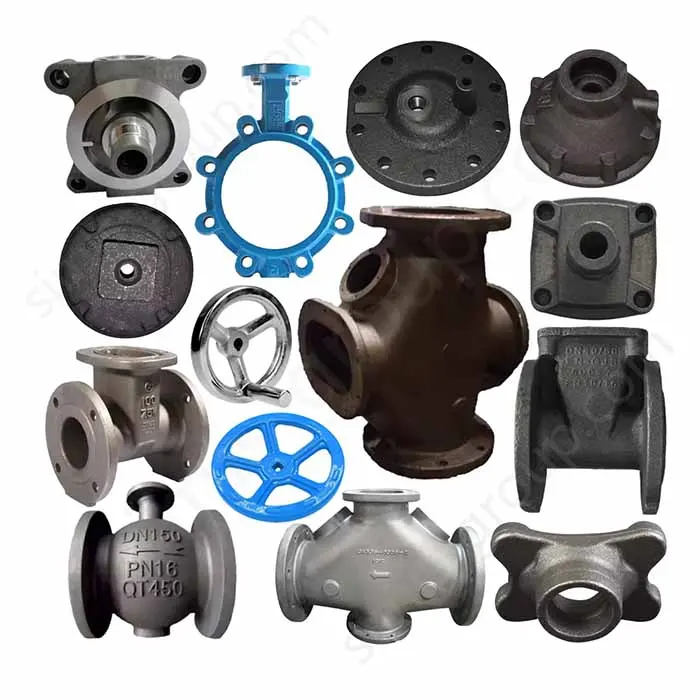
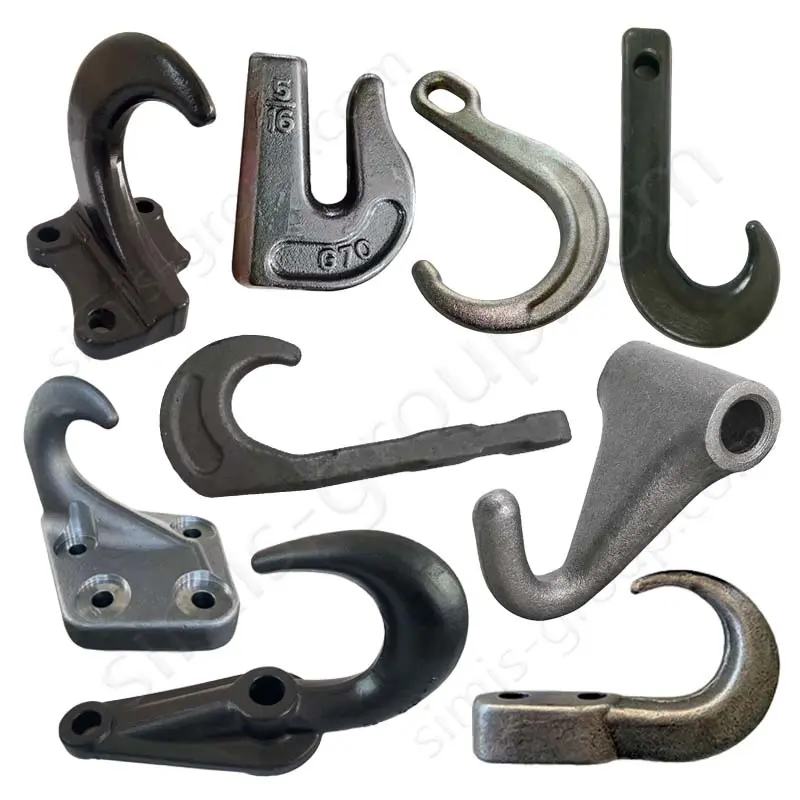
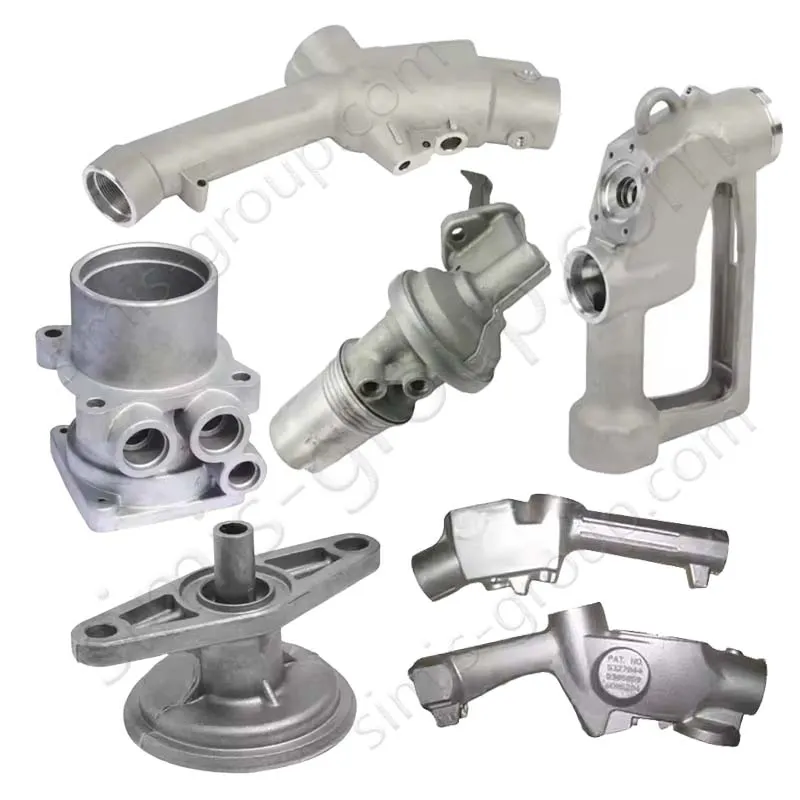
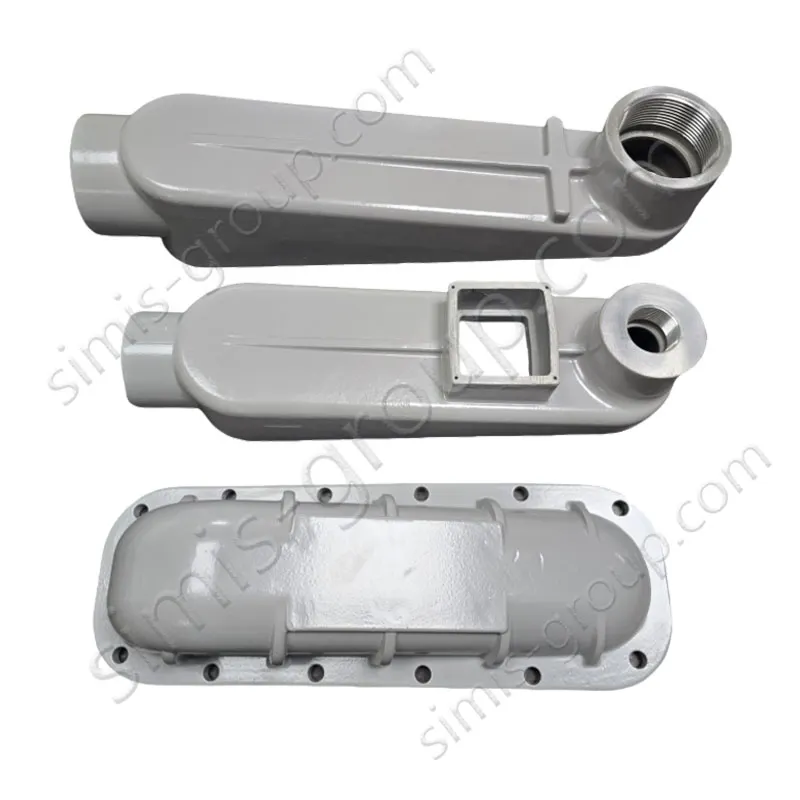
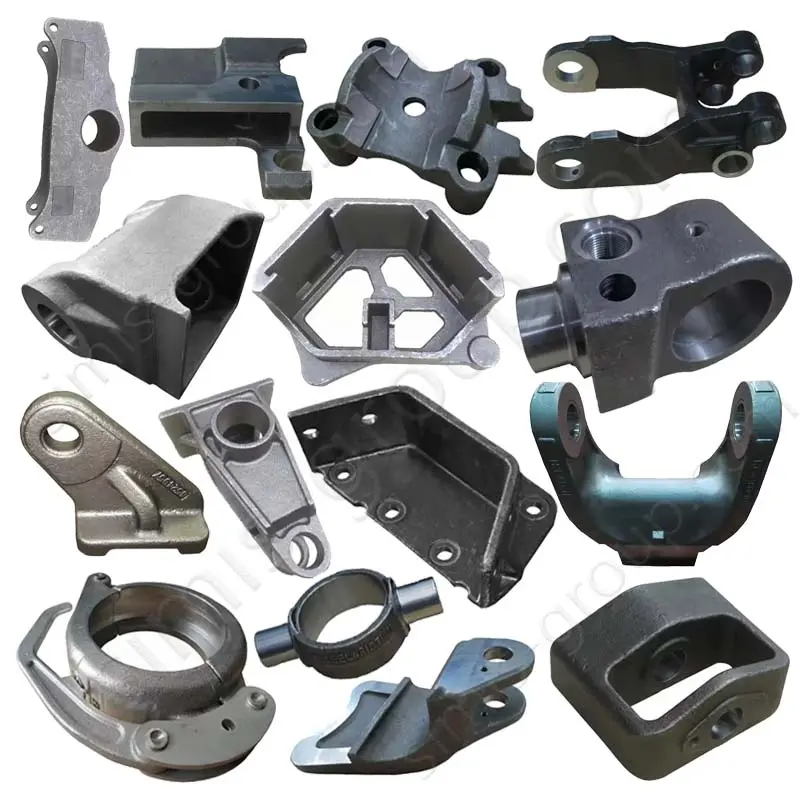
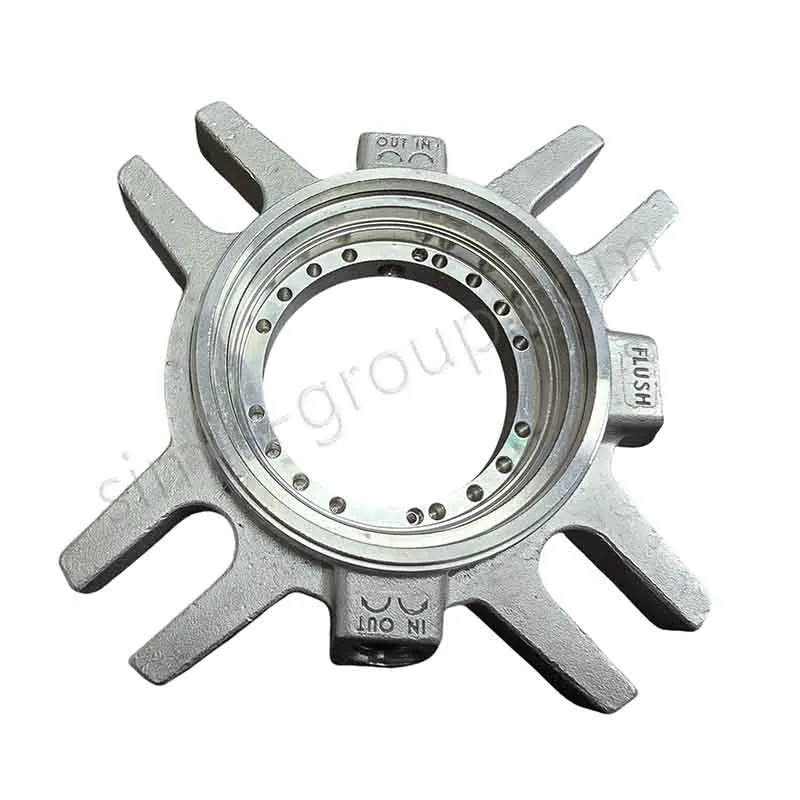
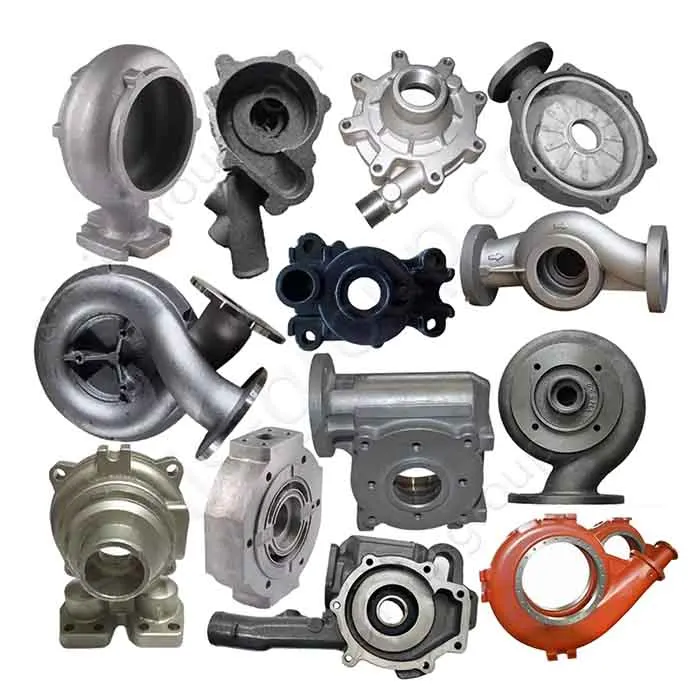
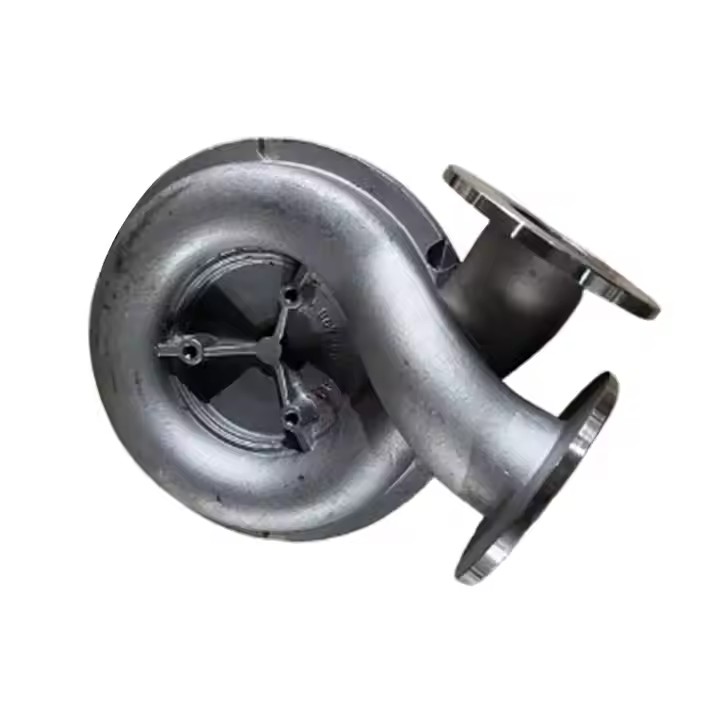
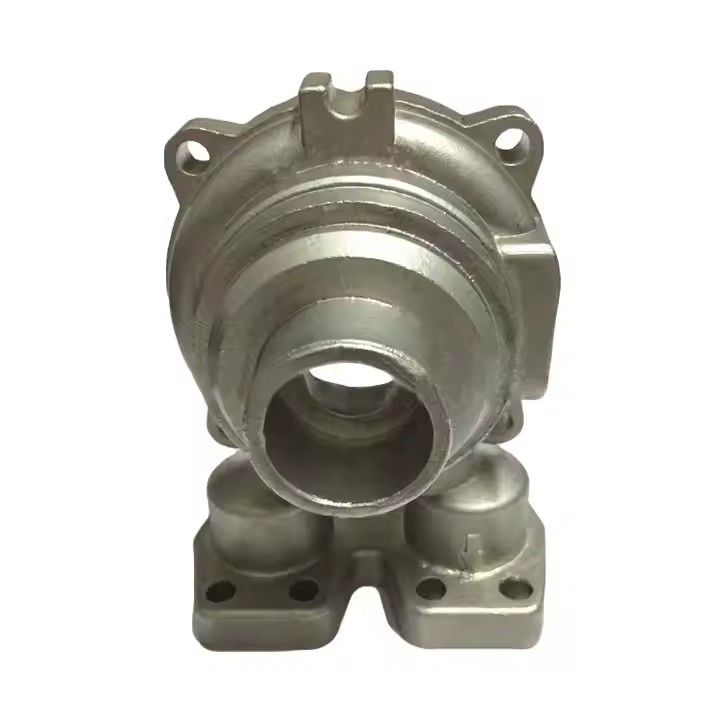
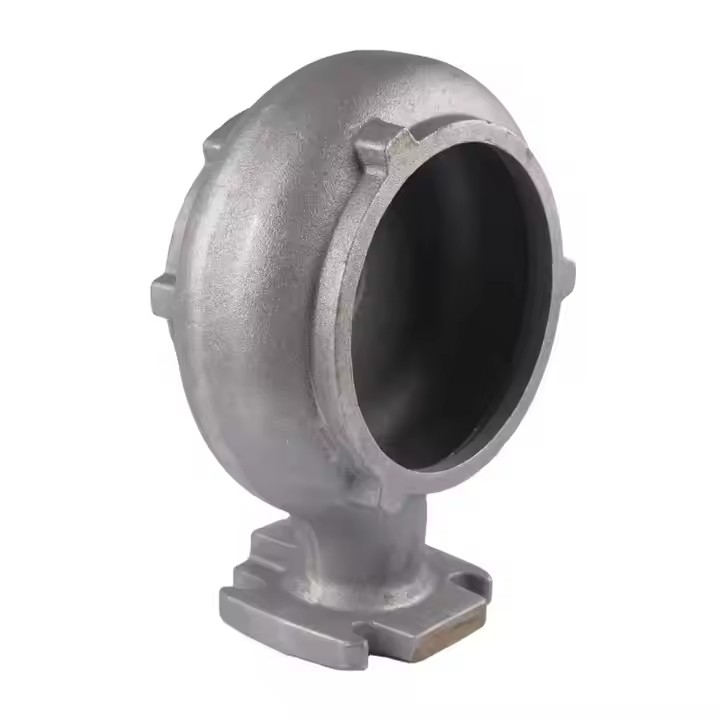
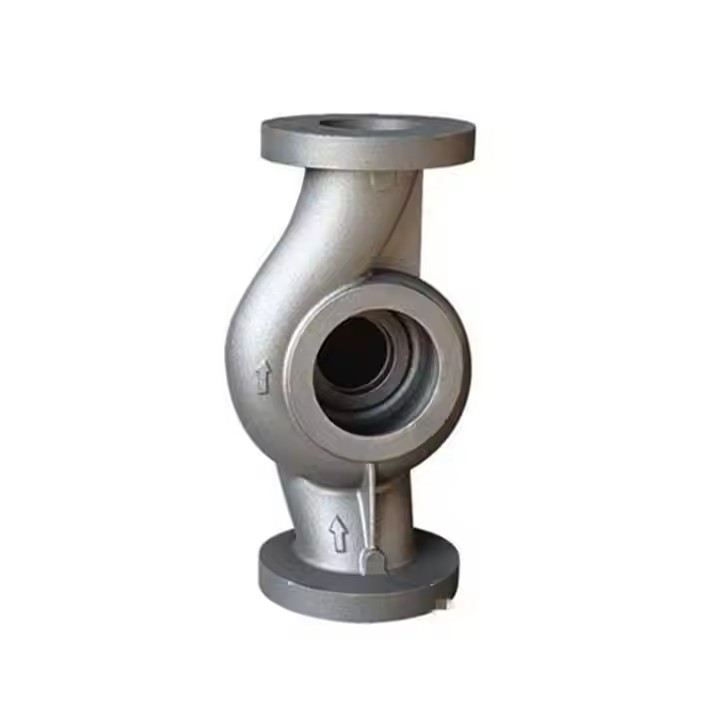
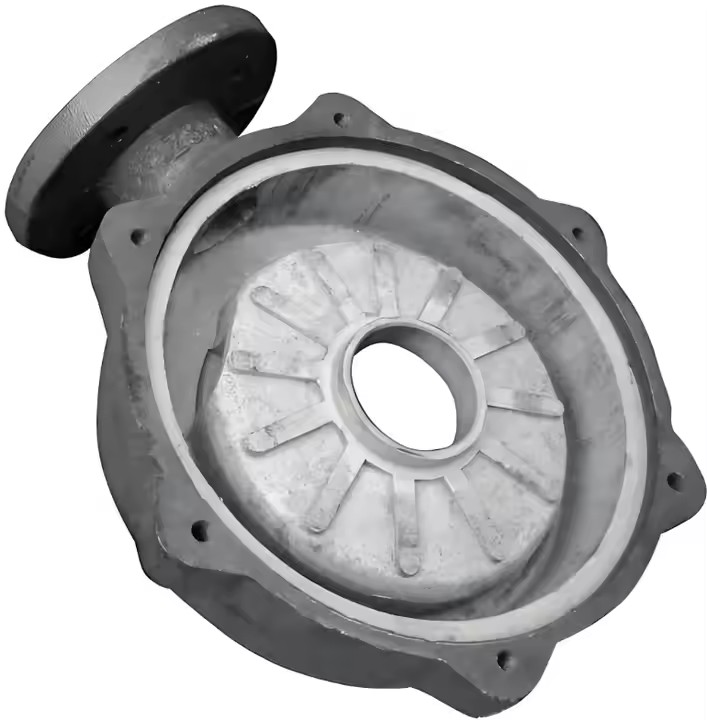
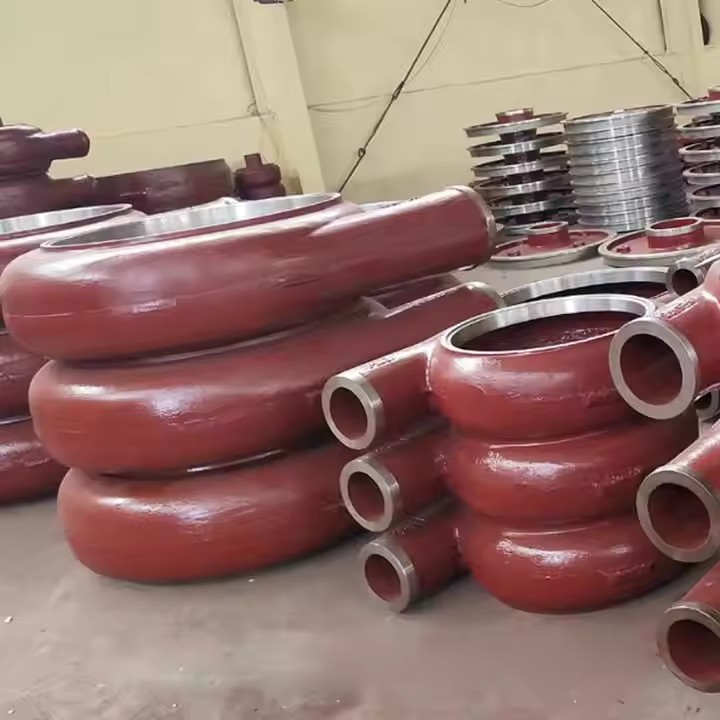
The photos below show examples of pump-related metal casings and casting work; the images alone do not establish any particular material grade, pressure rating or certified test result.
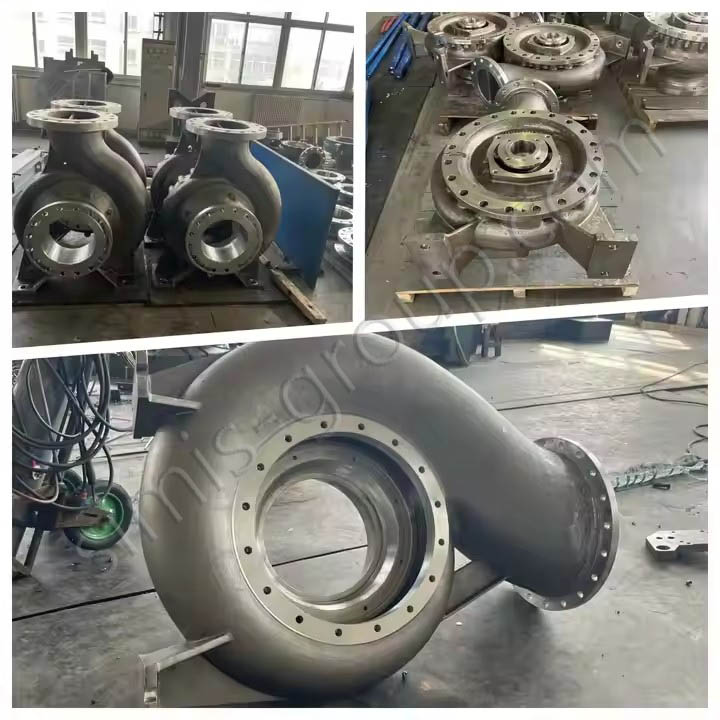
Pump Housing Types and Their Critical Manufacturing Features
| Housing type | Typical geometry | What the OEM should define |
|---|---|---|
| Centrifugal volute casing | Spiral or scroll-shaped flow path surrounding the impeller | Volute section, cutwater clearance, wear-ring interfaces, suction/discharge datum faces |
| Horizontal or vertical split case | Two mating casing halves with a divided pressure boundary | Parting-face flatness, alignment dowels, gasket land, matched machining and bolt pattern |
| Multistage pump casing | Multiple hydraulic stages, diffusers or chamber components | Stage register fits, axial stack-up, internal passage alignment, sealing grooves |
| Slurry or abrasive-service casing | Flow sections exposed to solid particles, sometimes replaceable liners | Wear allowances, liner locations, corrosion/abrasion specification and service access |
| Compact automotive or auxiliary pump housing | Integrated ports, mounting bosses and sometimes thin walls | Tooling feasibility, fastener bosses, flatness, fluid ports and assembly access |
A pump housing and a pump impeller are not interchangeable parts. The housing is generally stationary, while the custom impeller transfers energy to the fluid in a centrifugal pump. Related diffuser geometry may also be manufactured as separate guide vane and housing components. The assembly drawing should identify which parts are included in the RFQ.
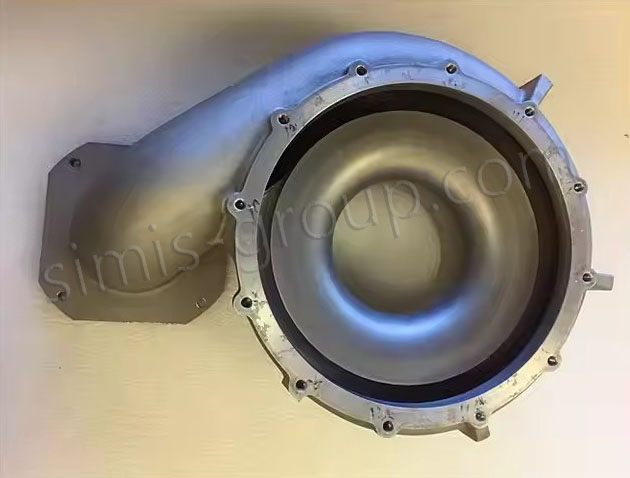
Selecting a Casting Process for the Pump Housing Design
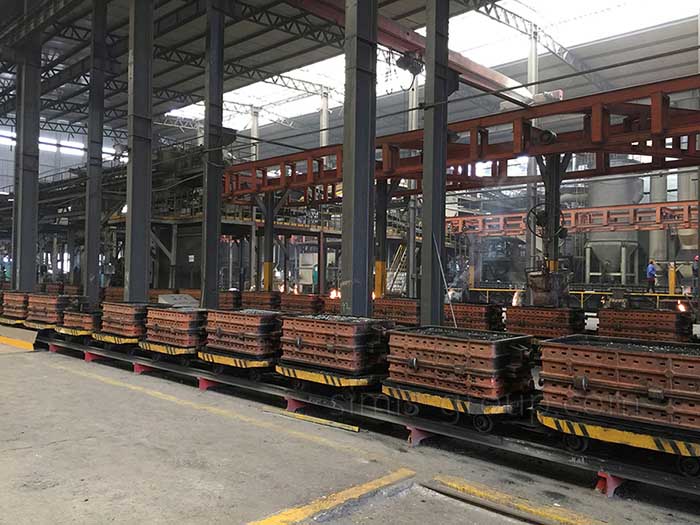
Mold and core design often determine whether the internal passage can be cast reliably and cleaned after shakeout. Flow transitions, wall-thickness changes, isolated heavy sections, machining allowance and access to core prints all affect manufacturing cost and consistency. Rather than claim one method always produces a flawless hydraulic surface, SIMIS reviews process suitability against the part geometry and order quantity.
| Manufacturing route | Where it may fit | Engineering review points |
|---|---|---|
| Sand casting | Large cast iron, ductile iron, steel or aluminum bodies; complex cores; varied volumes | Core stability, feeding, wall transitions, internal passage cleaning and machining stock |
| Shell mold casting | Certain medium-sized iron or steel components where repeatability matters | Tooling economics, passage access, wall thickness and achievable as-cast detail |
| Lost foam casting | Selected complex housings where expendable patterns are practical | Pattern rigidity, gas evolution, casting quality, process validation and finish machining |
| Investment casting | Small-to-medium intricate stainless steel or alloy pump parts | Size/economic limits, flow-path geometry, gating and required machined interfaces |
| Pressure die casting | Selected high-volume aluminum or zinc auxiliary housings | Die investment, porosity risk and any pressure-tightness requirements |
Gravity casting or hybrid casting-plus-machining routes may also be considered for appropriate aluminum designs. If pressure retention is critical, a process must be qualified against the agreed casting acceptance criteria; the word “casting” alone does not guarantee leak-free service.
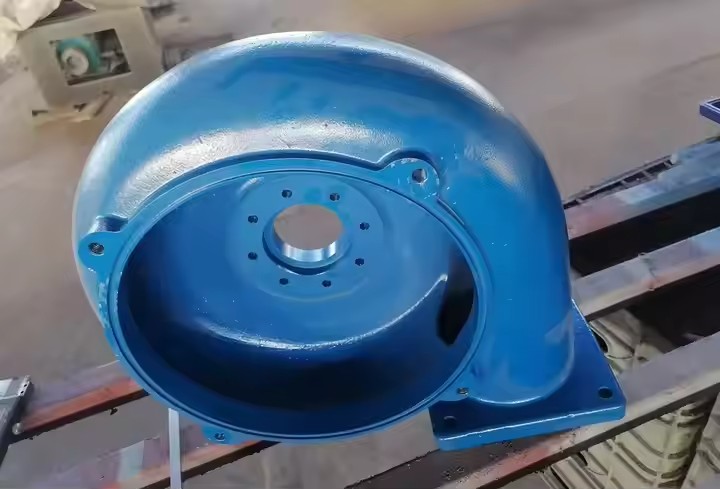
Material Selection for Pump Casings: Fluid, Pressure and Wear
Choose the material from the actual fluid chemistry, operating temperature, pressure, solids content, pump duty and approved specification. Material families below describe possibilities, not universal approvals for every fluid or pressure class.
| Material family | Potential advantages | Design considerations |
|---|---|---|
| Gray cast iron | Castability, stiffness and vibration damping in suitable water or utility duties | Brittleness, pressure design, fluid compatibility, coating |
| Ductile cast iron | Higher ductility and useful toughness for many industrial or municipal designs | Grade-specific strength, casting quality, corrosion conditions |
| Carbon or low-alloy cast steel | Strength and toughness options for demanding industrial casing designs | Weld repair rules, heat treatment, test requirements, alloy selection |
| Stainless cast steel | Alloy-dependent corrosion resistance for chemical and process pumping | Actual alloy grade, chloride level, temperature, finish and material traceability |
| High-chromium or other wear-resistant alloy | Potential abrasion resistance in slurry-handling components | Brittleness, machinability, particle impact, liner/service strategy |
| Aluminum or copper alloys | Weight or selected corrosion-service advantages where suitable | Fluid compatibility, pressure limits, galvanic interaction and inspection |
Confirming the casting grade against real service conditions
For chloride-containing, hot or particle-laden liquids, the same nominal material family can behave very differently at different concentrations and temperatures. Procurement drawings should identify the casting designation and agreed material test records, rather than relying on a broad term such as stainless, alloy steel or bronze.
For corrosive service, “stainless steel” alone is not a sufficient material specification; the required alloy, test condition and service environment need to be stated. Likewise, a hard alloy may resist abrasion but not necessarily corrosion or cavitation. Related cast pressure-boundary practices for custom valve parts may have overlapping inspection considerations, but pump service requires its own design review.
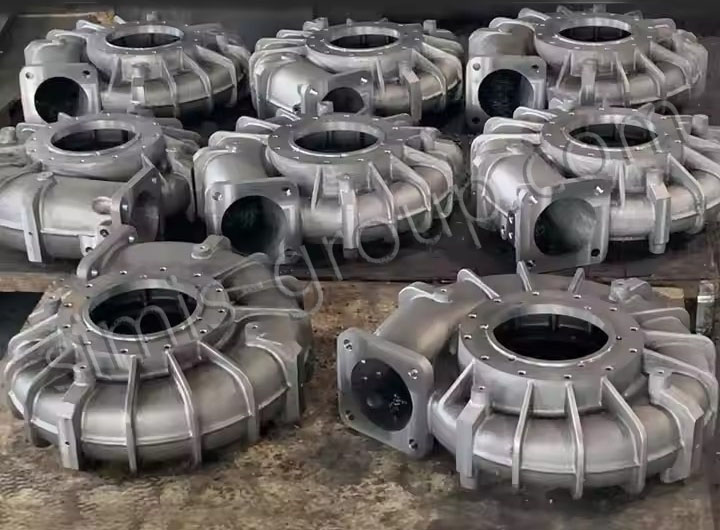
Volute Passage, Wall Thickness and Casting DFM
Flow passage and cutwater geometry
The profile around a centrifugal impeller influences the flow leaving the rotating element. Castability must be considered at the same time as hydraulic geometry: internal cores need adequate support, the resulting cavities must be cleanable and machining tools must reach designated interfaces. A smooth as-cast appearance does not by itself prove a specified pump efficiency or cavitation margin.
Core location, parting lines and machining allowance
Core shift can alter local wall thickness or move an internal feature relative to a machined datum. The design review should identify minimum pressure-wall sections, reasonable transitions and allowance for final facing or boring. Feeders, parting lines and gates should avoid interfering with functional faces and inaccessible cavities.
Liners, drain passages and service features
Where the pump design uses replaceable liners, wear rings, drains, vents or instrument connections, their locations and required threads must be clear on the drawing. For split casings, matched halves and the assembled datum system can be more important than inspecting each half in isolation.
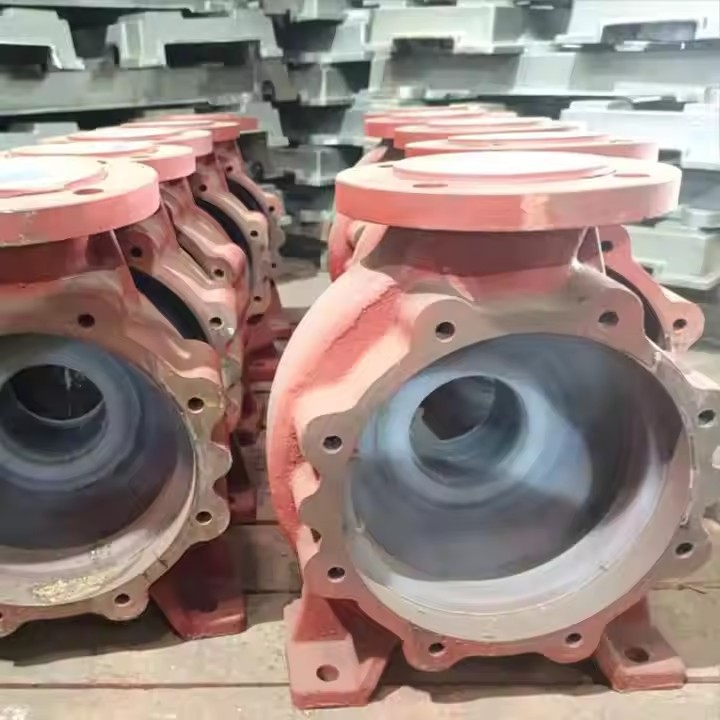
Precision CNC Machining of Pump Housings
A good casting is the starting point; assembly-critical geometry is typically established through planned rough and finish machining. Functional datum selection should reflect how the casing locates in the final pump, with machining sequences chosen to control distortion and preserve wall thickness. SIMIS supports casting with follow-on precision CNC machining according to the customer drawing.
Bearing, seal and wear-ring interfaces
Depending on pump configuration, casing or cover features may include seal chamber registers, cartridge-seal locating bores, wear-ring seats, bearing housing attachment bores and other precision fits. Important controls include bore diameter, roundness, relative position, face runout and surface roughness where specified. It is not correct to assume every pump casing itself carries the shaft bearings.
Flanges, split lines and mounting feet
Suction and discharge flange faces require the specified flatness and bolt-circle geometry; casing joint faces may need a controlled gasket land or O-ring groove. Mounting feet and dowel positions should be related to the intended assembled reference system so that pipe loads and fastening do not create avoidable fit-up problems.
Inspection of internal clearance features
Impeller running clearance and axial/radial fit depend on both the rotating part and the casing. Dimensional reports on machined wear-ring seats or chamber features can confirm part geometry, while pump clearance and performance must be validated at the assembly level.
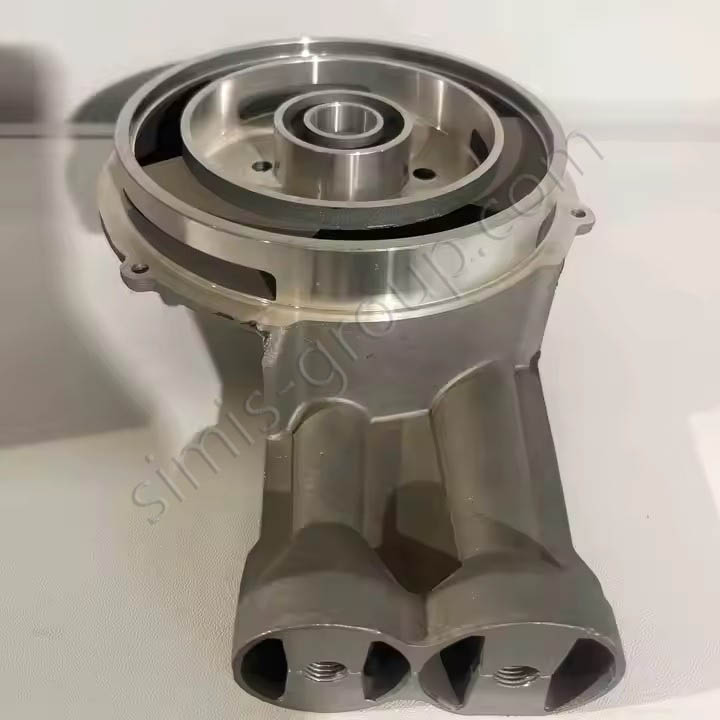
Pump Housing Quality Control and Pressure-Boundary Verification
Inspection scope should be documented before manufacturing. Casting process capability, specified material, intended service and customer acceptance criteria determine which checks are necessary; no universal inspection or pressure-test claim applies to every pump housing.
| Check or test | What it may establish | How the acceptance criteria are defined |
|---|---|---|
| Material identification and traceability | Specified casting grade, chemistry or mechanical properties | Purchase order, drawing, material standard and agreed certificates |
| Dimensional and geometric inspection | Machined bore sizes, flange faces, bolt patterns, reference datums | Drawing dimensions, GD&T and approved inspection method |
| Visual and nondestructive examination | Surface discontinuities or selected internal casting indications | Specified VT, PT, MT, UT or RT method and acceptance level |
| Hydrostatic or leakage testing | Leak behavior of the relevant pressure envelope under defined test conditions | Specified medium, pressure, duration, setup and leakage acceptance |
| Finish and cleanliness inspection | Surface condition, residue, ports, protective finish | Customer surface, cleaning and packaging requirements |
For pressure-retaining casings, testing may need to occur after selected machining operations and with proper test closures. If the customer requires a particular API, ASME or other industry standard, the edition, covered component, acceptance documentation and responsibility for testing must be stated. Inspection of a bare casing should not be represented as certification of a fully assembled pump.
For broader manufacturing inspection practices, see SIMIS quality control. We avoid declaring “zero porosity,” mandatory radiography of every casting or guaranteed leak-free operation without an applicable project test record.
Applications: Water, Slurry, Chemical and Marine Pump Components
Custom casings appear in municipal water transfer and wastewater equipment, agricultural irrigation, mining dewatering and slurry pumps, industrial process systems, power-generation auxiliary pumps and marine water-handling equipment. The drawing and medium determine whether ductile iron, cast steel, stainless steel, bronze or aluminum is appropriate; the service category does not determine a material grade by itself.
For abrasive slurries, investigate erosion zones, replaceable liners and maintenance access. For chemical or marine service, review chloride content, galvanic couples, corrosion allowance and selected alloy. For water or HVAC duty, mounting rigidity, sealing faces and cost-effective casting may be leading concerns. Food-contact or pharmaceutical use has separate surface, cleanability and compliance requirements that must be defined by the OEM, not inferred merely from stainless steel casting.
Matching supplied components to the intended industry
An irrigation casing, abrasive mining volute and chemical-process pump can share a broadly similar exterior but have very different fluid-contact surfaces, casting inspection levels and maintenance requirements. Mark these features explicitly on the OEM drawing to support accurate scope and cost evaluation.
Manufacturing evidence should be tied to the specific part and scope: inspection of a machined housing is different from a validated pump performance curve, noise level, cavitation test or endurance result.
Working with SIMIS on an OEM Pump Housing Project
The production route can include casting feasibility review, pattern and core planning, trial casting, machining process planning, dimensional inspection and finishing or packaging requirements as agreed. An early discussion about internal passage geometry and functional datum strategy can prevent costly adjustments when a casting reaches final machining.
SIMIS focuses on customer-specific pump bodies rather than catalog replacement stock. Drawings and purchasing documents should identify whether the supply scope is a raw casting, a machined housing or a more complete set of casing components. Any special examination, material certificates, hydrostatic tests or third-party approval should be agreed before order placement.
Request a Quote for Custom Cast and Machined Pump Housings
For a useful quotation, send the 2D drawing and 3D STEP model, pump type, material grade and required standard, envelope dimensions and unit weight if known, annual quantity, operating medium and conditions, critical bore and sealing tolerances, inspection and pressure-test specifications, and the required delivery scope. Mark the inlet/outlet flange standards, internal cores or liner interfaces and any special coating or corrosion requirements.
Email info@simis-group.com with your project drawings and requirements to discuss an OEM pump housing manufacturing quotation.