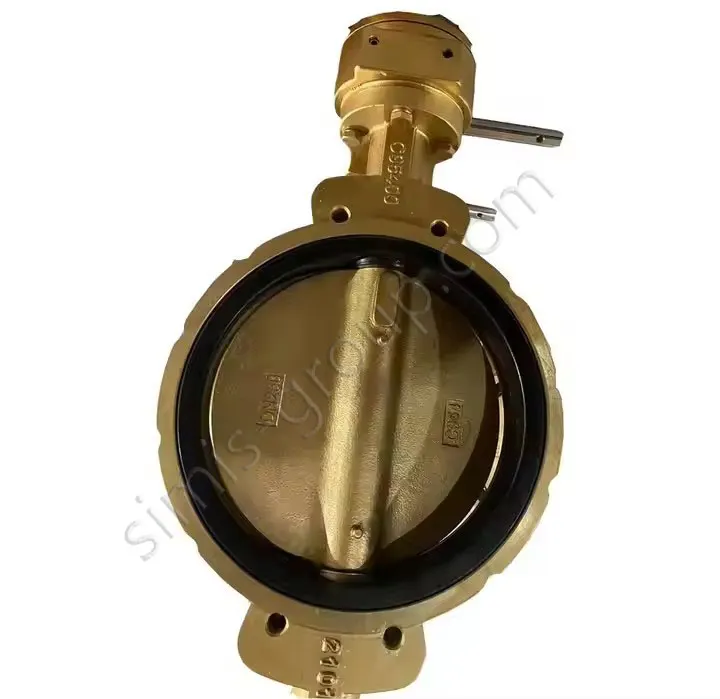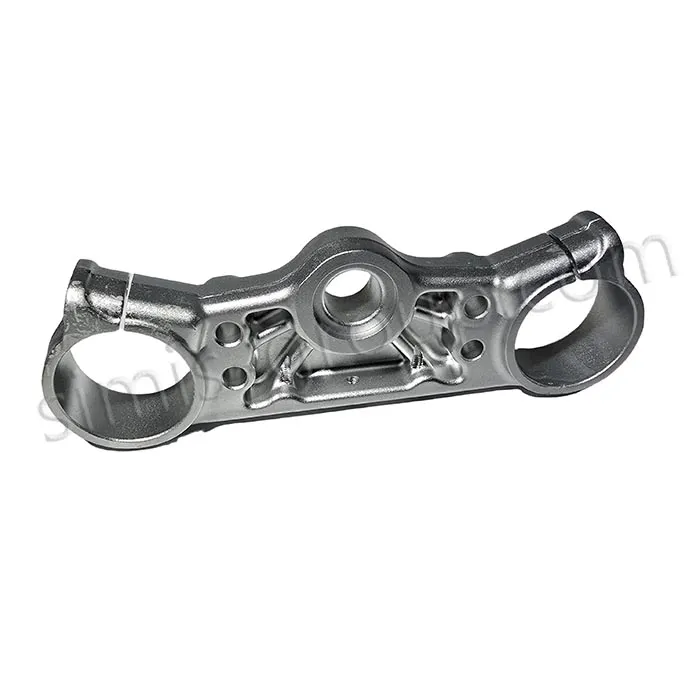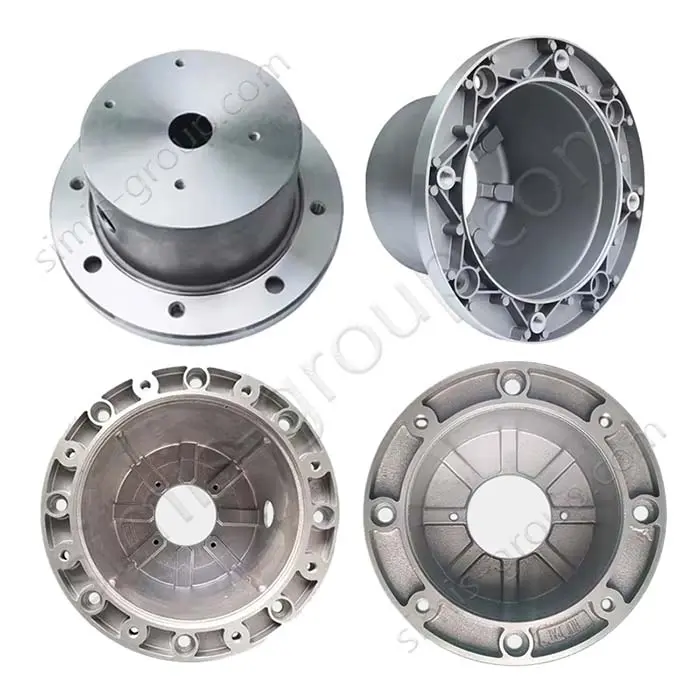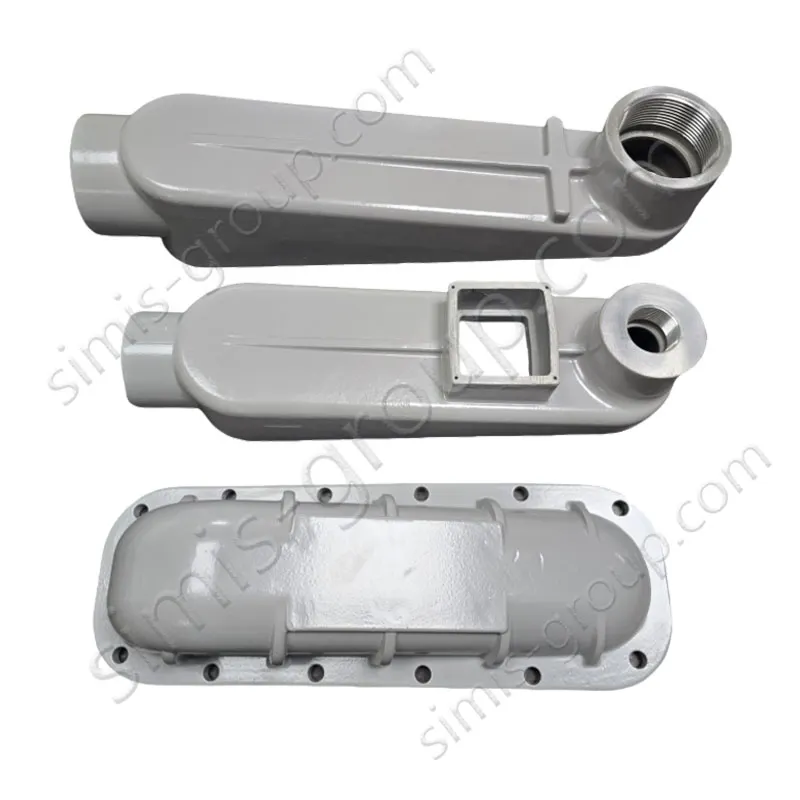
Custom Guide Vane And Housing Manufacturer
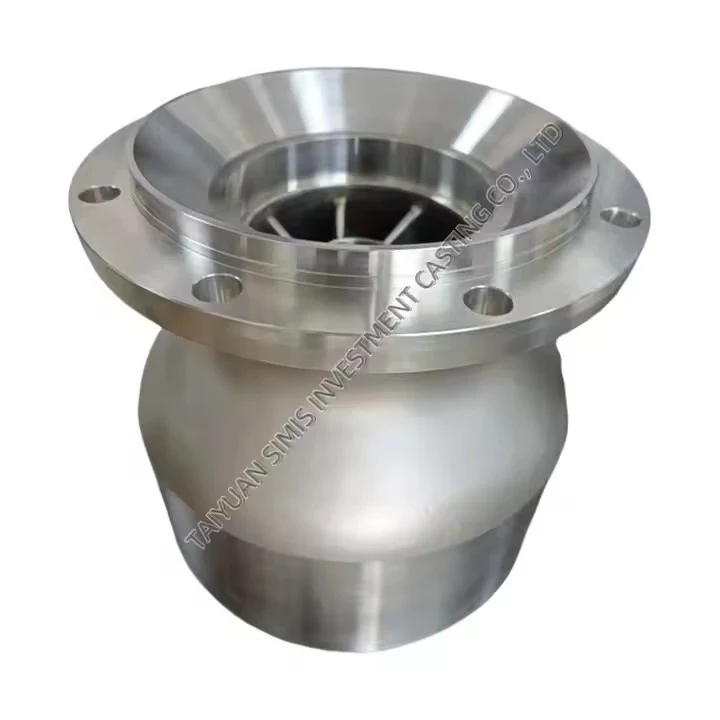


Guide Vane And Housing

Custom Guide Vanes and Diffuser Housings: OEM Manufacturing FAQs
Can SIMIS manufacture custom guide vanes and diffuser housings from our drawings?
Yes. SIMIS supports drawing-based OEM manufacturing of stationary guide vanes, integrated diffuser assemblies and guide vane housings for pumps, turbines, compressors and other fluid machinery. Depending on the material, geometry and order quantity, production may include precision investment casting, sand casting, aluminum casting, CNC machining, heat treatment and surface finishing. We review vane geometry, internal passages, mounting interfaces, material specifications and project-specific inspection requirements before recommending a manufacturing route.
What is the difference between a guide vane and a diffuser housing?
A guide vane directs fluid flow at a defined position in the machine. A pump diffuser uses stationary passages to manage flow leaving an impeller and, in suitable designs, convert part of its velocity energy into static pressure. A diffuser housing supports or contains these passages and may include structural mounting or pressure-boundary features. Guide vanes may be cast integrally with the housing or manufactured as separate components, depending on the assembly design.
Which material is suitable for stainless steel pump guide vanes?
The material should be selected according to the pumped fluid, temperature, pressure, solids content and required mechanical properties. Cast stainless steels, including suitable austenitic or duplex grades, may be considered for certain corrosive services. Carbon and alloy steels, aluminum alloys and copper-based alloys are alternatives for other applications. Material suitability must be confirmed against the applicable specification and actual fluid chemistry; no single alloy provides universal resistance to corrosion, cavitation or erosion.
Can the vane passages and housing interfaces be precision machined?
SIMIS supports CNC machining of accessible sealing faces, mounting flanges, locating diameters, bores and other critical interfaces. Complex internal vane passages may be formed near-net by casting and may require selective polishing or other approved finishing rather than conventional machining throughout the passage. The achievable dimensional accuracy depends on accessibility, casting geometry, the datum scheme and the specified inspection method.
What information is needed for a guide vane and housing quotation?
Please provide 2D drawings, available STEP or other 3D models, the intended material grade, overall dimensions, critical vane profiles and passage geometry, operating fluid, temperature, pressure, flow rate and estimated quantities. Identify machined interfaces, required surface roughness, pressure-boundary requirements and any specific nondestructive examination or dimensional reports. A complete model of the internal flow passages is particularly helpful for assessing casting feasibility.
OEM Guide Vanes, Pump Diffusers and Flow-Directing Housings
Guide vanes and diffuser housings are engineered metal components that control the direction and distribution of fluid moving through a pump, turbine or compressor. Their functional geometry can include curved vanes, annular passages, inlet and outlet openings, mounting flanges, internal support rings and precisely located mating surfaces.
In centrifugal and multistage pumps, stationary diffuser vanes guide flow leaving a rotating impeller into the next stage or outlet passage. In turbines, guide vanes may direct incoming flow toward the runner. Compressor stator vanes perform related flow-guidance functions, but their aerodynamic duties are not identical to those of a liquid pump diffuser. Component geometry must therefore follow the actual equipment design.
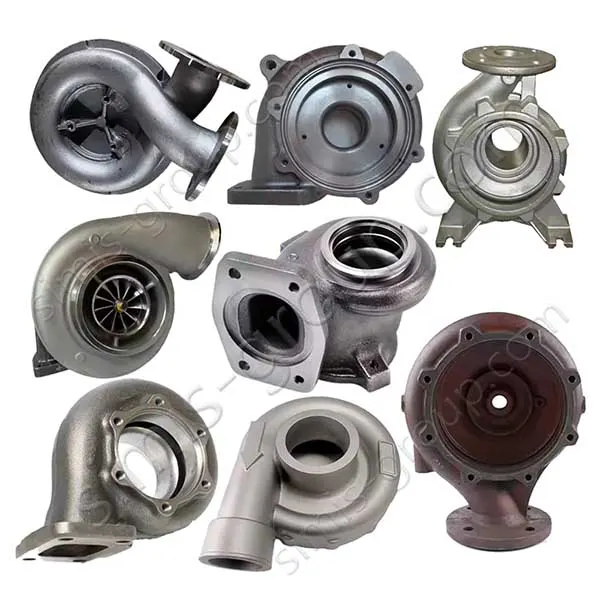
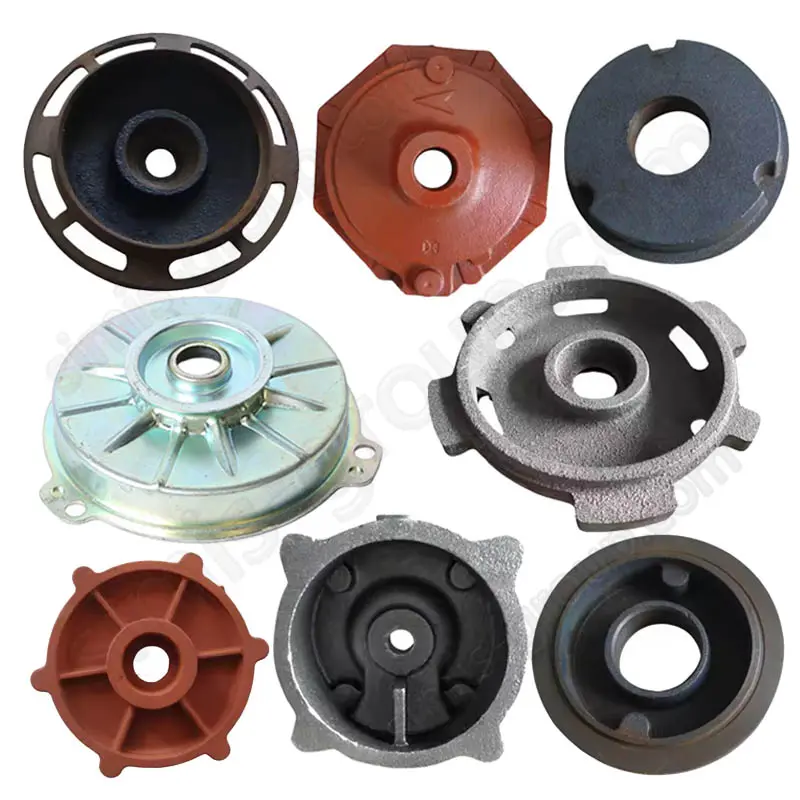
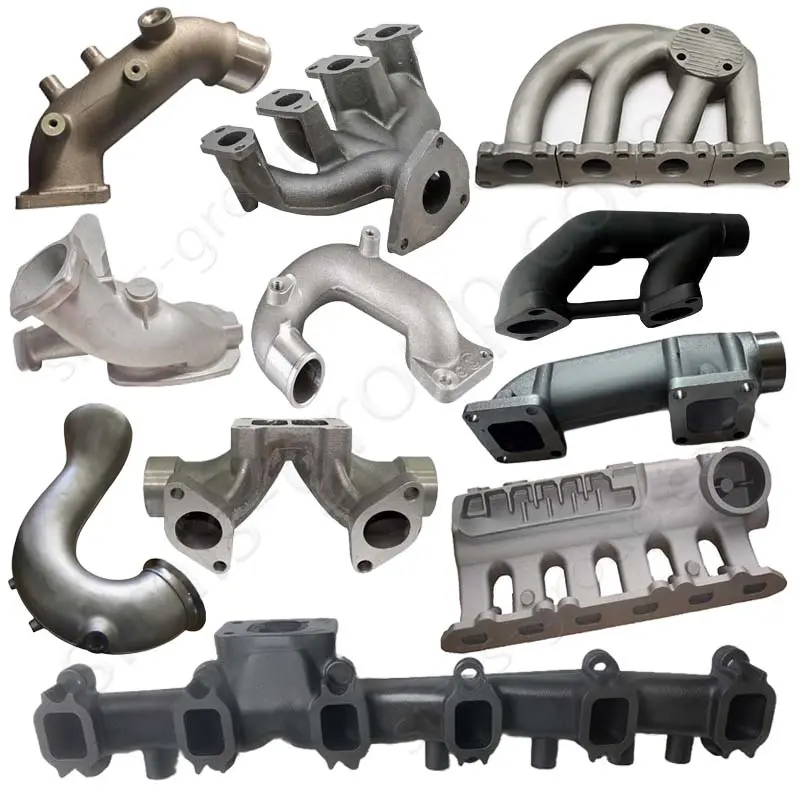
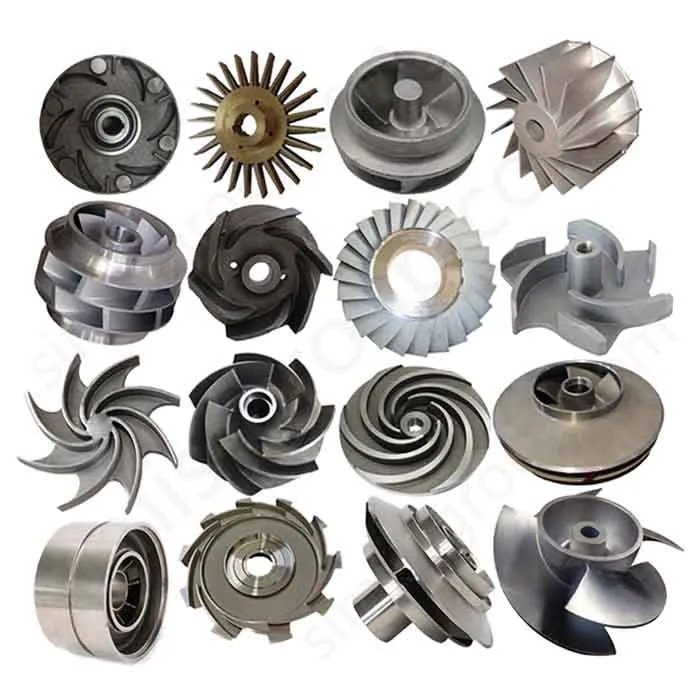
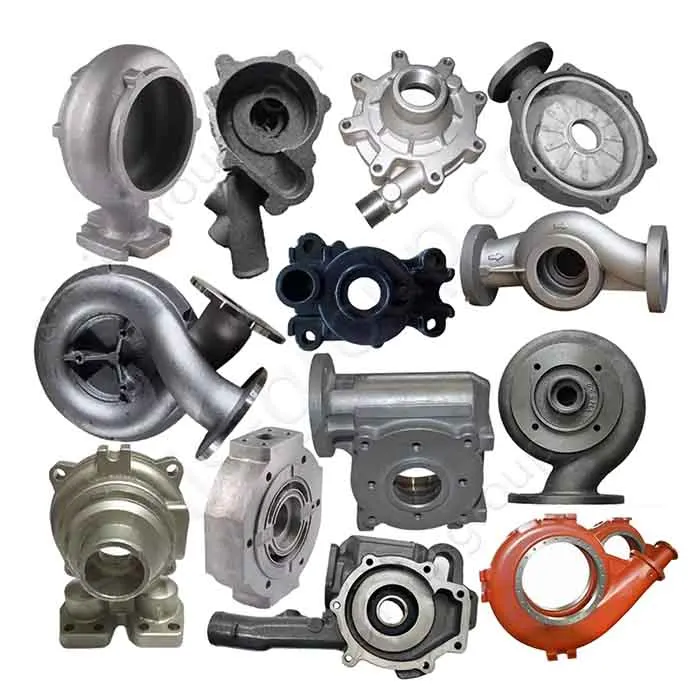
SIMIS manufactures custom casting and machined metal parts based on customer drawings. We can review one-piece vane-and-housing castings, separate vane components and housings designed to receive independently manufactured vanes. Related rotating components can be found on our custom impeller manufacturing page, while our custom pump housing page covers the wider range of pump casing designs.

Critical Flow-Path Geometry and Guide Vane Design Features
Guide vane manufacturing is particularly sensitive to flow-passage geometry. A component can meet its external dimensions and still have unacceptable variation in the internal vane profile or throat opening. For that reason, the engineering drawing should identify which surfaces and dimensions directly affect the fluid path.
Vane inlet angle and outlet angle
The inlet and outlet geometry of a stationary vane influences the direction in which fluid enters and leaves the passage. The specified angle, camber and local thickness must be reproduced within the agreed tolerances. Manufacturing should follow the approved hydraulic or aerodynamic model; changing an angle to simplify tooling can affect the flow behavior of the entire machine.
Throat area and passage consistency
The minimum flow area between adjacent vanes may be an important dimension in a diffuser. Variations in vane spacing, casting thickness or core position can change the effective passage area. Where required, the customer should specify how throat width, passage dimensions and circumferential spacing are to be inspected.
Leading edges, trailing edges and surface condition
Vane edges may require defined radii, thickness or contour. Casting flash, inappropriate grinding or excess weld repair near these features can change the designed profile. Surface roughness should be controlled where the drawing requires it, but polishing every internal surface to an arbitrarily low Ra value is not necessarily achievable or beneficial for every application.
Integral versus separately assembled guide vanes
Some diffuser designs integrate the vanes, inner hub and outer wall into one casting. Others use separate vanes attached to a ring or housing. Integral casting reduces certain assembly operations but may create more difficult mold and inspection access. Separate construction introduces attachment dimensions and assembly tolerances. The approved design and manufacturing feasibility should determine the arrangement.
Casting Processes for Custom Guide Vanes and Housings
Casting method selection depends on vane size, material, wall thickness, passage accessibility and production quantity. Different processes offer different advantages, but none can automatically guarantee maximum fluid efficiency, zero porosity or a perfectly reproduced internal passage.
Precision investment casting for stainless steel guide vanes
Lost-wax investment casting is a candidate for compact guide vane assemblies with curved profiles, relatively thin sections and stainless steel or alloy steel material requirements. Ceramic-shell tooling can reproduce detailed external features and reduce machining on selected surfaces. However, internal passage accessibility, ceramic removal, shrinkage and critical vane-edge definition must be evaluated for each design.
Our precision investment casting foundry can review suitable stainless and alloy steel diffuser components based on the customer's model and material specifications.
Sand casting for large diffuser and guide vane housings
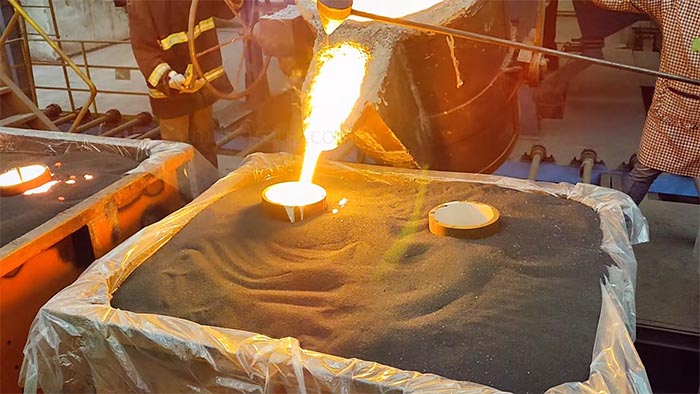
Sand casting may be practical for larger housings, pump casings and heavy flow-guiding structures that require substantial cores or reinforcing sections. Pattern and core design must consider wall thickness, feeding, internal passage formation and removal of molding material. Critical sealing faces, locating registers and bores can be left with machining stock.
SIMIS can evaluate appropriate sand casting routes for large steel, iron and suitable nonferrous components.
Pressure die casting for selected aluminum housings
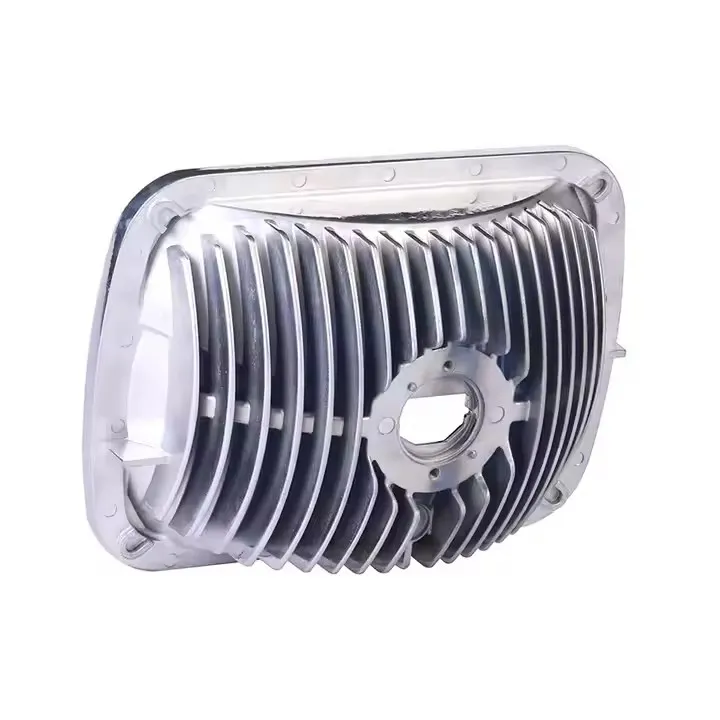
High-pressure die casting may be considered for suitable high-volume aluminum housings with relatively thin walls and integrated details. The process involves substantial tooling investment and requires review of internal passage geometry and casting porosity. It should not be selected automatically for a pressure-containing housing without evaluating the specified integrity and test requirements. Learn more about pressure die casting.
Gravity permanent mold casting for aluminum components
For selected aluminum diffuser or guide vane housing designs, gravity permanent mold casting may provide an alternative manufacturing route. Feeder design, core requirements, attainable wall thickness and mechanical properties must be evaluated. The method is not inherently superior to pressure die casting for every geometry or production quantity.
| Manufacturing Process | Potential Application | Key Considerations |
|---|---|---|
| Investment Casting | Complex stainless or alloy steel vanes and compact diffusers | Vane definition, ceramic removal, section thickness and casting integrity |
| Sand Casting | Large guide vane housings and pump flow casings | Core layout, feeding, wall thickness and machining allowance |
| Pressure Die Casting | Suitable high-volume aluminum housings | Tooling, porosity, core geometry and pressure requirements |
| Gravity Permanent Mold Casting | Selected aluminum diffuser and guide housing designs | Feeding, cores, material grade and casting volume |
| CNC Finish Machining | Flanges, sealing surfaces, locating bores and assembly interfaces | Functional datums, geometric tolerances and access |

Material Selection for Guide Vanes and Flow Housings
Material requirements differ between clean-water pumps, chemical process equipment, compressors and turbines. Corrosion resistance, erosion behavior, strength, temperature capability and casting feasibility should be considered together. The specified alloy grade must be compatible with the actual fluid and the relevant material standard.
Stainless steel for corrosive fluid applications
Austenitic stainless cast steels may be considered for certain pump and process-fluid applications. For example, cast grades specified under applicable standards can provide properties associated with corrosion-resistant austenitic alloys. However, a cast stainless grade should not be assumed identical to a similarly named wrought grade. Chlorides, temperature, cleaning chemicals and the final metallurgical condition require review.
Duplex stainless and specialized corrosion-resistant alloys
Duplex stainless steels may offer useful combinations of strength and corrosion resistance for selected environments. Their suitability depends on the exact grade, solution-treated condition, phase balance and service conditions. A higher-alloy material is not automatically immune to pitting, erosion or environmental cracking. SIMIS can review drawing-based custom stainless steel castings with the customer-specified material requirements.
Carbon steel, alloy steel and copper alloys
Carbon and alloy steels may be suitable for defined structural or pressure-related conditions, with heat treatment and corrosion protection specified where necessary. Copper-based alloys may be considered for selected marine or fluid-handling components. The proper choice depends on water chemistry, temperature, flow velocity, contaminants and the applicable design specification; alloy-family names alone are insufficient for approval.
Aluminum alloy guide vane housings
Aluminum alloys may be attractive where low component mass, suitable casting geometry or thermal characteristics are important. They are not interchangeable with cast steel for every high-temperature or highly loaded application. The customer should specify the relevant alloy, casting condition and service limits, including the potential for corrosion or erosion under the intended operating conditions.
| Material Category | Potential Benefit | What to Verify |
|---|---|---|
| Austenitic Stainless Steel | Corrosion-resistant options for specified fluids | Cast grade, fluid chemistry, temperature and surface condition |
| Duplex Stainless Steel | Selected strength and corrosion-resistance combinations | Grade, heat treatment, phase balance and exposure limits |
| Carbon or Alloy Steel | Structural and material-property options for engineered loads | Pressure requirements, corrosion, heat treatment and testing |
| Aluminum Alloy | Reduced mass and suitable lightweight cast structures | Temperature, porosity, strength and flow-related wear |
| Copper-Based Alloy | Material options for selected marine and fluid-handling duties | Alloy specification, water chemistry, velocity and corrosion behavior |

Design for Manufacture: Complex Vane Passages and Casting Cores
The internal flow geometry of a diffuser may be more difficult to manufacture than its external housing. Narrow throat regions, undercut surfaces and passages enclosed between an inner and outer ring can restrict tooling access. An early design-for-manufacture review helps identify these challenges before patterns and molds are produced.
Core location and passage accessibility
Sand-cast housings may need cores to create internal passages. Core prints, support, removal routes and cleaning access should be planned around the finished geometry. Investment-cast passages may introduce different shell-removal or access challenges. The foundry must be able to form and clean the specified channel without unapproved alterations to the hydraulic profile.
Thin vane sections and heavy mounting bosses
A thin vane joining a thick outer ring or flange can create uneven solidification conditions. Feeding, local shrinkage and distortion risks should be considered. Appropriate fillets and section transitions may be proposed for manufacturability, but changes that affect vane angles, flow area or structural loads require customer approval.
Parting lines, casting flash and internal cleaning
Parting-line placement and gating should avoid unnecessary interference with critical flow surfaces where feasible. The cleaning plan must address residual mold material, flash and inaccessible corners. A detailed casting design should also distinguish surfaces that may be finished mechanically from those that must remain largely in the as-cast condition.
Tooling approval and first-article parts
For new diffuser tooling, first-article dimensional inspection can help confirm that the internal flow features and mounting interfaces correspond to the approved drawing. Critical dimensions should be identified in advance so they can be measured using suitable access, gauges or scanning methods if specified.
CNC Machining of Diffuser Housings and Guide Vane Interfaces
Casting provides the main flow-path shape, while machining establishes critical mounting and sealing interfaces. SIMIS can review precision CNC machining operations according to the customer's dimensional and geometric tolerances.
Housing registers and locating diameters
Locating diameters may establish the position of a diffuser relative to the pump casing, stage components or shaft axis. Their diameter, roundness and position are important when they form part of the assembly's datum system. Machining should follow the agreed functional references instead of independently optimizing each surface without regard to the final assembly.
Sealing faces, flanges and stage connections
A housing may include gasket faces, O-ring grooves, mounting flanges, threaded holes or adjacent stage connections. Flatness, surface finish, bolt pattern and axial dimensions should be specified according to the actual sealing and assembly design. Correctly machined interfaces are necessary where defined, but they do not independently establish leak-tightness or the pressure rating of an assembled pump.
Coaxiality, face runout and functional alignment
Multistage pump components may require controlled relationships between central openings, locating rings and stage faces. The relevant geometric tolerances depend on the bearing, shaft, impeller and housing arrangement. A diffuser housing can be manufactured to its drawing without guaranteeing the final rotor alignment or clearances of the completed machine.
Machining and finishing of accessible vane surfaces
Accessible vane edges or flow surfaces may be deburred, locally machined or polished where required. Deep enclosed passages may not permit ordinary cutter access. The finishing plan should therefore be confirmed during design review, with a realistic distinction between as-cast dimensions and post-machined features.
Cavitation, Erosion, Corrosion and Pressure-Boundary Requirements
Guide vanes and diffuser housings operate in fluid environments where performance depends on the entire hydraulic or aerodynamic system. It is important to distinguish component manufacturing requirements from pump or turbine performance validation.
Cavitation depends on operating conditions
Cavitation can arise when local fluid pressure falls sufficiently for vapor formation and subsequent bubble collapse. Its occurrence depends on pressure distribution, liquid properties, temperature and operating point. An appropriate vane profile and material may contribute to a design strategy, but manufacturing the specified casting does not guarantee cavitation-free operation.
Solid-particle erosion and local wear
Sand, suspended solids or other particles can produce wear in pump and turbine passages. Erosion behavior depends on particle size and concentration, fluid velocity, impact angle, alloy and surface condition. A harder material or special coating is not automatically the best solution for every abrasive duty. The equipment designer should specify the relevant material and inspection requirements.
Pressure-containing housings and leakage testing
Some diffuser housings are part of a pressure boundary, while other guide vane components merely direct flow inside a separate pressure casing. These roles require different design and acceptance criteria. Pressure-containing castings may require material specifications, defined inspection and hydrostatic or other leakage tests as specified by the customer. A successful casting inspection does not replace pressure testing where the governing design requires it.
Surface preparation and protective finishes
Selected components may require blasting, cleaning, passivation, polishing or other alloy-compatible finishing. Coatings and surface treatments should be reviewed for the actual fluid and temperature, especially on internal passages and precision mating surfaces. SIMIS can discuss project-specific surface treatment requirements without promising a fixed corrosion or erosion lifetime.
Quality Inspection for Custom Guide Vane Castings and Housings
A suitable inspection plan must address material properties, internal passage geometry and functional assembly interfaces. The required tests depend on whether the component is a non-pressure flow guide, a pressure-containing housing or a part used in a safety-related application.
| Inspection Area | Project-Specific Verification |
|---|---|
| Material Grade | Chemical composition, mechanical properties and specified heat-treated condition |
| Vane Geometry | Profile, inlet and outlet angles, vane thickness and passage spacing |
| Flow Passages | Throat area, accessible passage dimensions and specified surface condition |
| Machined Interfaces | Locating diameters, flange flatness, bores, bolt patterns and geometric datums |
| Casting Integrity | Visual inspection and suitable NDT with agreed locations and acceptance criteria |
| Pressure Boundary | Specified pressure or leakage testing where the housing design requires it |
| Surface Finish | Designated roughness, burr removal, cleanliness and protective finishing |
| Documentation | First-article inspection, material test reports and traceability as agreed |
Dimensional measurement of complex vanes
CMM equipment, suitable profiles, gauges or other measurement methods may be used to inspect accessible guide vane surfaces. Some enclosed passages may require special fixtures, section-based inspection or a separately agreed scanning method. The buyer should identify critical dimensions before manufacturing so that inspection access can be planned.
Non-destructive examination and casting acceptance
Liquid-penetrant inspection can be relevant for surface-breaking indications in suitable materials. Radiographic or ultrasonic examination may be specified for selected casting sections, subject to the material, geometry and detection limits of the method. No nondestructive test should be described as proving that every casting is completely free from internal porosity or other discontinuities.
Hydraulic performance and machine-level testing
Pump head, hydraulic efficiency, compressor performance, cavitation behavior and turbine output depend on the complete machine and its operating conditions. Component inspection can verify compliance with the approved casting and machining drawings, but cannot independently demonstrate the performance of the assembled equipment. Any required flow testing or efficiency validation should be separately specified and documented.
SIMIS can review the required inspection scope through its quality control processes. Test frequency, coverage, acceptance criteria and the documentation package should be agreed with the OEM before production.
Applications of Custom Guide Vanes and Diffuser Housings
Centrifugal pumps and multistage pump diffusers
Multistage pumps may use stationary diffusers to direct flow between impeller stages and manage the conversion of velocity to pressure. Relevant manufacturing features include vane profile, stage-to-stage alignment, central locating geometry and sealing interfaces. Material and pressure requirements depend on the specific pump design and pumped liquid.
Hydraulic turbines and power-generation equipment
Hydraulic turbines use guide structures to control or direct incoming water toward the runner. Some designs include adjustable wicket gates that require pivot and actuation features, unlike a fixed pump diffuser. Their structural and dimensional requirements should be established from the turbine assembly. Related cast structures are described on our custom turbine housing page.
Compressors and industrial air-moving equipment
Compressors, fans and other air-moving machines may use stationary guide or diffuser components to establish the desired flow direction. Airfoil geometry, temperature and housing interfaces may differ substantially from those of liquid pump components. Manufacturing should follow the approved aerodynamic design and application-specific material requirements.
Chemical processing, marine and energy equipment
Chemical pumps, marine fluid systems and energy equipment can require guide vanes with special corrosion, temperature or erosion requirements. The alloy and inspection plan should be selected for the actual environment. A component manufactured for freshwater service should not automatically be considered interchangeable with a seawater or aggressive chemical-service part.

Request a Quote for Custom Guide Vanes and Diffuser Housings
SIMIS supports OEM manufacturing of custom guide vane castings, pump diffuser assemblies and flow-guiding housings based on approved customer drawings. Our feasibility review can cover material selection, investment or sand casting, aluminum casting where suitable, machining access, heat treatment, surface finishing and agreed inspection requirements.
For a detailed quotation, please provide: 2D drawings and STEP or other available 3D models showing the full flow passages; required alloy grade and material standard; maximum dimensions and estimated casting weight; vane inlet and outlet geometry; throat and passage dimensions; locating and sealing interfaces; operating fluid, temperature, flow rate and pressure; specified surface roughness; required nondestructive examination or pressure tests; and planned batch and annual quantities.
If the component forms part of a pressure boundary, a safety-related machine or a high-efficiency hydraulic assembly, please identify the applicable acceptance standards and validation responsibilities. Changes to the flow path, material or critical interface geometry should be approved by the customer's responsible engineer before tooling or production.
Send your custom guide vane and diffuser housing drawings to info@simis-group.com for a manufacturing feasibility review and quotation.