Custom Gray Iron Parts Manufacturer
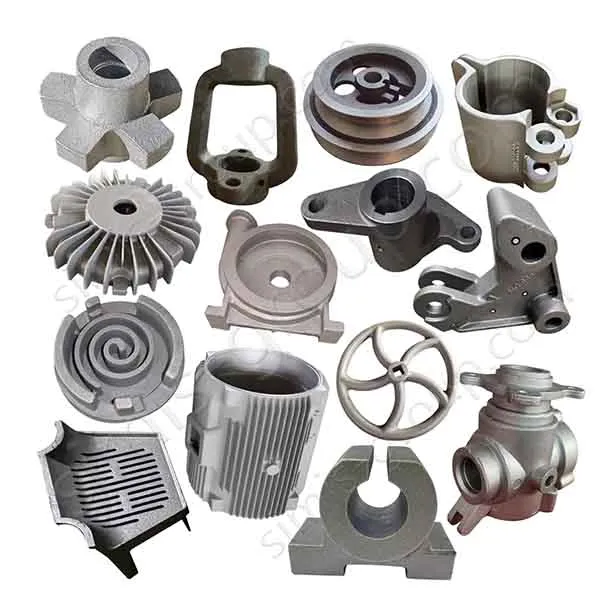
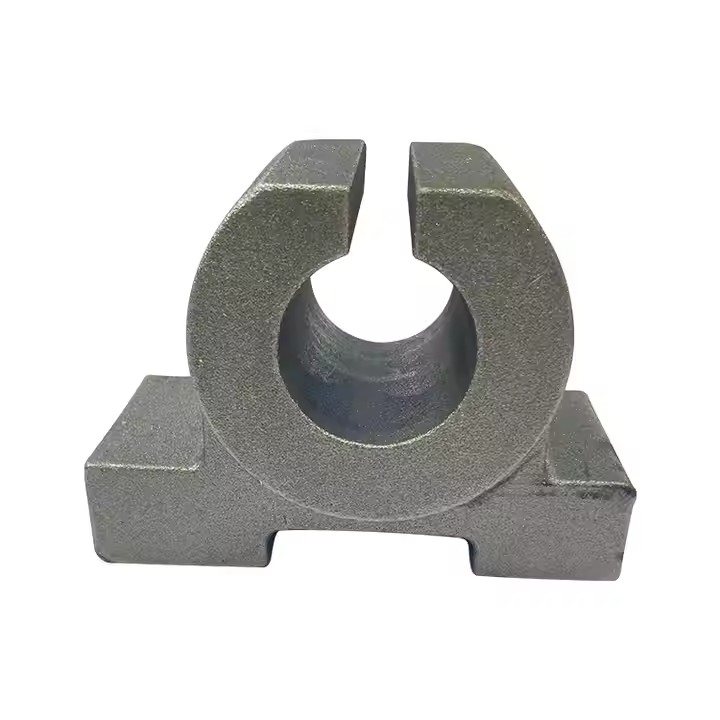
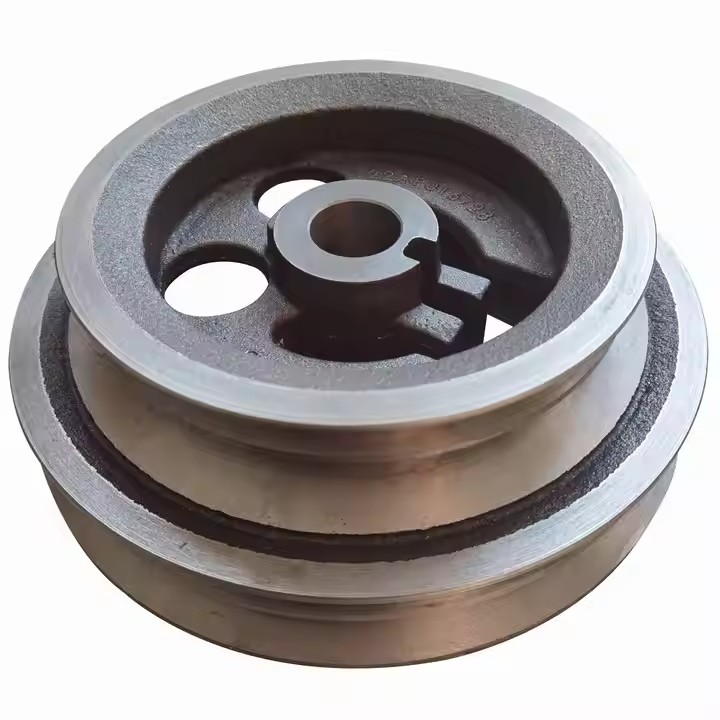
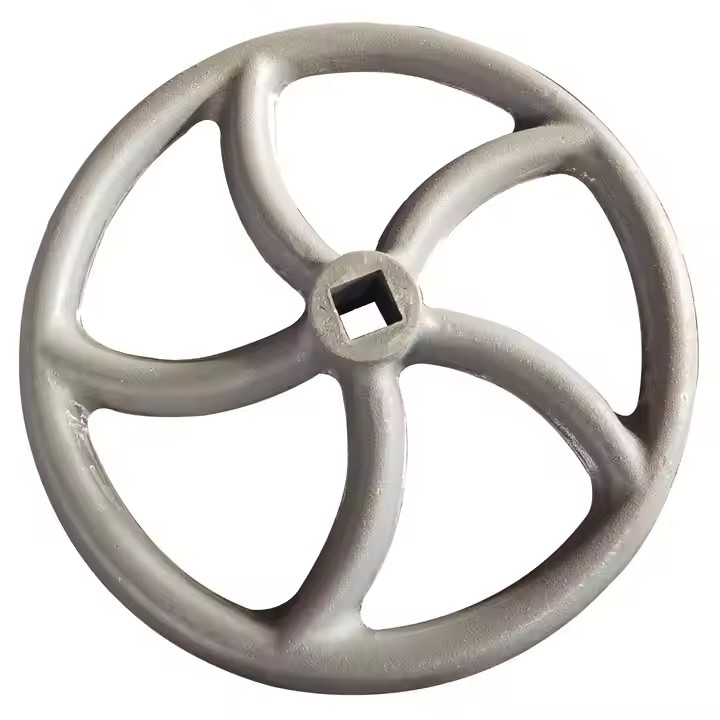
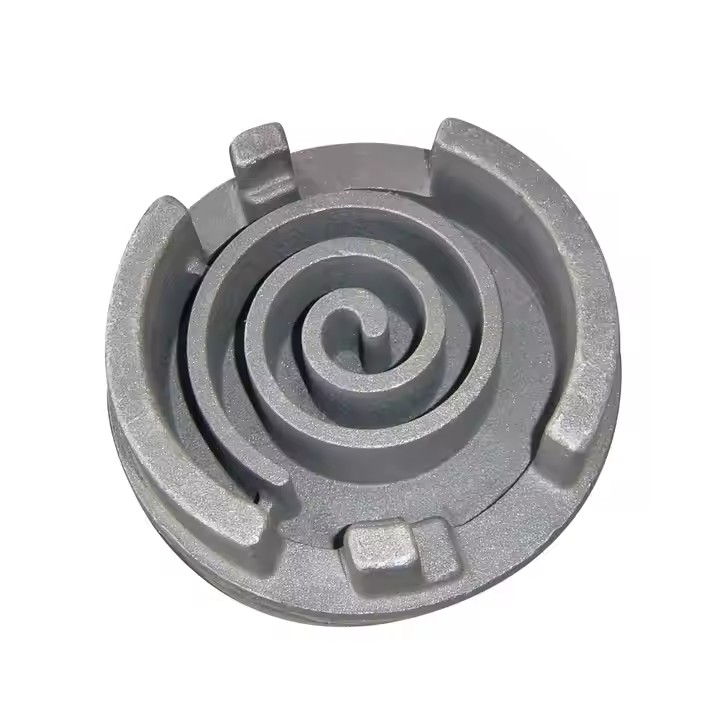
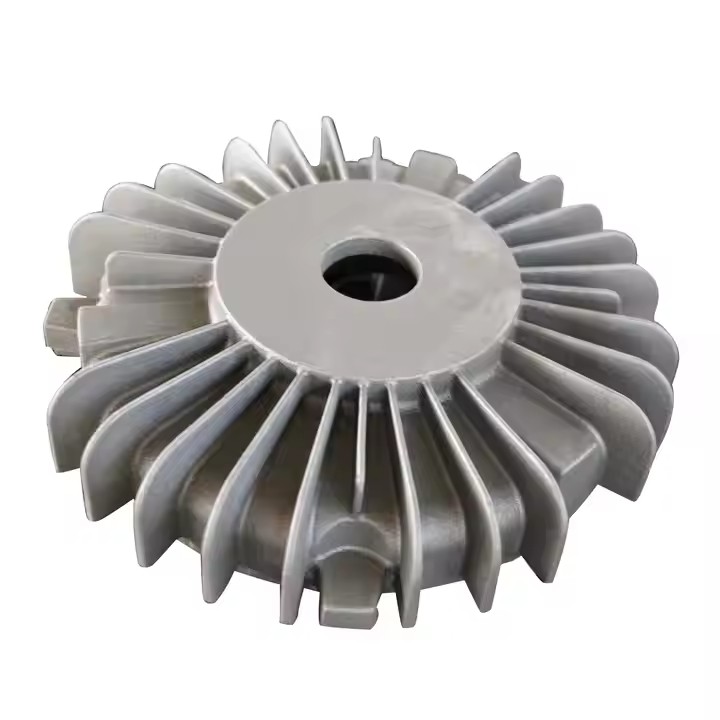
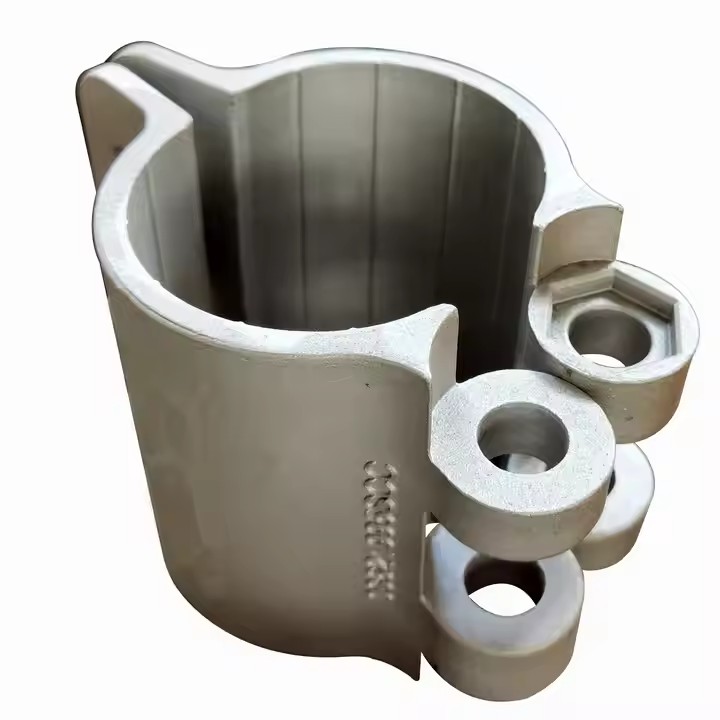
Gray Iron Parts

Custom Gray Iron Parts: OEM Manufacturing FAQs
Can SIMIS manufacture custom gray iron castings from our drawings?
Yes. SIMIS supports drawing-based OEM manufacturing of custom gray iron parts, including cast machine components, housings, pulleys, bases, brackets and other industrial castings. Depending on the geometry and production requirements, the proposed route may involve sand casting, shell mold casting, lost foam casting, CNC machining and protective finishing. We review material specifications, casting feasibility, functional dimensions and inspection requirements for each project.
Which gray cast iron grades can be specified?
Customers may specify gray iron according to ASTM A48/A48M, EN 1561, ISO 185 or another applicable material standard. Common engineering examples include ASTM A48 Classes 20, 30, 35 and 40, and EN-GJL-200, EN-GJL-250 and EN-GJL-300. The correct grade depends on the part's strength, hardness, wall thickness, wear conditions and service requirements. Grades from different standards should not be treated as automatically interchangeable.
What is the difference between gray iron and ductile iron?
Gray iron contains graphite primarily in flake form, while ductile iron has predominantly spheroidal graphite. The flake structure can contribute to vibration damping, thermal behavior and machinability, but also produces comparatively limited tensile ductility and fracture resistance. Ductile iron is often considered when greater elongation or different strength characteristics are needed. Neither material is universally better; the choice must follow the part design and operating conditions.
Can gray iron parts be supplied with precision CNC machining?
SIMIS supports CNC finishing of gray iron castings for bearing seats, mounting faces, center bores, pulley grooves, threaded holes and other functional features. Actual tolerances depend on part size, machining datums, wall stiffness, tooling and the customer's drawing. A component with accurate machined interfaces does not necessarily require equally tight tolerances on every as-cast surface.
What information is required for a gray iron casting quotation?
Please provide 2D engineering drawings and available STEP or other 3D models, the specified gray iron grade, approximate casting or finished weight, overall dimensions, required quantities, critical machined features, surface finish and inspection requirements. Where damping, thermal performance, pressure containment or wear resistance is important, include the relevant operating conditions and acceptance criteria rather than relying on a general material description.
OEM Custom Gray Iron Castings and Machined Components
Gray cast iron, also called grey iron or flake graphite cast iron, is widely used for industrial components requiring castable geometry, good machinability and useful vibration damping characteristics. Its graphite flakes distinguish it from ductile iron and influence both its advantages and limitations.
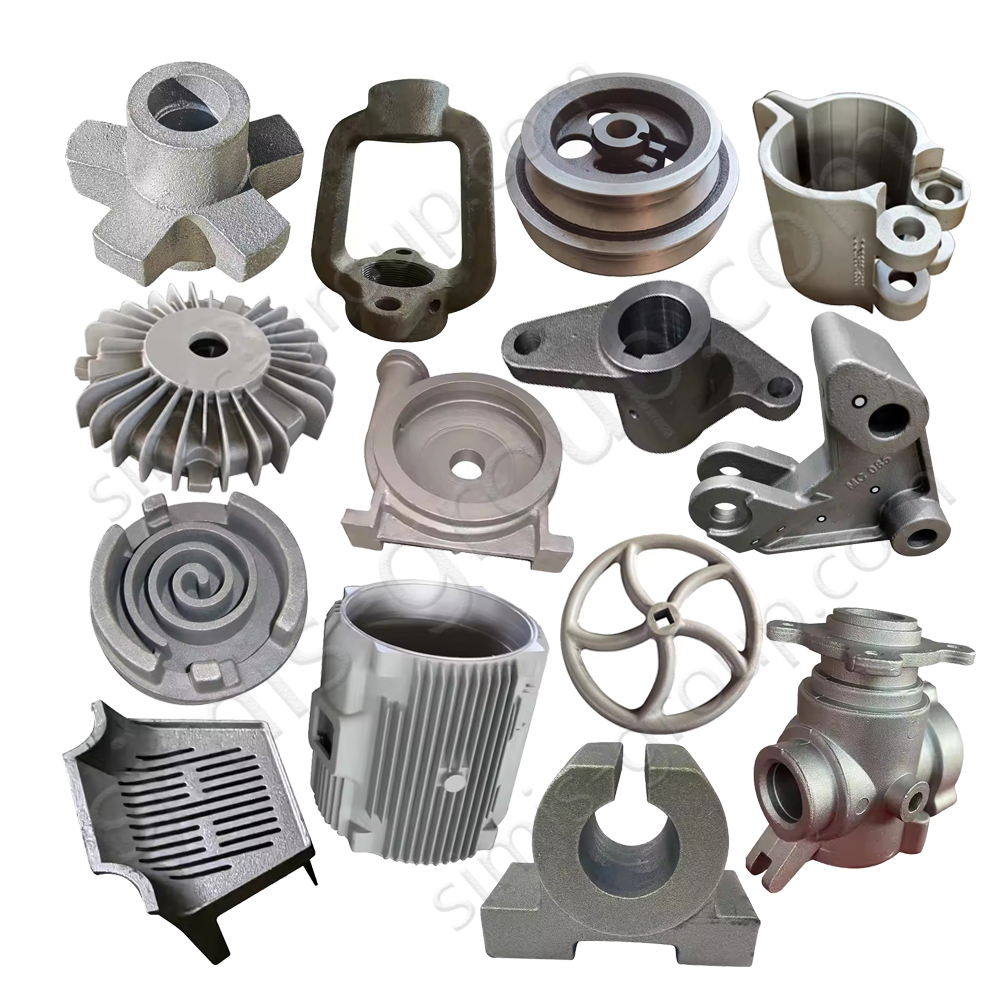
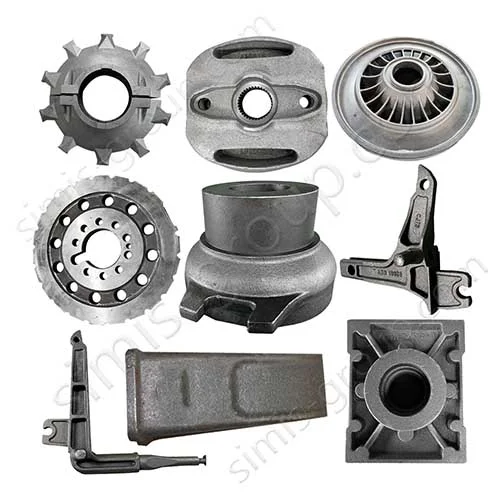
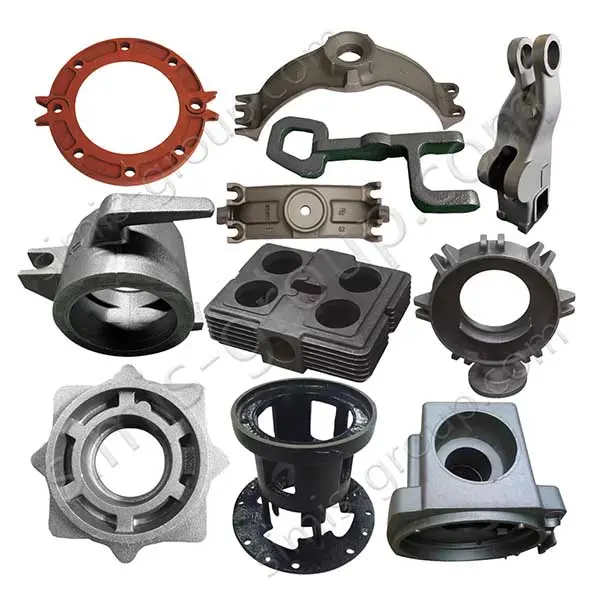
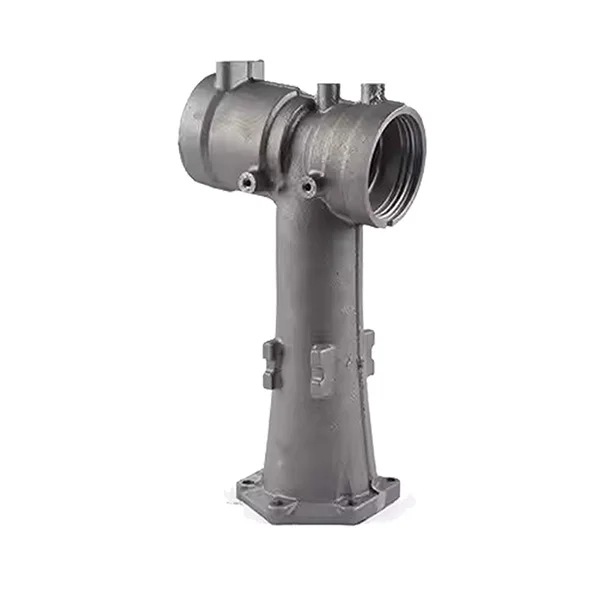
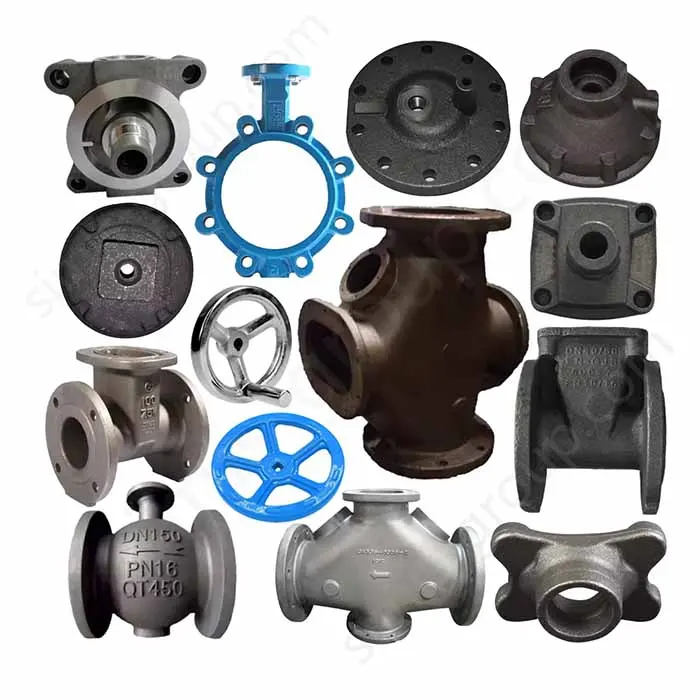
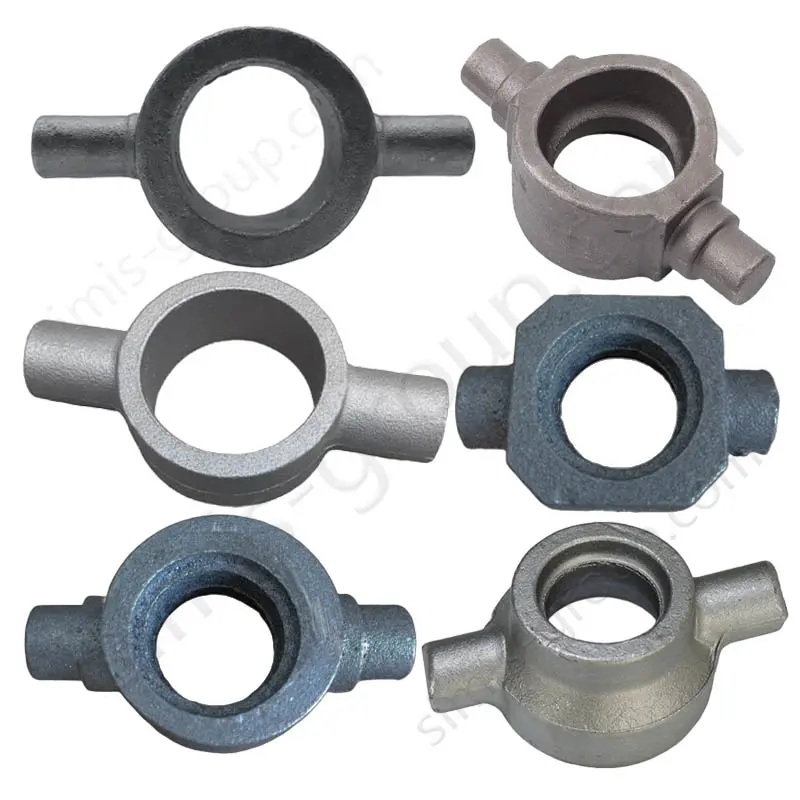
Typical components include machinery bases, brake-related castings, engine housings, compressor parts, pump casings, pulleys, flywheels, equipment counterweights and other stationary or moderately loaded components. However, the suitability of gray iron for a particular application depends on the grade, casting section, loads, thermal conditions and relevant safety requirements.
SIMIS provides custom gray iron casting and secondary machining based on customer drawings. Manufacturing decisions are made around the functional design, production quantity and required acceptance standards instead of assuming that one casting process or one gray iron grade fits every component.
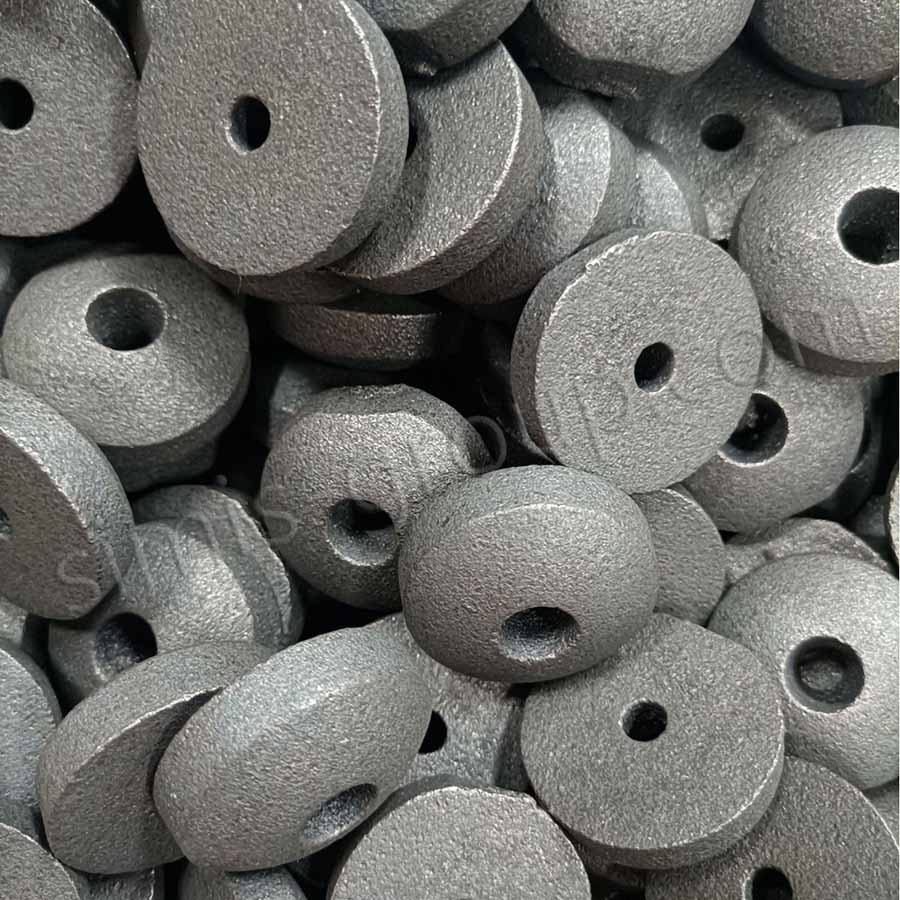
Manufacturing Processes for Custom Gray Iron Parts
Gray iron can be manufactured using several molding methods. Selection depends on the casting's overall size, required surface definition, internal cavities, tooling investment and production volume. Mold design must also support the required material quality and provide enough stock for subsequent machining.
Sand casting for machinery housings and heavy components
Sand casting is a versatile choice for gray iron machine bases, housings, counterweights, large pulleys and other complex or heavy castings. Green sand and resin-bonded sand molding may be considered depending on the component's requirements and production arrangement. The process can accommodate casting cores and substantial sections, subject to a suitable gating, feeding and solidification design.
SIMIS offers custom sand casting services for drawing-based iron components. Pattern development, machining allowances and critical surfaces should be reviewed before tooling production.
Shell mold casting for repeat-production gray iron components
Shell molding may be suitable for smaller or medium-sized parts requiring consistent mold geometry and detailed external features. It can be evaluated for selected pulleys, mounting components and repeat-production castings. Tooling cost, achievable part size, casting section and required dimensional tolerances influence its economic suitability.
Our shell mold casting capabilities provide an alternative route where the required geometry and production quantity justify the tooling arrangement.
Lost foam casting for selected integrated shapes
Lost foam casting may be considered for certain complex geometries where a disposable foam pattern provides manufacturing advantages. Pattern dimensional stability, coating, gas evacuation, surface quality and internal soundness must be assessed for the particular component. The process should not be described as eliminating every casting defect or guaranteeing that all internal passages can be formed without difficulty.
SIMIS can review appropriate lost foam casting applications during the manufacturing feasibility assessment.
| Manufacturing Route | Potential Applications | Main Considerations |
|---|---|---|
| Sand Casting | Machine bases, large housings, heavy pulleys and counterweights | Core layout, section thickness, tooling, feeding and machining allowance |
| Shell Mold Casting | Suitable smaller repeat-production components | Tooling investment, mold detail, size and dimensional repeatability |
| Lost Foam Casting | Selected complex near-net-shape components | Foam pattern preparation, gas control and casting soundness |
| CNC Finish Machining | Bearing bores, mounting faces, pulley grooves and shaft interfaces | Functional datums, tolerances and machined surface quality |
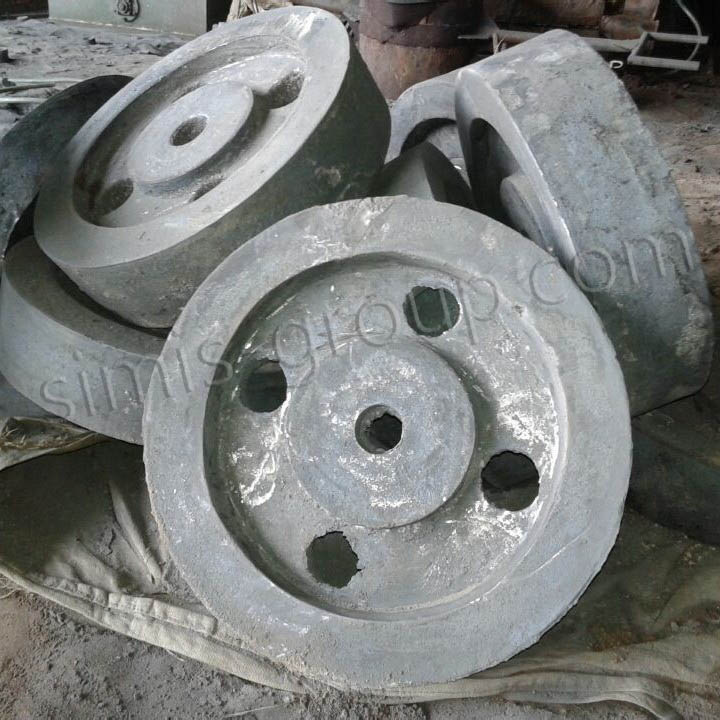
Gray Iron Material Grades and Flake Graphite Microstructure
The characteristic structure of gray cast iron consists of graphite flakes distributed through a metallic matrix that may contain ferrite, pearlite or other constituents depending on the grade and processing conditions. Graphite morphology, matrix structure, chemical composition and section thickness collectively affect strength, hardness, machinability, damping and thermal behavior.
ASTM A48 gray iron classes
ASTM A48/A48M provides specifications for gray iron castings classified by minimum tensile-strength requirements using the applicable standard's test methods. Higher class numbers generally indicate higher specified tensile strength, but they do not guarantee superior ductility, better damping or improved performance in every application. Actual part-section properties and required testing must be considered.
EN-GJL and ISO gray cast iron grades
EN-GJL grades under EN 1561 and applicable ISO 185 designations may also be used for gray iron parts. Examples include EN-GJL-200, EN-GJL-250 and EN-GJL-300. A customer changing from one grading system to another should confirm the required mechanical properties and test conditions rather than assuming direct equivalence.
Graphite shape, flake distribution and matrix structure
Graphite flake size, distribution and type depend on composition, inoculation and cooling conditions. Metallographic examination may be specified when particular graphite characteristics matter to the application. However, one idealized graphite description should not be applied automatically to every casting grade, section size or service condition.
| Material Specification | Examples | What the Buyer Should Confirm |
|---|---|---|
| ASTM A48/A48M | Classes 20, 30, 35 and 40 | Required class, test-bar conditions, hardness and any supplemental requirements |
| EN 1561 | EN-GJL-200, EN-GJL-250 and EN-GJL-300 | Grade designation, casting thickness and specified property verification |
| ISO 185 | Applicable gray iron grade designations | Standard edition, acceptance criteria and mechanical testing |
| Customer-Specific Grade | Project-defined chemistry, matrix, hardness or properties | Feasibility, sampling locations, inspection and traceability requirements |
Material grades should be selected against actual load cases and part geometry. A high tensile-strength class is not an assurance of high impact resistance, and gray iron should not be specified for a safety-critical tensile component without suitable engineering assessment and validation.
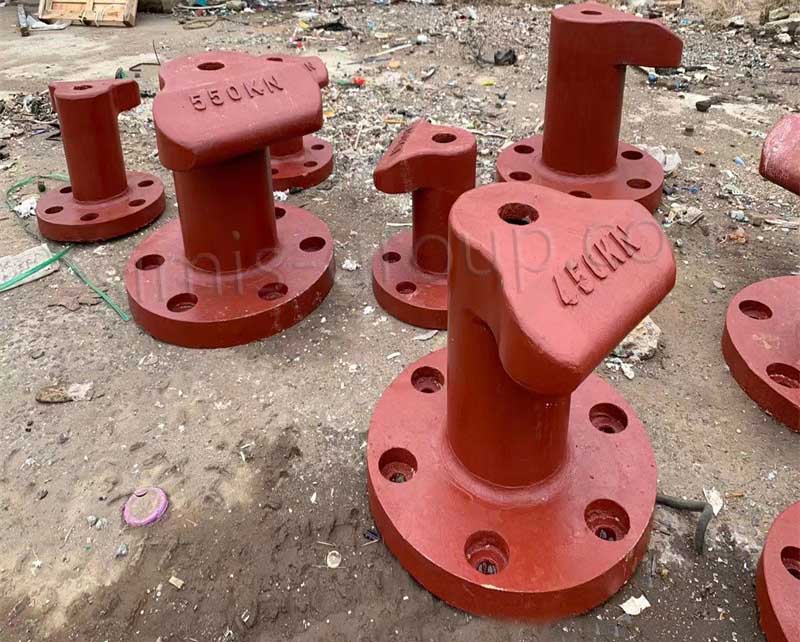
Why Choose Gray Iron? Damping, Machinability and Thermal Behavior
Vibration damping for machine bases and housings
The graphite flake structure can contribute to gray iron's relatively good capacity to dissipate vibration energy. This characteristic is useful when evaluating material choices for machine tool bases, engine housings, compressor frames and other equipment structures. However, actual noise and vibration performance depends on the complete machine, including geometry, stiffness, mounting conditions and excitation frequencies.
Machinability of gray cast iron
Gray iron is often attractive for components requiring significant boring, drilling, turning or milling. The graphite structure can aid chip formation, although machining performance still varies with hardness, matrix structure, inclusions, interrupted surfaces and tool selection. It would be inaccurate to guarantee the same cutting speed or tool life for every gray iron casting.
Heat conduction and thermal cycling
Gray iron can offer useful thermal characteristics for certain engine, braking and machinery applications. Heat-transfer performance depends on material grade, microstructure, temperature and component geometry. Likewise, resistance to thermal cracking or fatigue cannot be inferred from thermal conductivity alone; these characteristics require suitable material selection and application-level validation.
Wear and sliding contact conditions
Some gray iron grades perform well in specified sliding or wear-related applications, particularly when matched with suitable surface finish, lubrication and mating materials. Wear resistance should be evaluated for the actual contact pressure, motion, abrasive conditions and operating environment. The graphite structure does not eliminate the need for lubrication or appropriate component design.
Gray Iron vs. Ductile Iron: Selecting the Correct Casting Material
Gray iron and ductile iron are both widely used in metal casting, but their graphite structures lead to important differences. Material substitution must be supported by analysis of the specific component and should not rely on general claims that one material is always stronger, cheaper or more durable.
| Engineering Factor | Gray Iron | Ductile Iron |
|---|---|---|
| Graphite Structure | Predominantly flakes | Predominantly spheroidal graphite |
| Tensile Ductility | Generally limited | Greater elongation available in suitable grades |
| Vibration Damping | Often advantageous for machine structures | Different damping response depending on grade and structure |
| Load-Bearing Applications | Useful for appropriately designed parts with limited tensile or impact demands | Can be considered for a wider range of specified structural load cases |
| Manufacturing Selection | Grade, section thickness, casting geometry and machinability | Grade, nodularity, elongation and loading requirements |
For parts requiring specified ductility or different structural properties, review the alternative custom ductile iron castings route. Where even higher-strength specialized iron is proposed, austempered ductile iron (ADI) involves its own material grades and controlled heat treatment. ADI should not be confused with conventional gray iron.
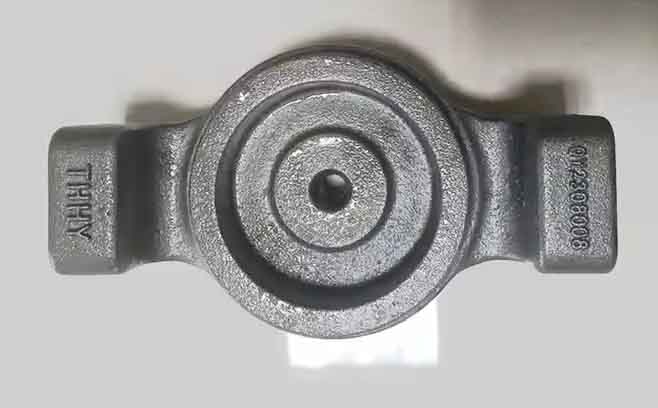
Gray Iron Casting Design and Metallurgical Process Control
The performance of a gray iron component depends on more than its nominal tensile-strength class. Melt chemistry, inoculation, mold conditions, solidification rate and local section geometry influence graphite structure, matrix formation and casting quality. A suitable process plan must therefore consider both foundry conditions and the final part's intended function.
Melt chemistry and inoculation
Carbon, silicon and other alloying elements influence gray iron solidification and matrix properties. Inoculation is used to control graphite formation and reduce the risk of undesirable microstructures. The required chemistry and processing controls depend on the material specification, desired matrix and casting sections.
Section thickness, cooling rate and casting quality
Thick bosses connected to thinner ribs or walls may develop different cooling rates and local structures. The foundry must consider gating, feeding, mold properties and transitions between sections. Thin sections can be sensitive to excessive chilling, while heavy sections may require attention to shrinkage and other solidification-related defects.
Core design and casting cavities
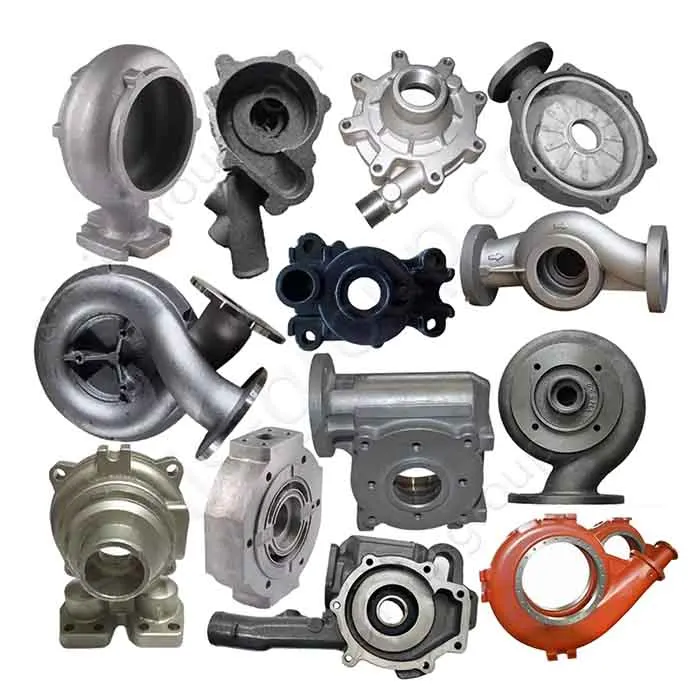
Machinery housings and pump castings may require sand cores to form internal cavities and fluid passages. Core position, wall thickness, cleaning access and machining allowance should be evaluated during the drawing review. Complex internal geometry does not automatically guarantee consistent wall thickness or leak-free performance.
Casting allowances and functional datums
Patterns must provide suitable draft, shrinkage allowance and machining stock. Functional reference surfaces should be identified early so the casting can be located consistently during machining. Reducing unnecessary stock may improve manufacturing efficiency, but sufficient material must remain to achieve the specified finished dimensions.
Precision CNC Machining of Custom Gray Iron Castings
Many gray iron parts require machining of selected functional features after casting and cleaning. SIMIS supports precision CNC machining for custom metal castings according to the dimensional and geometric tolerances on the customer drawing.
Bearing bores and shaft mounting interfaces
Gray iron bearing supports, motor housings and pulleys may require controlled bore diameters, roundness, alignment and surface roughness. The specified fit depends on the mating component, operating conditions and assembly method. A single universal bore tolerance is not appropriate for every product.
Machine base mounting faces and locating holes
Machine bases and structural housings can require flat mounting surfaces, drilled or tapped mounting holes, and consistent datum relationships. The machining strategy should consider component rigidity, clamping distortion and the final assembly's accuracy requirements.
Pulley grooves, hubs and rotating interfaces
Gray iron pulleys and wheels may require turning of outside diameters, belt grooves, hub bores and keyways. Geometric inspection can address concentricity and runout where specified. Dynamic balancing requirements should be established according to the operating speed and complete rotating assembly rather than automatically assigned to every cast pulley.
Sealing flanges and machined fluid passages
Selected pump and valve housings may include machined flange faces, threaded ports, sealing grooves and bearing locations. The allowable pressure, fluid compatibility and leakage acceptance criteria remain project-specific. Accurate machining is important but cannot independently establish a finished assembly's pressure rating.
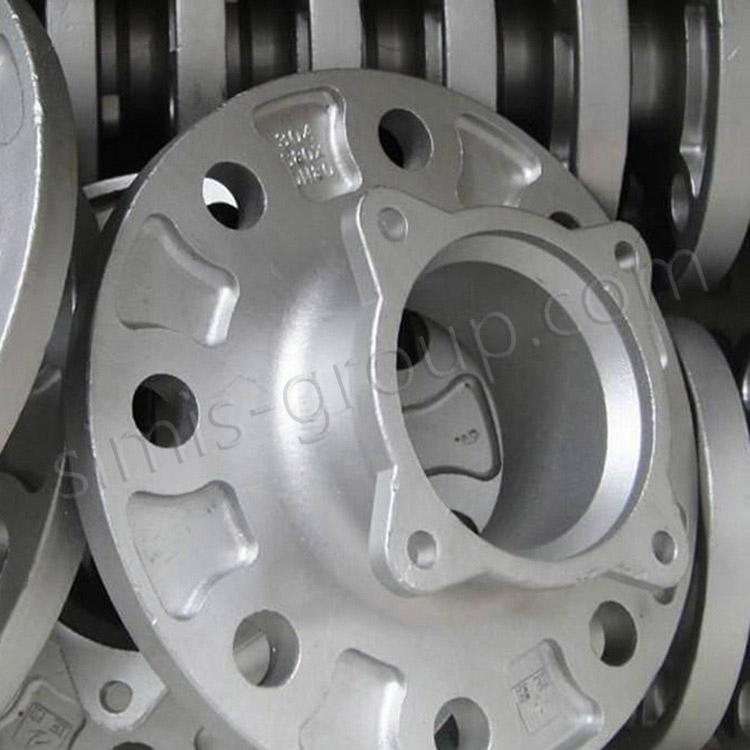
Heat Treatment, Stress Relief and Surface Protection
Stress relief for dimensionally sensitive castings
Some large or extensively machined gray iron components may benefit from an appropriately specified stress-relief process to reduce the risk of dimensional changes during subsequent machining or service. The suitability and processing schedule must be evaluated for the material and geometry. Stress relief does not guarantee zero distortion in every casting.
Annealing and specified matrix requirements
Heat treatment can be considered to modify hardness or matrix characteristics where required by the specified material grade and application. The result depends on chemistry, section thickness and thermal schedule. SIMIS can review relevant metal parts heat treatment requirements with the customer.
Painting, blasting and corrosion protection
Gray iron requires suitable environmental protection when corrosion is a concern. Cleaning, shot blasting, industrial painting or other compatible coatings may be specified. The coating must be selected for the intended environment, and bearing seats, sealing surfaces and other critical dimensions may need masking or post-coating finishing. SIMIS can discuss surface treatment options as part of the OEM manufacturing plan.
Applications of Custom Gray Cast Iron Parts
Machine tools and industrial equipment
Machine beds, equipment bases, columns, saddles and certain bearing supports can benefit from gray iron's machinability and damping characteristics. Structural geometry, stiffness, mounting conditions and local loading still need engineering consideration. Cast material alone cannot guarantee machine accuracy or reduced vibration.
Engine, automotive and powertrain components
Specified gray iron grades may be used for brake-related components, engine castings, pulleys, flywheels and other automotive or industrial powertrain parts. Thermal behavior, wear, cyclic loading and the required inspection plan must be considered for each design. Safety-related or high-speed components require appropriate engineering validation and system-level testing.
Pumps, compressors and fluid-handling machinery
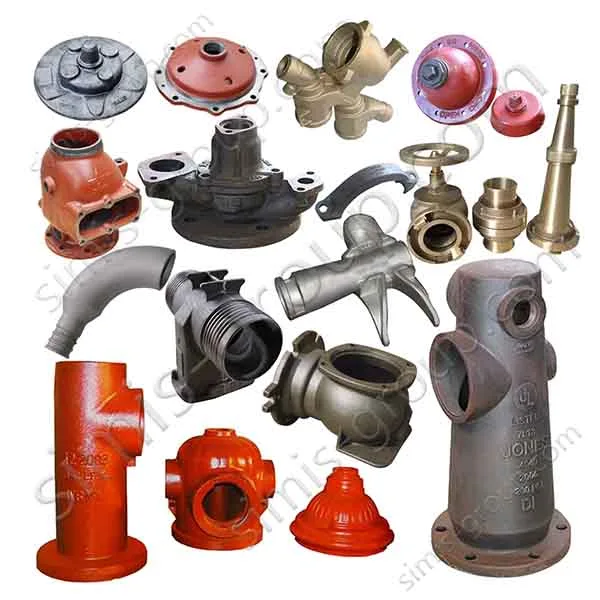
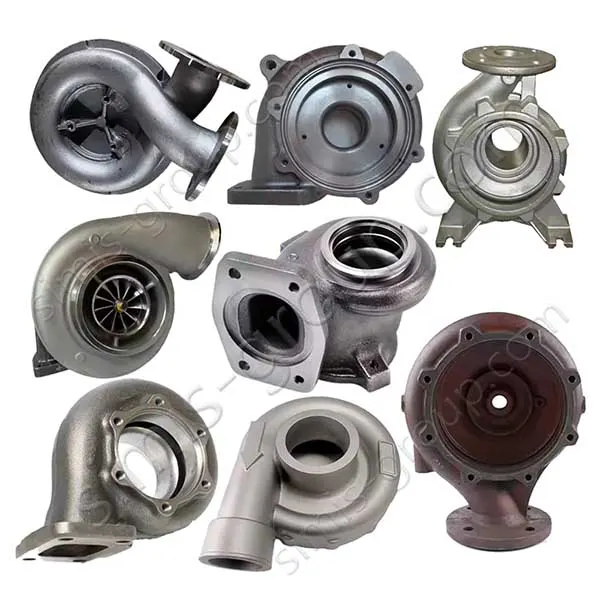
Gray iron is used in selected industrial pump and compressor housings where the specified design, material grade and fluid conditions are appropriate. Machining of bearing bores, internal interfaces and sealing flanges is often important. For related drawing-based castings, see custom pump housings. Pressure-containing applications require their own applicable material specifications, test procedures and system approval.
Counterweights and mass components
Gray iron may also be selected for equipment counterweights, balancing masses and ballast castings because it can form substantial solid sections in custom shapes. These parts emphasize target mass, mounting dimensions, handling geometry and secure installation. Our custom counterweight blocks page explains the separate requirements for finished weight and mass distribution.
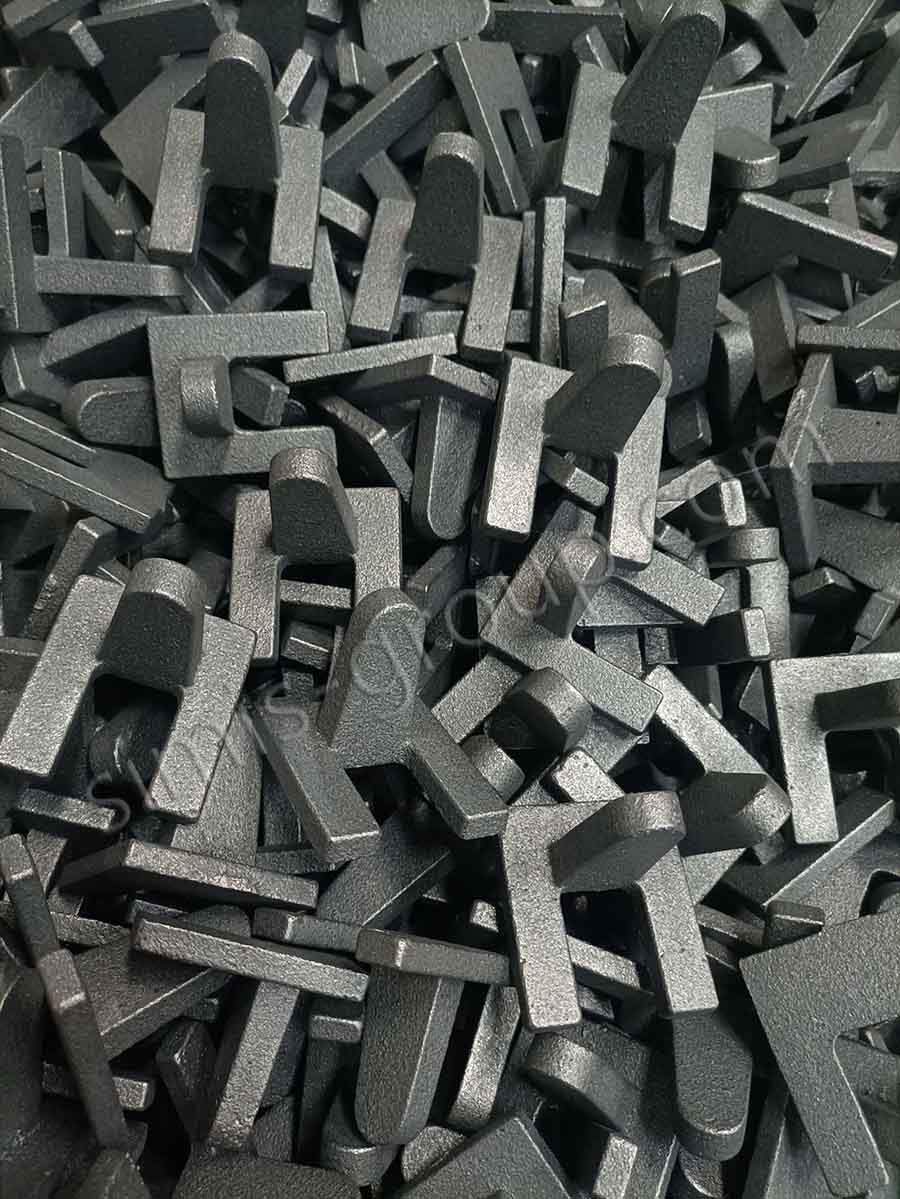
Quality Control and Metallurgical Inspection for Gray Iron Castings
Quality assurance for custom gray iron parts should cover casting material, functional geometry and project-specific operating requirements. An appropriate inspection plan may include chemical analysis, hardness, tensile testing, metallographic examination, casting surface inspection and dimensional checks. The need for each test depends on the agreed specification.
| Inspection Area | Project-Specific Verification |
|---|---|
| Chemical Composition | Specified melt chemistry and production records |
| Tensile Properties | Applicable gray iron class and prescribed test-piece procedure |
| Hardness and Microstructure | Brinell hardness and metallographic examination where specified |
| Casting Integrity | Visual acceptance and appropriate NDT with agreed coverage and limitations |
| Critical Dimensions | Bores, mounting faces, hole patterns and other drawing datums |
| Surface Condition | Cast surface, machining finish and specified protective coating |
| Documentation | Material test reports, dimensional results and traceability where agreed |
Metallographic examination and graphite structure
Where graphite flake characteristics or matrix composition are important, metallographic examination can be included in the test plan. The sampling method and examination locations should represent the actual project requirements. A single sample does not automatically prove identical structure throughout a large casting.
Non-destructive examination and internal defects
Ultrasonic inspection of gray iron may be affected by material-related sound attenuation and microstructural characteristics. Where ultrasonic, magnetic-particle or other testing is required, the method must be selected for the casting material, section and defect type, with agreed acceptance criteria. No examination method should be described as guaranteeing completely defect-free material.
Dimensional inspection and traceability
Critical interfaces may be inspected using CMM equipment, bore gauges, micrometers, fixtures or other appropriate tools. The customer can specify first-article inspection, batch sampling, material traceability and required reporting. SIMIS can review these requirements through its quality control process.
Request a Quote for Custom Gray Iron Castings and Parts
SIMIS supports the production of custom gray iron castings and machined parts based on customer-supplied drawings. Our manufacturing review can cover casting process selection, the specified gray iron grade, pattern development, CNC machining, heat treatment, protective finishing and project-specific inspection documentation.
For an accurate OEM quotation, please provide: 2D engineering drawings and available STEP or other 3D files; required material standard and gray iron class; casting or finished-part weight; maximum dimensions; machining datums and tolerances; critical surface finishes; estimated batch and annual quantities; and any required test or inspection reports.
If the component is used in braking, rotating machinery, pressure-containing equipment or another safety-related application, also include its operating conditions, applicable standards and validation requirements. Proposed material changes or structural modifications should be approved by the customer's responsible engineering team before production.
Send your custom gray iron part drawings and purchasing requirements to info@simis-group.com for a manufacturing feasibility review and quotation.