Custom Counterweight Balancing Blocks Manufacturer
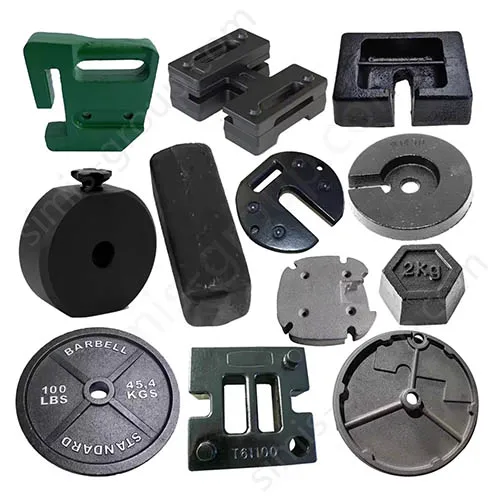


Counterweight Balancing Blocks

Custom Counterweight Blocks: OEM Manufacturing FAQs
Can SIMIS manufacture custom counterweight blocks to our drawings?
Yes. SIMIS supports OEM manufacturing of custom cast iron counterweight blocks, balancing weights and ballast components based on customer drawings. Depending on the required weight, dimensions, material and production volume, manufacturing may include sand casting, shell mold casting, CNC machining and protective finishing. We review the target mass, mounting arrangement, casting geometry and inspection requirements before recommending a production route.
Which is better for counterweights: gray cast iron or ductile iron?
Gray cast iron is often a practical choice for counterweights that primarily provide mass and do not serve as highly stressed structural connections. Ductile iron may be considered where the weight also contains loaded mounting features or where the specified mechanical properties require greater ductility. The final grade should be selected according to the component's geometry, operating conditions and customer engineering requirements rather than density alone.
Can the finished counterweight meet a specified weight tolerance?
A target finished mass and allowable tolerance can be included in the manufacturing specification. The achievable range depends on casting size, geometry, material variation, cleaning, machining and finishing. Counterweights can be checked using suitable weighing equipment, and accessible adjustment areas may be machined where the design permits. The mass tolerance and any center-of-gravity requirements must be agreed before production.
Can mounting holes, slots and lifting features be customized?
Yes. A counterweight design may include through-holes, mounting bosses, recessed fastener locations, stacking interfaces, positioning slots or handling features. Critical mating dimensions can be CNC machined when required. Any lifting eye, handling opening or retained-load connection must be assessed for its intended loads and verified according to the customer's approved design; a cast-in opening alone does not establish a rated lifting capacity.
What information is needed for an OEM counterweight quotation?
Please provide the 2D drawing and available 3D model, material grade, target mass and tolerance, overall dimensions, mounting-hole or slot specifications, center-of-gravity requirements where applicable, surface treatment and estimated order quantity. State whether the weight will be installed individually or as part of a stacked assembly, and identify any safety-related handling or retention requirements. This information helps determine casting feasibility, finishing operations and the inspection plan.
OEM Cast Iron Counterweight Blocks for Industrial Equipment
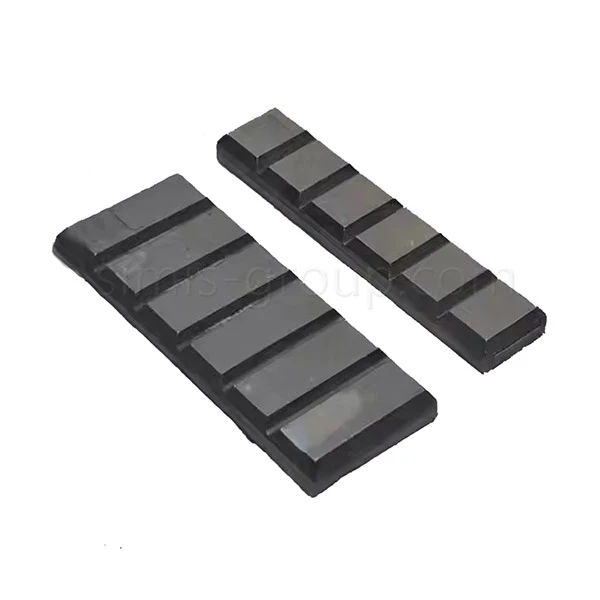
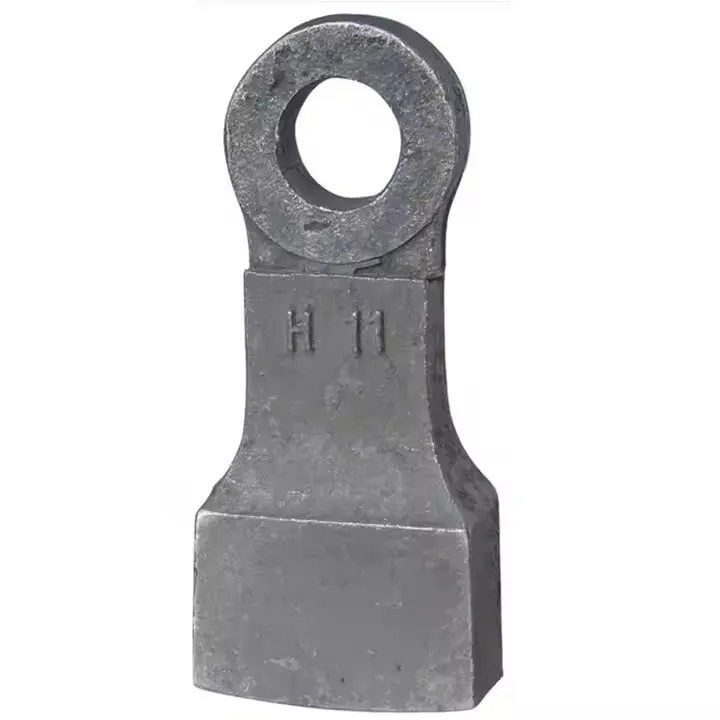
Counterweight blocks are mass components used to offset another load, adjust an equipment's mass distribution or support a designed balancing arrangement. Common configurations include cast iron ballast blocks, removable counterweight plates, equipment-specific balancing weights and assembled counterweight packs. Their dimensions and connection features are developed around the available installation space and the machine manufacturer's requirements.
For many applications, the most important purchasing requirements are not complex surface tolerances but the correct finished weight, repeatable mounting dimensions and a secure fit within the equipment. A heavy casting can be relatively simple in shape yet still require careful control of its production mass, handling surfaces and attachment details.
SIMIS supports drawing-based cast counterweights for industrial machinery, construction equipment, material-handling systems and other OEM applications. Unlike standard off-the-shelf ballast plates, custom components can incorporate project-specific recesses, mounting holes, stacking profiles and space-constrained geometries.

Counterweight Blocks, Ballast Weights and Balancing Components: Key Differences
The terms counterweight, ballast weight and balancing block are sometimes used interchangeably, but their functional requirements can differ considerably. Identifying the actual purpose is important before defining the manufacturing and inspection requirements.
| Component Type | Primary Function | Important Requirements |
|---|---|---|
| Equipment Counterweight | Offsets an operating load or contributes to the designed equipment mass distribution | Target mass, location, retention and structural attachment |
| Ballast Block or Plate | Adds weight within a defined available space | Mass, overall dimensions, stackability and installation clearance |
| Machine Balancing Weight | Adjusts the static mass distribution of a machine or moving mechanism | Mass tolerance, installed position and functional reference dimensions |
| Rotating Balance Weight | Contributes to a specified rotating assembly balance correction | Mass, angular position, operating speed and assembly-level balancing requirements |
A heavy stationary counterweight does not automatically require dynamic balancing. Conversely, a balancing weight installed on rotating machinery must be assessed as part of the relevant rotating assembly. The manufacturing and inspection plan should reflect the actual duty rather than applying one universal balancing specification to every block.
Casting Process Selection for Custom Counterweight Blocks
Casting is a practical manufacturing option for custom counterweights because it can produce substantial metal mass in compact or irregular shapes. The process must accommodate the required casting weight, geometry, order volume and any functional mounting details. The lowest tooling cost does not necessarily produce the lowest total delivered cost for every project.
Sand casting for heavy cast iron counterweights
Sand casting is a common choice for large and heavy counterweight blocks. It accommodates relatively simple solid masses as well as castings with recessed mounting regions, raised bosses or non-standard external contours. Tooling can be reviewed according to the required quantities and size. SIMIS offers custom sand casting for drawing-based iron components.
Shell mold casting for suitable repeat-production weights
For smaller or medium-sized parts that require repeatable shapes, defined surface features or higher-volume production, shell mold casting may be considered. The decision depends on the component's size, the available tooling system, surface requirements and the relationship between pattern cost and production quantity.
Lost foam casting for complex external geometry
Some counterweight geometries with complex recesses or irregular contours may be candidates for lost foam casting. However, a near-solid counterweight rarely benefits from introducing unnecessary internal cavities. Pattern stability, casting soundness, dimensional requirements and the actual weight target must all be evaluated before choosing this route.
| Manufacturing Route | Potential Fit | Manufacturing Considerations |
|---|---|---|
| Sand Casting | Large, heavy blocks and custom ballast shapes | Pattern cost, solidification, casting variation and material handling |
| Shell Mold Casting | Suitable smaller repeat-production weights | Tooling investment, dimensional repeatability and part-size limits |
| Lost Foam Casting | Selected complex near-net-shape configurations | Pattern accuracy, casting quality and weight consistency |
| CNC Finish Machining | Functional holes, positioning surfaces and approved mass adjustment | Datum selection, machining stock and finished-weight verification |
Gray Cast Iron vs. Ductile Iron for Counterweight Manufacturing
Gray cast iron and ductile iron are both relevant materials for custom counterweight production, but their principal differences are mechanical rather than a simple distinction between high-density and low-density metals. Their densities are relatively close, while graphite structure, strength, elongation and fracture behavior differ.
Gray cast iron counterweight blocks
Gray iron is commonly considered for non-structural ballast and mass components. Its castability, machinability and damping characteristics can be useful in many machine applications. However, the presence of graphite flakes influences fracture behavior, so loaded mounting eyes or highly stressed connections require a specific material and design assessment. SIMIS also manufactures custom gray iron castings for OEM applications.
Ductile iron counterweight components
Ductile iron offers a different combination of tensile properties and elongation because its graphite is present predominantly as nodules. It may be considered where the casting contains functional mounting structures or experiences handling and operational loads beyond providing mass alone. The applicable grade must be established through the customer's drawing and verified material requirements. Learn more about custom ductile iron parts.
| Material | Potential Advantages | Important Limitations |
|---|---|---|
| Gray Cast Iron | Castability, machinability and vibration damping for appropriate mass components | Limited ductility; loaded attachments require careful engineering review |
| Ductile Iron | Available strength and ductility grades for engineered cast structures | May add material and process requirements not needed for simple ballast |
| Steel | Alternative for fabricated or structurally integrated weights | Total cost and manufacturing route depend on geometry and assembly design |
| Other Specified Materials | Options for unusual packaging, corrosion or equipment requirements | Lower-density alloys may require greater volume to achieve the same mass |
The correct material is determined by the installed function, casting shape, strength requirements, environment and total cost. A higher-strength grade is not automatically necessary for a counterweight whose principal purpose is to provide a defined mass.

Target Mass, Weight Tolerance and Center of Gravity
Mass control is often a defining requirement for counterweight production. Even if a casting fits the available space, its actual mass can vary due to casting dimensions, material properties, removed gates and risers, machining and surface finishing. A clear mass specification is therefore necessary when the equipment design depends on a restricted weight range.
Define the target finished mass
The drawing should state whether the required weight refers to an individual casting, a finished painted component or a complete assembled counterweight pack. The allowable tolerance can be stated as an absolute mass range or percentage, provided the acceptance method is clear. Because coatings and accessories contribute to finished weight, the measurement stage should also be defined.
Control mass distribution and center-of-gravity position
For some equipment, total mass alone is insufficient. The position of the center of gravity relative to functional mounting datums may also influence system behavior. Overall shape, material distribution, recesses and machining locations therefore need to be considered. Where a center-of-gravity tolerance is specified, its feasibility and verification method must be reviewed separately from ordinary weighing.
Allow suitable weight adjustment features
A drawing may identify non-critical regions where small amounts of material can be removed to bring the finished weight into tolerance. Such regions must not compromise required mounting features, minimum wall sections or the approved mass distribution. Machining cannot be assumed to correct an underweight casting unless the design includes a separately approved means of adding mass.
Individual weights and counterweight assemblies
When several blocks form one assembly, the customer should define whether each block needs an individual tolerance or only the completed group must meet the specified mass. Stacking order, locating geometry and retention must also be confirmed. The equipment designer remains responsible for the final balance and stability calculations.
Mounting Features and CNC Machining Requirements
Counterweight blocks can be manufactured close to their finished shape, but some mounting interfaces require secondary machining. SIMIS can review CNC machining for installation features specified on the customer's drawings.
Bolt holes and locating features
Mounting-hole diameter, center-to-center spacing and relative position can affect equipment assembly. Depending on tolerance, holes may be cast near-net and then drilled or machined to final dimensions. Slots and counterbores require appropriate access and adequate material around the attachment regions.
Stacking surfaces and installation clearance
Stacked ballast systems may require consistent overall thickness, interlocking shapes, aligned recesses or controlled bearing contact. The drawing should identify functional faces and installation clearances instead of applying unnecessarily tight tolerances to every external cast surface.
Handling slots and attachment integrity
Cast-in handling slots or lifting features may simplify production logistics, but their geometry must be compatible with the intended handling method. Concentrated loads, impact during installation and the casting material's local properties require consideration. If a lifting feature must carry a rated load, its design and verification requirements should be supplied by the customer.

Casting Design and Surface Treatment for Heavy Counterweights
Heavy castings need a manufacturing plan that addresses mold filling, solidification, cleaning and safe handling. Because counterweights may contain substantial solid sections, shrinkage behavior, feeding arrangements and material consistency should be reviewed alongside tooling and dimensional requirements.
Heavy sections and casting soundness
Large variations in section thickness can contribute to uneven solidification and internal shrinkage. Gates, risers, mold design and local geometry should be evaluated before production. Minimizing casting defects is important, but no sand-casting process can be described as guaranteeing completely void-free material in every component.
Cleaning and edge treatment
After casting, gates and risers are removed and the component is cleaned. Grinding, shot blasting, deburring or local edge finishing may be applied according to the drawing. Handling edges and mating slots deserve attention because sharp flash or residual material can interfere with installation and safe handling.
Painting and protective finishing
Counterweights used outdoors may require painted or powder-coated surfaces to reduce corrosion exposure and meet equipment appearance specifications. Surface preparation, coating thickness, color and inspection requirements should be defined by the project. SIMIS can discuss relevant metal surface treatment options.
A protective coating does not guarantee indefinite corrosion resistance. Outdoor durability depends on the coating system, environment, damage during service and maintenance. It is also important to confirm whether the specified target weight applies before or after finishing.
Applications of Custom Counterweight Balancing Blocks
Construction and earthmoving equipment
Excavators, forklifts and other equipment may use custom-shaped counterweights in their approved mass-distribution arrangements. These castings can require complex external profiles and mounting recesses to fit the available machine envelope. The machine manufacturer determines the necessary mass, center of gravity and stability conditions.
Lifting machinery and material handling
Selected lifting and material-handling systems use counterweights to offset operating loads. The mounting, retention, handling and test requirements can be safety-critical. A counterweight casting should be produced to the approved design and should not be presented as independently establishing a lifting machine's working load limit or resistance to overturning.
Machine tools and industrial equipment
Machine tools and special-purpose equipment may incorporate balancing masses in vertical axes, moving structures or equipment bases. Depending on the mechanism, a counterweight may offset gravitational forces or provide a selected mass distribution. SIMIS supports related industrial machinery metal components made to OEM drawings.
Mining and heavy-duty industrial systems
Mining equipment and large industrial installations may require durable ballast or counterweight components with considerable mass. Their manufacturing requirements can include large casting dimensions, transportation planning, coating durability and accessible handling features. See the related mining equipment castings range for other custom metal components.
Quality Inspection: Mass, Dimensions and Material Verification
Counterweight quality should be assessed against the final part specification rather than relying only on a visual casting inspection. The appropriate plan may include weight verification, mounting dimensions, material grade, surface condition and additional integrity checks for loaded attachment features.
| Inspection Item | Project-Specific Check |
|---|---|
| Finished Mass | Weighing with suitable equipment against the agreed mass tolerance |
| Center of Gravity | Specified evaluation or measurement where required by the assembly design |
| Installation Dimensions | Overall envelope, hole spacing, slots, thickness and functional datums |
| Material | Grade, chemistry and specified material properties |
| Casting Condition | Visual inspection and appropriate defect acceptance criteria; NDT if specified |
| Surface Finish | Coating appearance, specified thickness and handling-edge condition |
| Traceability | Lot identification, inspection records and supporting documents where agreed |
Weight inspection and measurement consistency
The weighing method should be suitable for the component's mass and the specified tolerance. It is important to identify whether attachments, protective coatings and packaging are excluded from the accepted part weight. For repeated orders, consistent weighing and documentation practices help compare production batches.
Material and casting inspection
Material verification may include chemical analysis and grade-specific mechanical testing. Casting inspection can address surface defects, critical mounting regions and agreed internal-quality requirements. Non-destructive testing should be selected for the material and the applicable acceptance standard, rather than assuming that every counterweight requires comprehensive ultrasonic or radiographic inspection.
Assembly-related acceptance
For stacked or retained counterweights, checking the assembly interface can be as important as weighing individual pieces. Fit checks, inspection gauges or sample assembly may be included where specified by the OEM. SIMIS can review the agreed plan through its quality control procedures.
Request a Quote for Custom Cast Iron Counterweight Blocks
SIMIS supplies OEM counterweight blocks and industrial balancing components manufactured to customer specifications. We can review casting feasibility, material selection, critical mounting features, finished-mass requirements and protective finishing for new or repeat-production projects.
For a detailed quotation, please provide: 2D drawings and available STEP or other 3D models; target finished weight and tolerance; material specification; maximum dimensions; installation holes, slots and stacking interfaces; center-of-gravity requirements if applicable; surface coating requirements; planned batch and annual quantities; and the required inspection documentation.
If the component has a load-bearing or safety-related role, also include the operating conditions, retention arrangement, approved handling requirements and applicable engineering standards. This allows the production plan to distinguish a straightforward ballast casting from a structurally loaded counterweight component.
Send your custom counterweight drawings and purchasing requirements to info@simis-group.com for a manufacturing feasibility review and quotation. The proposed casting process, machining scope, finishing and inspection requirements can then be confirmed for your OEM project.