Custom Chocky Wear Bars & Blocks Manufacturer
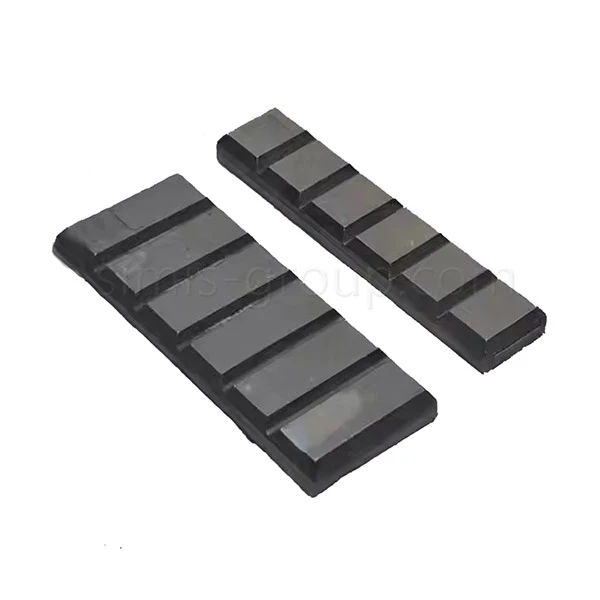


Chocky Wear Bars & Blocks

Custom Chocky Wear Bars & Blocks Manufacturing FAQs
Can SIMIS manufacture chocky wear bars and blocks to our drawings?
Yes. SIMIS works with OEM and industrial buyers on custom-cast chocky wear bars, wear blocks and selected wear-liner components. We review the drawing, requested alloy, wear environment, dimensions, mounting method and required quantity before confirming mold design, production feasibility and inspection scope. Our focus is made-to-order parts for mining and bulk-material equipment rather than retail replacement stock.
Should a chocky wear block use high-chromium white iron or high-manganese steel?
The choice depends on how the part actually wears. High-chromium white iron is commonly considered where hard particles cause severe sliding or gouging abrasion but impacts are limited to what the selected grade and geometry can tolerate. Austenitic high-manganese steel is more appropriate for some high-impact, work-hardening applications. The two alloys are not interchangeable. Feed particle size, impact energy, abrasion pattern and operating temperature should guide material selection.
Can custom wear blocks be manufactured with a weldable steel backing?
A bimetal design may combine a hard, abrasion-resistant casting with a lower-carbon steel backing intended for attachment to the equipment. The specified interface geometry, joining or cast-on method, backing thickness and acceptance criteria need to be reviewed for each design. Welding should be performed on the approved backing or attachment feature under a suitable procedure; the hard high-chromium wear face should not be assumed directly weldable.
Which casting methods can be considered for wear bars and blocks?
Sand casting is a common starting point for thick or relatively large wear parts. Investment casting may be assessed for smaller, detailed shapes, while lost foam casting can be considered where its geometry and alloy requirements are suitable. The selection is based on size, section thickness, shape, alloy, batch volume and any bimetal interface—not simply on which process offers the finest surface finish.
What information is required for an OEM chocky block quotation?
Send 2D drawings or a 3D model, overall dimensions, specified material grade, order quantity, attachment details and any critical tolerances. It is especially useful to describe the material being handled, impact level, sliding direction, operating temperature, target replacement interval and any approved hardness, microstructure or bond-inspection requirements. If an existing worn part is available, dimensions and photos can help clarify the service condition.
OEM Chocky Wear Bars and Wear Blocks for Abrasive Equipment
Chocky wear bars and blocks are replaceable protective elements used where bulk solids repeatedly contact equipment surfaces. The goal is to protect the underlying steel structure with a suitable wear material and a mounting arrangement that can be serviced when the wear allowance is consumed. Typical uses include excavator buckets, shovel lips, transfer chutes, hoppers, crushers and heavy material-handling equipment.
SIMIS offers drawing-based manufacturing of custom metal wear components. For these parts, selecting a hard alloy is only part of the engineering decision. Casting geometry, available wear thickness, the support structure, attachment method and the expected balance between abrasion and impact all influence the specification. We therefore review the complete component drawing rather than treating every wear bar as the same standard product.

Wear Material Selection: High-Chrome Iron, Manganese Steel and Bimetal Designs
The best material is the one matched to the dominant wear mechanism and the approved design. High hardness alone does not establish the impact toughness of a part or guarantee its life in service. Where a customer calls out a particular grade or standard, the applicable edition and acceptance criteria should be specified in the purchase documentation.
| Material or construction | Where it may be considered | Important technical points |
|---|---|---|
| High-chromium white cast iron | Sliding abrasion, mineral handling, chute protection and selected low-to-moderate impact wear zones | Hard carbide-bearing microstructure; check alloy grade, section thickness, carbide distribution, specified hardness and fracture risk. ASTM A532/A532M may be relevant when required by the drawing. |
| Austenitic high-manganese cast steel | Applications with sufficiently severe impact or deformation to promote work hardening | Different behavior from high-chrome white iron. Evaluate impact regime, work-hardening conditions, base material and specified steel grade. |
| Bimetal wear block: hard face + steel backing | Weld-on or mechanically attached designs requiring both a wear face and a more readily attachable backing | Confirm backing grade and thickness, casting-to-backing joining method, bond-area requirements, attachment method and agreed verification. |
| Customer-specified wear-resistant alloy | Special temperatures, corrosion exposure, gouging loads or established OEM replacement designs | Confirm the actual purchase specification and whether an approved alternative is permitted. |
Some customers specify hardness in HRC or HB, while others use chemistry, microstructure and field wear data as additional acceptance measures. A nominal hardness range should never replace the actual material specification or be used to promise a specific wear life.

Casting Processes for Custom Wear Bars and Blocks
Sand Casting for Thick-Section Wear Components
Sand casting is often an option for wear bars, blocks and larger liners where heavy sections or custom outlines are involved. Pattern allowances, feeding and cooling behavior must be considered when casting abrasion-resistant alloys. The mold and tooling plan can also account for recesses, bevels and other part features intended to fit a particular bucket, chute or frame.
Investment and Lost Foam Casting for Suitable Shapes
For smaller wear parts with more intricate features, investment casting may be evaluated if the selected alloy, dimensions and economic volume suit the process. Lost foam casting is another potential route for certain complex one-piece shapes. Neither method automatically produces better wear resistance: material chemistry, microstructure and operating conditions remain central to performance.
Machining and Finishing of Attachment Features
High-chromium white iron can be difficult to machine after final hardening. For this reason, cast-to-shape features, tooling allowances and the sequence of any required machining should be planned early. Depending on the design, CNC machining or grinding may be appropriate for selected mounting faces, backing features, slots and holes. A hard wear face should not automatically be designed with deeply machined features if an alternate cast-in or backing-side detail would be more practical.
If an OEM needs a combined wear block and steel backing, both casting feasibility and the attachment interface should be considered during the process review. A hard-face casting and its backing should be treated as an engineered assembly with specified inspection requirements, not merely two materials placed together.
Critical Dimensions and Mounting Design for Chocky Wear Parts
A chocky wear block must cover the target contact zone while fitting the existing structure. A dimensional drawing should define more than length, width and thickness; the location of the backing, bevels, weld zones and clearances also affects installation and replacement.
Length, width and working thickness: match the wear zone and the intended replacement allowance.
Wearing-face profile: specify flat, curved, tapered or corner-protection profiles according to the equipment surface.
Wear direction and impact path: identify leading edges and zones of concentrated loading that may require geometry changes.
Backing and attachment details: define a steel backing, weld-access area, bolt feature or other approved fastening method as appropriate.
Installation fit: provide base-frame dimensions, adjacent liner clearances and any specified flatness or location tolerances.
Replacement planning: confirm whether components will be installed individually, in rows or as a custom liner arrangement.
Weld-on chocky blocks are not the same as bolt-on liners. For a weld-on design, the equipment substrate and the selected backing need a compatible joining procedure. For bolt-on blocks, hole layout, fasteners and bearing surfaces must be defined. These choices should be fixed before tooling begins.

Component Inspection and Acceptance Planning
Inspection for high-alloy wear castings should be established around the agreed material and drawing requirements. The following checks may be considered during quotation and production planning; the exact test types, sample frequency and acceptance limits depend on the customer specification.
Alloy chemistry: confirm composition against the specified high-chrome iron, manganese steel or other approved grade.
Hardness and metallography: evaluate hardness, carbide or matrix structure where specified and relevant to the wear mechanism.
Dimensions and profile: check total length, thickness, curvature, mounting position and any critical attachment features.
Bimetal interface: define how backing material, bonding or joining integrity and usable attachment area will be accepted.
Casting examination: use agreed visual or non-destructive checks where section size, service risk or purchase requirements justify them.
Installation documentation: confirm whether the buyer requires material records, measurements, marking and traceability.
ASTM A532/A532M covers abrasion-resistant cast irons used in fields including mining and material handling, but use of that specification should be requested and verified for the specific alloy and order. Neither a hardness number nor a casting inspection report, by itself, verifies a promised reduction in equipment downtime.
Where Custom Chocky Wear Blocks Are Used
The same protective geometry does not work equally well across all applications. Different industries expose a wear part to different particle sizes, impact energies, temperatures and installation constraints.
| Application | Example protected area | What to confirm before production |
|---|---|---|
| Mining and quarrying | Excavator buckets, shovel lips, chute impact zones | Rock size, impact intensity, sliding direction, wear allowance and replacement access |
| Crushing and screening | Transfer points, rock boxes, liners and adjacent wear zones | Gouging versus sliding abrasion, vibration, fastening arrangement and section thickness |
| Cement and bulk materials | Clinker and aggregate transfer chutes, hoppers | Operating temperature, abrasion pattern, material compatibility and service clearance |
| Earthmoving and construction | Bucket wear protection and equipment contact points | Impact regime, backing interface, welding access and service replacement plan |
| Industrial material transport | Scraper or screw-conveyor contact zones where a protective wear insert is appropriate | Feed characteristics, available space, expected contact path and mounting geometry |
For other heavy-duty replaceable wear components, see our custom ball mill liners and custom crusher hammer heads. Our mining castings and forgings page provides further examples of OEM metal parts used in extraction and material handling. A machine shaft or screw conveyor may have a different design and wear mechanism, as discussed on the custom screw conveyor spiral shaft page.
Request a Quote for Custom Chocky Wear Bars and Blocks
SIMIS works with OEM purchasers and maintenance-equipment suppliers that require wear castings produced to their own drawings. We can review the selected alloy, casting route, proposed backing or mounting design, expected lot size and inspection requirements before finalizing the quotation scope.
Drawings: PDF/DWG engineering drawings or STEP models, including dimensions and tolerances.
Material: exact grade or permitted alternatives, including the required wear-face and backing materials for bimetal parts.
Service conditions: material handled, dominant wear mechanism, impact level, working temperature and installation environment.
Mounting arrangement: weldable backing dimensions, bolt or recess details and the mating equipment geometry.
Commercial and inspection needs: quantities, any sample order, required records and project acceptance criteria.

Have a chocky block drawing, a worn sample or a wear-bar replacement project? Contact SIMIS or email info@simis-group.com to request a drawing-based OEM quotation. We will assess the proposed manufacturing and acceptance scope against your specifications.