Custom Guardrail Shoes Base Manufacturer


Guardrail Shoes Base

Custom Guardrail Shoes Base Manufacturing FAQs
Can SIMIS manufacture custom guardrail post bases from our drawings?
Yes. SIMIS offers drawing-based OEM manufacturing for guardrail shoes, cast post bases, flanged post supports and related metal anchoring components. Please provide the approved 2D drawings or 3D models, material specification, post-interface dimensions, hole pattern, finish and expected order volume. We review casting feasibility, machining allowances and the agreed inspection requirements before quoting. Structural performance remains subject to the approved design and the installed barrier system.
Which is better for a guardrail shoe: ductile iron, gray iron or steel?
The correct choice depends on the actual application. Ductile iron may be evaluated for specified cast supports where strength and ductility are needed. Gray cast iron can suit certain decorative, pedestrian or lower-impact uses but should not automatically replace a ductile or steel structural component. Cast steel or fabricated steel may be appropriate for other engineered connections. For highway vehicle-containment systems, the material and shape must match the approved barrier design and its governing requirements.
Can you cast non-standard anchor holes, post sockets and angled bases?
Custom castings can incorporate mounting bosses, sloped bases, post sockets, reinforcing ribs and preliminary hole features where feasible. Anchor holes, locating faces or mating dimensions may need subsequent CNC machining to reach the drawing requirements. We recommend specifying the complete hole pattern, bolt access, post cross-section, connection angle and installation datum before tooling approval.
Does a heavy cast iron guardrail base automatically provide a crash rating?
No. A cast base by itself does not establish the impact performance of an installed guardrail. Vehicle-containment capability depends on the complete tested or engineered system, including the post, rail, fasteners, anchors, supporting structure and installation arrangement. SIMIS can manufacture components against defined project specifications; crash ratings, approvals and final system-level validation must be confirmed by the responsible designer or system supplier.
What information is needed to quote custom guardrail shoes bases?
Send your component drawings, material and grade, overall dimensions, post size, anchor bolt hole diameter and spacing, quantity, surface finish and inspection requirements. If the part belongs to a safety-critical barrier system, include the approved component reference, applicable standard, design load information and any specified traceability or test records. These details determine tooling, casting process, machining scope and quotation accuracy.
OEM Guardrail Shoes and Post Base Castings Made to Drawings
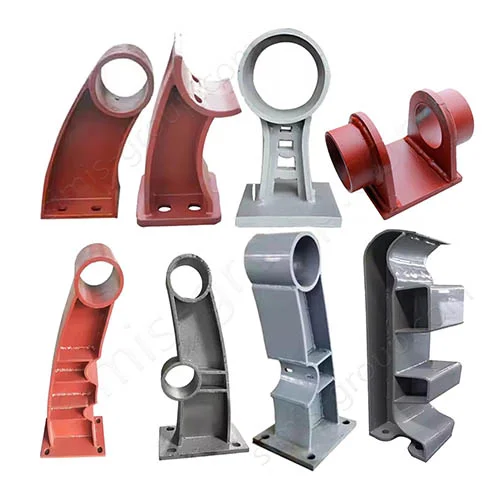
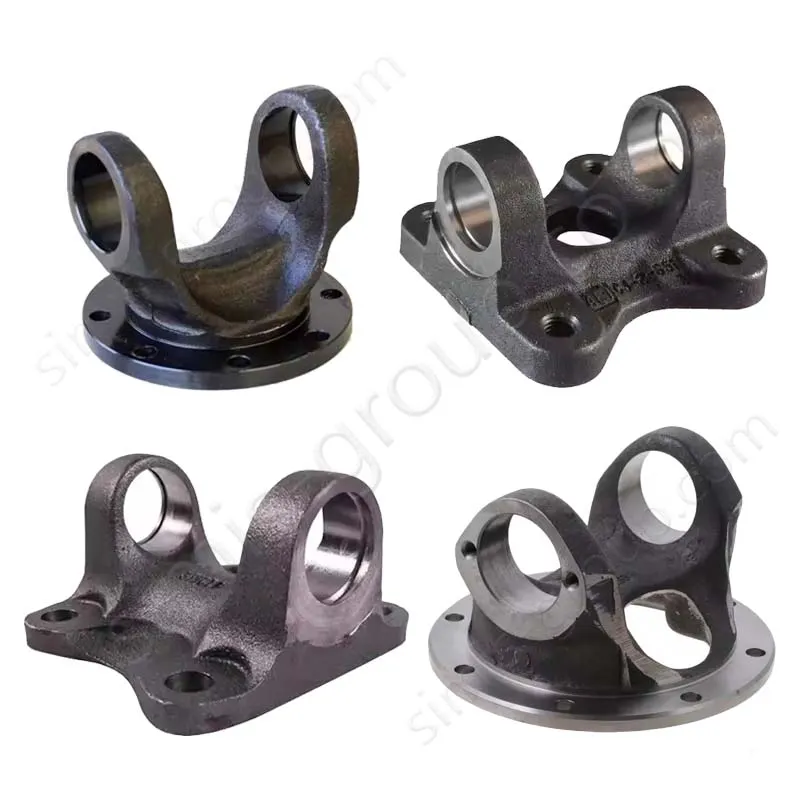
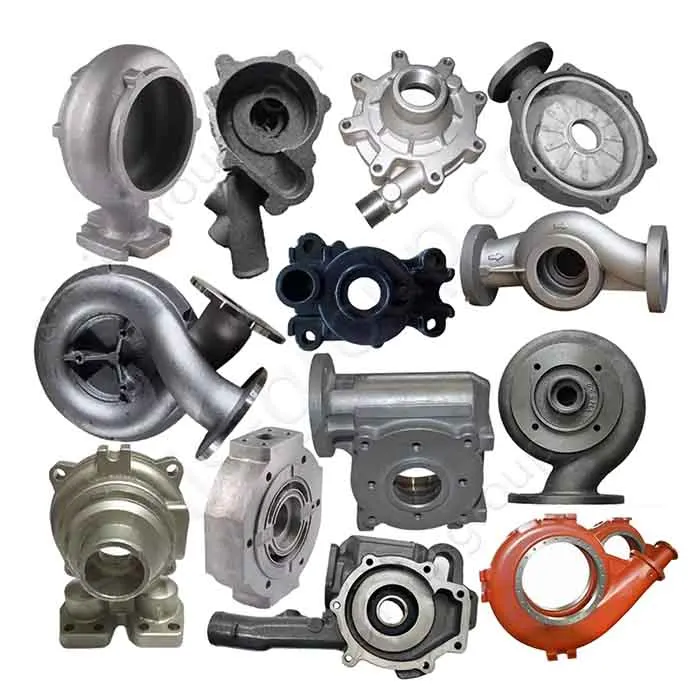
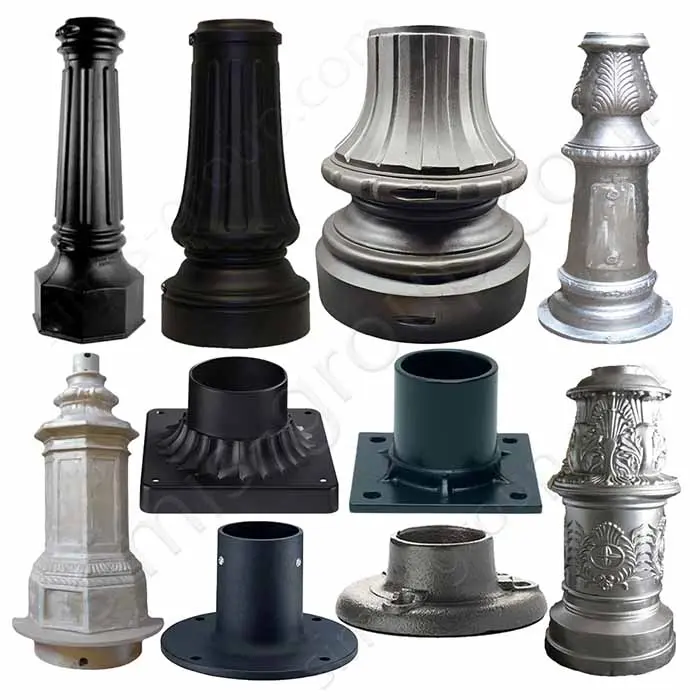
Guardrail shoes bases—also called guardrail post bases, mounting shoes, post footings or flanged post supports—connect a guardrail post to a prepared mounting structure. The geometry may be simple, but its fit is important: a base must locate the post, accommodate the prescribed fasteners and align with the mounting surface. Custom designs are often required when post profiles, barrier layouts or anchor patterns differ from standard hardware.
SIMIS supports OEM production of custom metal guardrail base components using suitable casting and machining processes. Rather than selling a universal off-the-shelf guardrail system, we work from customer-approved drawings to evaluate part geometry, material selection, production volume and functional interfaces. Our municipal engineering metal parts category includes related infrastructure castings and connections.
A decorative pedestrian-railing base, an industrial machine-guard shoe and a component for a road safety barrier can look similar, but their structural duties may be very different. The drawing and application specification must therefore establish the required performance—not the product name alone.

Manufacturing Processes for Custom Cast Iron Guardrail Bases
The best manufacturing method depends on casting size, wall sections, material, geometry, annual demand and the required installation features. Castings can consolidate post sockets, flanges and reinforcement into a single shape, but not every design must be cast. Steel fabrication may be more appropriate for certain plate-based or welded support arrangements.
Sand Casting for Larger and Heavy-Section Post Bases
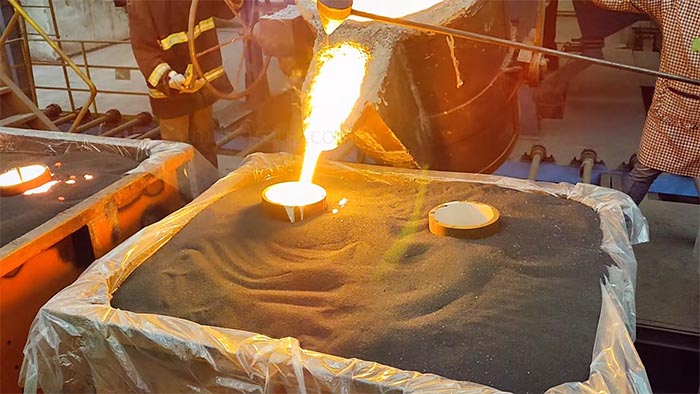
Sand casting is a common route to evaluate for ductile iron or gray iron bases with relatively substantial sections, mounting bosses, reinforcing ribs and shaped post sockets. Pattern design considers draft, parting lines, section changes and enough stock for machined mounting features. For thicker bases, feeding and solidification should be reviewed to reduce shrinkage risks around bosses and the post connection.
Shell Mold Casting for Repeatable Smaller Parts
Shell mold casting may suit certain smaller or medium-sized guardrail shoes produced in regular batches when repeatability and surface definition are important. However, the tooling investment, casting size, alloy and critical tolerance requirements must be assessed. It should not be assumed that shell molding eliminates the need to machine bolt holes or contact faces.
Lost Foam Casting for Suitable Complex Shapes
Lost foam casting is another route to consider for cast base geometries with unusual external forms or complex cast features. Process feasibility depends on the metal grade, wall thickness, tooling and expected acceptance criteria. Decorative contour complexity alone does not prove that a process is appropriate for a highly loaded structural part.
CNC Machining for Critical Mounting Interfaces
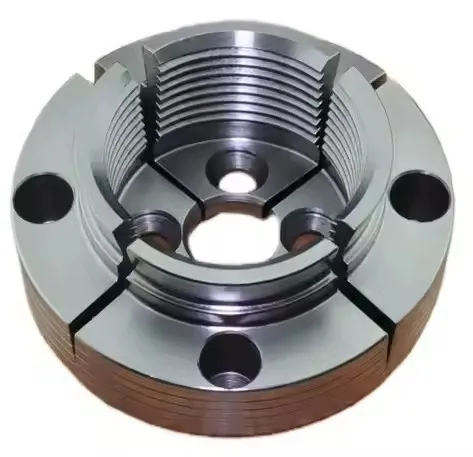
Depending on the drawing, CNC machining may be used to finish bolt holes, mating faces, post socket features, counterbores, locating surfaces or special threads. Machining is planned against functional reference datums so the finished shoe can be inspected and assembled consistently. Not all cast surfaces require machining; the correct scope depends on tolerances and how the component is mounted.
| Manufacturing route | Typical suitability | Main manufacturing considerations |
|---|---|---|
| Sand casting | Medium-to-large cast iron shoes, heavy-section bases and integrated bosses | Parting line, feeding, wall transitions, draft and machining stock |
| Shell mold casting | Suitable smaller cast shoes with repeat production | Tooling, component size, repeatability and surface detail |
| Lost foam casting | Selected complex cast geometries | Pattern design, material feasibility and casting acceptance criteria |
| CNC machining | Defined holes, mounting faces, bores and post interfaces | Datum selection, position tolerance, flatness and tool access |
| Steel fabrication | Specified plate or welded connection arrangements | Weld design, distortion control, material grades and approved structural details |
Material Selection: Ductile Iron, Gray Iron and Steel
A guardrail shoe must be specified for its actual duty. Material properties, base thickness, mounting configuration, environment and failure consequences all matter. Specifying a stronger metal without checking the connected post and anchors does not demonstrate that the assembled barrier can resist a particular force.
| Material | Potential manufacturing advantages | Engineering cautions |
|---|---|---|
| Ductile iron | Castable into ribs, sockets and flanges; grade-dependent strength and ductility | Choose the required grade and mechanical acceptance criteria; assess load and impact conditions |
| Gray cast iron | Good castability and dimensional stability for certain fixed supports | More brittle behavior; should not be assumed suitable for crash-sensitive or highly impact-loaded systems |
| Cast steel | Potential option for engineered load-bearing cast connections | Grade, structural design, casting soundness and acceptance testing need project review |
| Fabricated structural steel | Useful for plate-based or welded shoe arrangements | Weldability, joint geometry, bolt connections and corrosion protection must be specified |
Where a buyer specifies a gray iron or ductile iron casting, chemical composition, mechanical properties and the correct designation should be documented. Our custom gray iron castings page provides additional context for iron-casting projects, but the suitability of any grade for a particular barrier must be evaluated separately.
For outdoor exposure, the purchaser may specify painting, powder coating or another compatible corrosion-protection system. Surface preparation, coating thickness, masking of mating surfaces and fastener clearances should be confirmed in the order requirements. The appropriate coating must be selected for the metal substrate and the installation environment; its service life cannot be guaranteed from the base material alone.

Critical Guardrail Base Dimensions and Installation Interfaces
The most valuable engineering information in a guardrail shoe drawing is often the relationship between the post, the anchorage and the base itself. Tight tolerances should be reserved for features that affect fit and alignment, rather than assigning unnecessarily close machining requirements to every as-cast dimension.
Anchor Bolt Hole Pattern and Edge Distance
Hole diameter, center-to-center spacing, positional tolerance, counterbore or slot shape and fastener accessibility should match the approved installation design. Holes may be cast in near-net shape and finished by drilling, or machined entirely after casting. The anchor capacity depends on the specified anchors, embedment, concrete or other substrate and edge distances; it cannot be inferred from the cast shoe dimensions alone.
Post Socket Geometry and Vertical Alignment
A cast-in post pocket or clamping interface must match the nominal post profile, installation clearance and attachment method. For non-standard railing slopes, the required post angle and orientation should be referenced to a controlled datum. Designers should also define drainage and access where water could collect inside a socket.
Mounting Face, Ribs and Local Wall Thickness
The bottom bearing face may be left as-cast or machined if flatness and contact requirements call for it. Reinforcing ribs and thickened bosses can make the casting more complex: abrupt section changes influence feeding and can concentrate loads. Any changes to ribs, fillets or boss thickness should be agreed with the customer before tooling if they affect the approved component design.
Functional datums: specify which surface, hole or post socket establishes assembly location.
Critical tolerances: identify hole positions, post-fit dimensions, heights and angles that control installation.
Fastener details: show bolt diameter, washer envelope, tool clearance and permitted slots if applicable.
Installation conditions: identify substrate type, approved fixing arrangement and whether the design uses bedding or grout.

Inspection Planning for OEM Guardrail Shoes Bases
Inspection is planned around the drawing and the risk associated with the component. A decorative cast shoe might primarily require dimensional and appearance checks, while an engineered load-bearing base may need material verification and additional examinations. The selected tests, inspection frequency and acceptance limits should be agreed before manufacture.
Dimensional checks: overall size, anchor hole diameter and location, post pocket geometry and specified mounting-face flatness.
Material verification: specified grade identification and relevant chemistry or mechanical properties when required by the order.
Casting acceptance: visual examination and customer-specified criteria for surface indications, shrinkage or other discontinuities.
Project-specific NDT: magnetic particle, ultrasonic or another appropriate test only where it is specified, technically suitable and has defined acceptance criteria.
Finish and documentation: agreed coating checks, traceability, measurement reports and inspection records.
A satisfactory dimensional or non-destructive examination does not, by itself, certify the impact performance of a guardrail assembly. Static pull-out tests, connection load tests, vehicle impact tests and infrastructure approvals are different verification activities. The responsible system designer and project authority determine which apply.
Where Custom Guardrail Post Bases Are Used
Guardrail shoes are specified in several types of engineered infrastructure and industrial installations. The relevant loads, installation methods and approval requirements differ by use.
Pedestrian and Architectural Railings
Cast post bases can support ornamental or pedestrian railing arrangements in parks, walkways, public buildings and landscape works. In these projects, appearance, repeatable post position, weather exposure and the specified pedestrian guard loads are important.
Industrial Guardrails and Equipment Barriers
Factories, warehouses and equipment areas may use cast or fabricated post mounting shoes for access separation, fixed railings or machine guarding. Each installation needs the correct post spacing, anchorage and operational load assumptions. Guardrail shoes may complement—but should not be confused with—custom parking barrier bollards that perform a different physical function.
Bridge and Roadside Infrastructure
Some guardrail systems use special base components or mounting brackets on engineered structures. Highway and bridge vehicle-containment assemblies have system-specific performance requirements; an unapproved cast iron substitute should not be used solely because the bolt pattern fits. For related bridge connections, see custom bridge guardrail brackets.
Design for Manufacture: Details That Affect Tooling and Cost
For recurring OEM orders, early coordination between the component drawing and the casting route helps prevent costly tooling changes. Some dimensions are best produced in the mold, while others should be machined after casting. The right balance depends on shape, volume and the customer's approved design constraints.
Pattern and draft: accessible molding faces, parting lines and a practicable method for releasing the pattern.
Wall transitions: transitions from thin webs to thick bosses that can be cast and fed consistently.
Machining allowance: enough stock on the specified locating faces and holes without unnecessary material removal.
Repeatability: checking gauges or fixtures for critical dimensions across repeat orders.
Packaging: protection for machined interfaces and finishes during transport to the customer.
An engineering drawing may specify the final product dimensions without showing the intermediate casting form. SIMIS can review possible casting allowances and proposed manufacturing details during quotation, subject to customer approval for any changes affecting functionality.
Request a Quote for Custom Guardrail Shoes Bases
SIMIS provides custom casting and machining services for guardrail post shoes and related metal support parts based on customer drawings. Our quotation review covers potential manufacturing routes, material grade, tooling, machining scope, required inspections and planned order quantities. We do not treat an individual casting as a pre-certified crash barrier or guarantee the installed system's performance without the relevant design and verification evidence.
Drawings: 2D PDF or DWG drawings and 3D STEP/IGES models where available.
Material: specified grade, approved alternatives and any required test documentation.
Interfaces: post section, socket details, anchor hole pattern, mounting datums, fit and finish.
Project requirements: installation context, applicable standards, design-load references and inspection requirements.
Commercial details: prototype or production quantity, annual forecast, delivery destination and target schedule.
Please contact SIMIS or email info@simis-group.com with your drawings for a manufacturing feasibility review and OEM quotation.