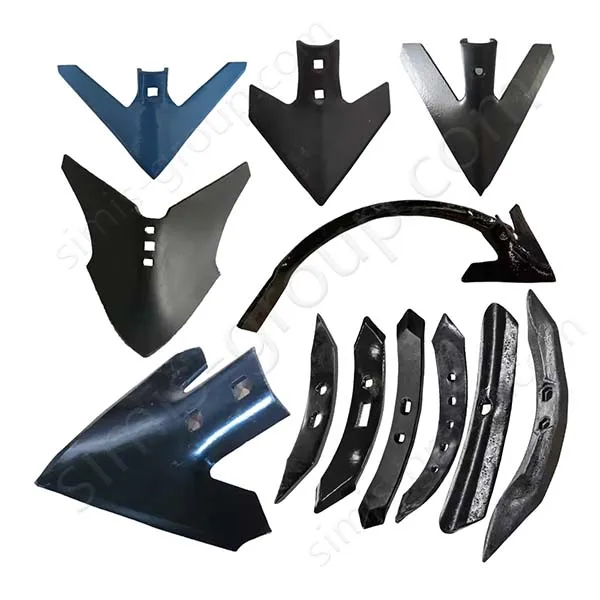
Custom Track Shoe Pad Plates Manufacturer
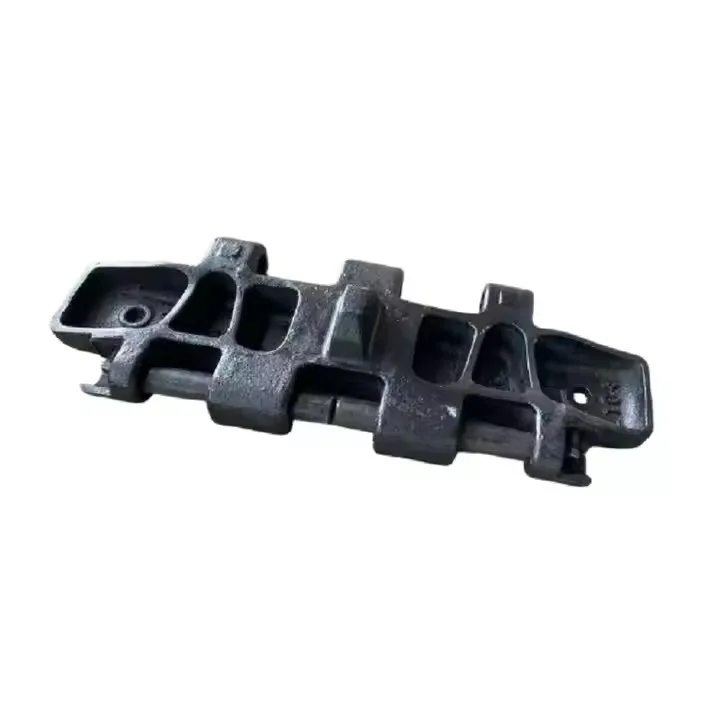


Track Shoe Pad Plates

Custom Track Shoe Pad Plates: OEM Manufacturing FAQs
Can SIMIS manufacture custom undercarriage track shoe plates from our drawings?
Yes. SIMIS supports drawing-based OEM manufacturing of steel undercarriage track shoe pad plates, grouser components and selected related crawler undercarriage parts. Depending on the approved material, shape and production quantity, manufacturing may involve sand casting, shell mold casting, closed-die forging, heat treatment, machining and protective finishing. We review the grouser profile, attachment pattern, steel specification, service conditions and inspection requirements before recommending a manufacturing route.
What is the difference between a track shoe, track pad and track link?
A steel track shoe is the ground-contact component attached to the track chain. Its raised grouser or grousers help provide traction. The term track pad can refer to a steel shoe or, in other contexts, an additional rubber or polyurethane road-protection pad. A track link is part of the articulated chain that connects through pins and bushings. These components have different functions, dimensions and manufacturing requirements, so the purchasing scope must be clearly identified.
Which materials are suitable for heavy-duty crawler track shoes?
Medium-carbon and selected alloy steels are potential choices for heat-treated steel track shoes. High-manganese austenitic cast steel may be considered for particular high-impact wear conditions, but it is not necessarily the best option for low-impact abrasion or every crawler design. Material selection should account for rock impact, soil abrasion, grouser wear, bending loads, operating temperature and the required manufacturing process.
Can SIMIS customize grouser profiles and track shoe mounting holes?
Custom designs can include single-, double- or triple-grouser profiles, special ground-contact features, defined plate thicknesses, mounting-hole patterns and selected relief openings. The final dimensions must match the customer's track chain and undercarriage design. Hole spacing, bolt-seat geometry, mounting-face contact and overall shoe width are particularly important. A similar-looking shoe is not necessarily interchangeable with the existing undercarriage.
What information do you need to quote custom track shoe pad plates?
Please provide 2D drawings and available 3D models, the required component type, shoe width, overall length, plate thickness, grouser number and profile, attachment-hole pattern, steel grade and heat-treatment requirements. Include the mating track link dimensions or undercarriage model, expected ground conditions, operating loads, quantity and required inspection reports. For an integrated link-and-shoe design, provide the complete chain connection geometry, including pin and bushing interfaces where applicable.
OEM Steel Track Shoes and Grouser Plates for Crawler Undercarriages
Track shoe pad plates are ground-engaging components used in crawler undercarriages for excavators, bulldozers, crawler tractors, mining machines and other tracked equipment. They help support the machine and transfer tractive forces between the track assembly and the operating surface. Their design must be compatible with the complete undercarriage, including track links, fasteners, rollers and the intended terrain.
A conventional detachable steel track shoe typically has a plate-shaped body, one or more raised grousers and an attachment pattern for connecting the shoe to track links. Certain specialized undercarriages instead use integrated track links or ground-contact components with pin and bushing connections. These are related products, but their load paths and assembly requirements differ.
SIMIS supports OEM production of custom cast and forged undercarriage metal components based on approved engineering drawings. Manufacturing feasibility depends on the actual component geometry, material grade, production quantity and inspection requirements. Our broader steel casting foundry capabilities support suitable drawing-defined steel components for demanding industrial equipment.

Types of Track Shoes: Single, Double and Triple Grouser Designs
Grouser configuration influences how a track shoe engages the ground. The correct profile depends on the machine's function, required traction, turning behavior and terrain. More grousers do not automatically produce better traction, and taller grousers are not suitable for every ground condition.
| Track Shoe Type | Potential Application | Design Considerations |
|---|---|---|
| Single Grouser | Selected bulldozers and crawler tractors requiring substantial ground penetration | Grouser height, traction, steering forces and impact loading |
| Double Grouser | Selected crawler loaders and other tracked machinery | Contact behavior, turning characteristics and grouser spacing |
| Triple Grouser | Many crawler excavators and machines requiring a different traction and maneuverability balance | Grouser profile, shoe width, contact conditions and undercarriage compatibility |
| Heavy-Service Grouser Shoe | Specified abrasive or rocky operating environments | Wear allowance, thickness, mass and additional loading on connected parts |
| Special-Profile Shoe or Integrated Component | Non-standard crawler assemblies and specialized tracked vehicles | Full assembly interfaces, joint geometry and approval of the custom design |
Single-grouser shoes for traction-focused applications
A single-grouser shoe has one principal raised traction bar across the shoe width. Such designs are associated with selected crawler tractors and bulldozers that require substantial ground engagement. Grouser height and thickness affect penetration and wear, but can also influence turning resistance, ground disturbance and loading on the undercarriage. The approved equipment design should determine the profile.
Double- and triple-grouser shoes for crawler machines
Double- and triple-grouser designs distribute ground-contact features differently. Triple-grouser shoes are widely associated with crawler excavators, where maneuverability and reduced ground penetration may be important. The actual behavior depends on machine mass, shoe width, surface conditions and operating method. A different grouser count should not be substituted without undercarriage approval.
Steel track shoes versus rubber road-protection pads
Some steel shoes are manufactured with additional holes or attachment features for approved rubber or polymer pads. The steel shoe remains the structural component, while the separate pad is selected for particular road-contact or surface-protection requirements. A steel track shoe should not be marketed as automatically safe for asphalt, pavement or finished concrete without an appropriate contact system and application assessment.
Manufacturing Methods for Custom Steel Track Shoe Components
Track shoe and undercarriage components are manufactured using several established metalworking routes. Depending on the design, these can include rolled or formed steel profiles, forging and casting. SIMIS reviews casting and forging options for the selected OEM component; a method appropriate for a complex integrated link is not necessarily the best choice for a conventional flat grouser shoe.
Sand casting for complex alloy steel undercarriage parts
Sand casting may be considered for specially shaped track components with integrated bosses, connecting features or substantial sections. The mold design must address feeding, shrinkage, casting integrity and the machining allowance needed at critical interfaces. Steel grade and casting geometry also influence whether the process is practical. SIMIS can evaluate suitable components through its sand casting foundry.
Shell mold casting for suitable repeat-production designs
Shell mold casting can be considered for selected smaller or medium-sized cast steel components where repeatable geometry and tooling economics support the process. Suitable steel grade, local section thickness, dimensional requirements and internal soundness must be reviewed. Shell molding does not eliminate the need for heat treatment or machining where the engineering drawing requires them. See SIMIS shell mold casting capabilities.
Closed-die forging for appropriate loaded steel components
Closed-die forging may be an option for certain shaped undercarriage components and selected track shoe designs when the material, geometry and production volume justify the tooling. The process plastically deforms steel into the required shape, followed by suitable finishing operations. Forging does not automatically guarantee maximum fatigue resistance or eliminate material and dimensional inspection. SIMIS can evaluate projects through its closed-die forging services.
Rolled and formed steel track shoe profiles
Many conventional steel track shoes are manufactured from rolled profiles or other formed steel sections. Such methods may be economical for repeated production of uniform grouser shapes. Whether rolling or forming is preferable to casting or forging depends on the exact profile, material, order quantity and available production route. The customer's approved material and manufacturing specification should take precedence over any general process recommendation.
| Manufacturing Route | Potential Use | Engineering Considerations |
|---|---|---|
| Steel Sand Casting | Complex or thick-section specialty undercarriage components | Casting soundness, local feeding, section transitions and heat treatment |
| Shell Mold Casting | Suitable smaller repeat-production cast parts | Tooling, steel grade, mold requirements and allowable part size |
| Closed-Die Forging | Selected steel components with appropriate forging geometry | Forging design, material condition, dies and subsequent machining |
| Rolled or Formed Steel | Applicable conventional grouser shoe profiles | Profile availability, forming method, heat treatment and hole-making |
| Secondary Machining | Attachment holes, locating faces and selected link interfaces | Datums, fits, finished material hardness and inspection access |

Track Shoe Material Selection: Alloy Steel, Carbon Steel and Manganese Steel
Track shoe material selection involves competing requirements for wear resistance, toughness, bending strength and manufacturability. The operating surface also matters: abrasive sand, fragmented rock, clay and repeated turning can produce different wear and stress patterns. The selected steel grade must be specified with its intended heat-treated condition and acceptance requirements.
Heat-treated carbon and low-alloy steels
Suitable carbon and low-alloy steels may provide the required combination of strength, wear resistance and toughness when correctly processed. The properties depend on chemistry, section thickness and thermal treatment. A specified hardness range can be useful for some applications, but higher hardness is not a universal indicator of better overall performance. For casting-based designs, see SIMIS custom alloy steel castings.
Austenitic high-manganese steel for selected impact conditions
High-manganese austenitic cast steels may offer useful work-hardening behavior when subjected to sufficient impact or plastic deformation. They are not necessarily superior in every low-impact abrasive environment. Where an austenitic manganese steel is specified, the exact casting grade and its required metallurgical condition should be identified. Such material should not be processed using a conventional low-alloy steel quench-and-temper schedule without a grade-specific engineering review.
Strength, toughness and local wear mechanisms
Abrasive contact gradually removes material from the grouser and plate. Rock impact can cause deformation, localized cracking or other damage, while mounting features may be exposed to different structural stresses. The preferred alloy and process should be selected for the dominant failure mechanisms rather than a general promise of maximum durability.
| Material Category | Potential Benefit | Selection Requirements |
|---|---|---|
| Medium-Carbon Steel | Suitable strength and heat-treatment options for approved shoe designs | Steel grade, forming route, hardness, toughness and duty cycle |
| Low-Alloy Steel | Grade-specific hardenability and mechanical-property options | Chemistry, final heat treatment, section thickness and fatigue loads |
| Austenitic Manganese Cast Steel | Potential work-hardening behavior in suitable impact conditions | Exact casting grade, metallurgical condition and impact environment |
| Customer-Specified Special Steel | Targeted properties for non-standard undercarriage components | Approved specification, property verification and compatibility with mating parts |
Grouser Geometry, Shoe Width and Ground Contact Performance
The geometry of a crawler track shoe helps determine how it engages the ground. Grouser number, height, profile, shoe width and plate thickness should be considered together with vehicle mass, travel speed, track configuration and terrain. Manufacturing accuracy can reproduce the specified design, but it does not independently guarantee a particular traction coefficient or ground pressure under all conditions.
Grouser height, width and profile
Grousers may differ in height, thickness, edge geometry and position across the plate. These dimensions affect contact with soil and the available wear allowance. A taller grouser may penetrate certain ground surfaces more deeply, but can also increase forces during turning or contact with hard surfaces. The finished profile must follow the customer's drawing rather than a universal high-traction geometry.
Track shoe width and flotation
Wider shoes may help increase the available ground-contact area under suitable conditions. However, wider plates also change the bending lever arm, corner loading and turning behavior. Selecting the widest possible shoe is not always appropriate on rocky or uneven ground. Shoe width should be approved for the vehicle's undercarriage and expected operating environment.
Plate thickness and grouser wear allowance
Shoe plate thickness affects structural stiffness and component mass. Grouser dimensions influence the amount of material available before a wear limit is reached. Increasing thickness or adding wear stock should be evaluated for total track mass, bolt loading and machine compatibility. More material does not automatically produce a longer service interval if another part becomes the limiting component.
Mud relief holes and special openings
Some track shoes include relief openings intended for particular mud or debris conditions. Their location and size should be established by the OEM. Openings remove material from the plate and may influence local stress, so they should not be added solely to improve appearance or without considering the structural design.
Track Shoe Bolt Holes, Mounting Interfaces and Chain Compatibility
For detachable track shoes, accurate attachment geometry is essential to the fit between the shoe and the track links. The correct dimensions cannot be determined from shoe width alone. The purchaser should identify the existing track chain, link configuration and all relevant mounting features.
Bolt-hole spacing and mounting pattern
Bolt-hole center spacing, hole diameter, the relationship to the shoe centerline and required seating geometry must follow the approved drawing. Different track chain designs can use distinct patterns even where the steel shoes have similar external dimensions. A replacement part should not be declared interchangeable without confirming these interfaces.
Bolt seats and contact faces
Track shoe connections rely on an appropriate relationship between bolts, nuts, shoe seats and mating links. Bolt seating, local thickness and contact-face geometry can influence load transfer. Tightening requirements and fastener selection are established by the undercarriage manufacturer. Machining a correct hole does not by itself prevent loosening or fastener fatigue.
Track chain pitch versus shoe mounting dimensions
Track chain pitch generally relates to the spacing of consecutive pin centers in the articulated chain. It is not the same measurement as grouser spacing or bolt-hole center distance on a detachable shoe. All relevant dimensions should be supplied separately. For integrated components containing links, the pin and bushing interfaces introduce additional fit, geometry and inspection requirements.
Machining and attachment fit inspection
Attachment holes may be produced using suitable drilling, machining or other approved methods, depending on the manufacturing route and tolerance requirements. Not every hole requires the same finishing sequence. SIMIS can review appropriate CNC machining operations for drawing-defined contact surfaces and precision features. Functional gauges or representative track links may be used where specified to verify assembly compatibility.

Heat Treatment, Hardness and Resistance to Wear and Impact
Track shoe and link components may require heat treatment to develop specified mechanical properties. Treatment selection must follow the steel grade and the function of the part. There is no single heat-treatment procedure that provides the correct balance of hardness, toughness and fatigue resistance for every crawler undercarriage component.
Quenching and tempering of suitable alloy steels
Quenching and tempering may be specified for certain carbon and low-alloy steel parts. The final material properties depend on composition, section thickness, heating, cooling and tempering conditions. Higher hardness can improve resistance to some abrasive contact conditions, but it may be inappropriate if the component requires greater toughness under impact or bending loads.
High-manganese steel requires a different metallurgical approach
Austenitic high-manganese cast steels are commonly processed to obtain the specified austenitic condition rather than conventional hardened martensite. Suitable solution treatment and cooling requirements depend on the exact alloy grade and casting section. Describing manganese steel as requiring the same quench-and-temper treatment as medium-carbon alloy steel would be technically misleading.
Hardness and impact-property verification
Where hardness is a purchasing requirement, the measurement method, location and acceptance range should be specified. Other mechanical tests may be necessary when impact loading or brittle fracture is a concern. A hardness test alone does not demonstrate wear life, fracture toughness or fatigue strength. SIMIS can discuss applicable heat treatment and material-verification requirements.
Distortion and final dimensional condition
Long plates, asymmetric castings and complex link shapes may change dimensions during thermal processing. Tooling allowances, fixturing and machining sequence should be planned accordingly. Critical mounting holes and functional features should be inspected in the final condition specified by the customer.
Corrosion Protection, Cleaning and Production Consistency
Undercarriage components can be exposed to rain, mud, chemicals and outdoor storage before and during service. Depending on the steel grade and equipment specification, suitable cleaning, blasting, priming, painting or temporary rust prevention may be required. The finish should be compatible with mounting interfaces and the intended field environment.
Ground-contact grousers experience wear that can remove conventional coatings. Painting a shoe does not establish permanent corrosion resistance or improved traction. The buyer should identify areas requiring protective finishing and those requiring controlled contact or bolt seating. SIMIS can review project-specific surface treatment options for steel castings and forgings.
For repeat OEM orders, consistency depends on controlling the approved manufacturing method, material, heat treatment and finished dimensions. First-article samples, drawings, reference gauges and agreed inspection records can help establish a common acceptance basis before larger production quantities are released.
Quality Control for Custom Track Shoes and Undercarriage Parts
Inspection should reflect the actual component type. A detachable grouser shoe requires control of the ground-contact profile and mounting interfaces. An integrated track link may require additional pin, bushing and chain-joint dimensions. The material and inspection plan must correspond to the engineering drawing and the intended structural requirements.
| Inspection Item | Project-Specific Verification |
|---|---|
| Material Grade | Specified chemistry and material identification with agreed batch records |
| Mechanical Properties | Tensile, hardness, impact or other required tests according to the material standard |
| Grouser Profile | Number, height, thickness, angle and location of ground-contact features |
| Shoe Dimensions | Width, overall length, plate thickness and designated geometric tolerances |
| Mounting Interfaces | Hole size and position, bolt seats, mounting-face contact and approved fit gauges |
| Integrated Track Links | Pin or bushing bores, center distances and joint-related features where applicable |
| Casting or Forging Integrity | Visual acceptance and specified NDT with agreed examination coverage |
| Heat-Treated Condition | Grade-specific treatment records, final properties and dimensional checks |
| Functional Testing | Project-defined load, fit, fatigue or assembly tests when required |
| Documentation | First-article reports, material certificates and traceability as agreed |
Dimensional inspection and functional gauges
CMM equipment, calipers, gauges and suitable profile fixtures may be used to inspect specified dimensions. For detachable shoes, an approved track-link fixture may help verify mounting compatibility. For integrated components, the inspection plan must also account for the relevant joint geometry. Dimensional accuracy should be evaluated against functional datums rather than general statements about perfect alignment.
Magnetic-particle and other nondestructive examination
Magnetic-particle inspection may be specified for selected ferromagnetic steel components to identify certain surface and near-surface discontinuities. Ultrasonic or radiographic examination may be appropriate for particular casting sections where the method and geometry permit. Each technique has detection limitations. Inspection cannot establish that a component is completely free from every internal defect or guarantee a specified fatigue life without additional verification.
Structural and fatigue validation
Track shoes and attached undercarriage components can experience ground reaction forces, impact and cyclic loading. Actual fatigue performance depends on geometry, material condition, discontinuities, attachment details and the operating load spectrum. Where proof-load or fatigue testing is required, the test arrangement, load levels, duration and acceptance criteria must be specified. Component manufacturing inspection does not replace validation of the complete crawler undercarriage.
Material records and first-article documentation
Customers may require chemistry reports, mechanical-test results, hardness records and first-article dimensional reports. These should be associated with the appropriate material heat, batch or component identification under the agreed traceability plan. SIMIS can review the necessary scope through its quality control processes.
Applications in Excavators, Bulldozers, Mining and Agricultural Machinery
Crawler excavators and construction equipment
Crawler excavators may use steel track shoes with defined grouser configurations and mounting patterns to support movement on soil, gravel or other construction surfaces. The correct shoe depends on machine weight, track chain type and anticipated turning and travel conditions. Replacement parts must match the approved undercarriage interface.
Bulldozers, crawler tractors and pipelayers
Bulldozers and crawler tractors may require grouser configurations suited to pushing, towing and other traction-intensive operations. Shoe width, grouser height and plate thickness must be compatible with the complete machine. Applications involving highly abrasive or rocky ground may require additional design and material review.
Mining and quarry machinery
Mining and quarry undercarriages can encounter abrasive rock, impacts and demanding duty cycles. The appropriate wear-resistant steel, structural geometry and inspection requirements depend on the actual component and machine. SIMIS supports related custom mining machinery castings and forgings for drawing-based OEM requirements.
Agricultural and forestry crawler equipment
Tracked agricultural and forestry equipment may require designs suited to softer ground, mud, crop residue or uneven terrain. Wider shoes may be evaluated to increase the available contact area, but their effect on steering loads and structural durability must also be reviewed. Related equipment components are covered by SIMIS agricultural machinery parts manufacturing services.
Special-purpose tracked vehicles
Some specialized crawler systems use non-standard steel ground-contact plates or integrated chain components. Their manufacturing requirements can differ from typical excavator shoes. For these designs, the buyer should submit the complete track assembly interface, operating environment and relevant qualification requirements rather than assuming compatibility with a standard product family.
Request a Quote for Custom Track Shoe Pad Plates
SIMIS supports OEM manufacturing of custom steel track shoe pad plates, grouser-related components and selected cast or forged crawler undercarriage parts based on approved customer drawings. Our manufacturing review can address process selection, material grade, heat treatment, critical mounting features, finishing and project-specific inspection requirements.
For a detailed RFQ, please provide: 2D engineering drawings and STEP or other available 3D models; whether the product is a detachable track shoe, integrated link or another undercarriage part; shoe width and length; plate thickness; grouser number, height and profile; bolt-hole dimensions and seating details; track chain pitch and link configuration where relevant; specified steel grade and heat-treated condition; operating environment; required inspection reports; and estimated batch and annual quantities.
If the product is intended to replace an existing OEM part, please supply the mating track chain information, relevant assembly drawings or verified dimensions. Part numbers and physical samples can support identification, but final manufacturing requirements should be confirmed against an approved drawing. Any proposed changes to the material, grouser profile, plate width or load-bearing connection geometry should be approved by the responsible equipment engineer before production.
Send your custom undercarriage track shoe pad plate drawings and purchasing requirements to info@simis-group.com for a manufacturing feasibility review and quotation.