Custom Crusher Hammer Head Manufacturer
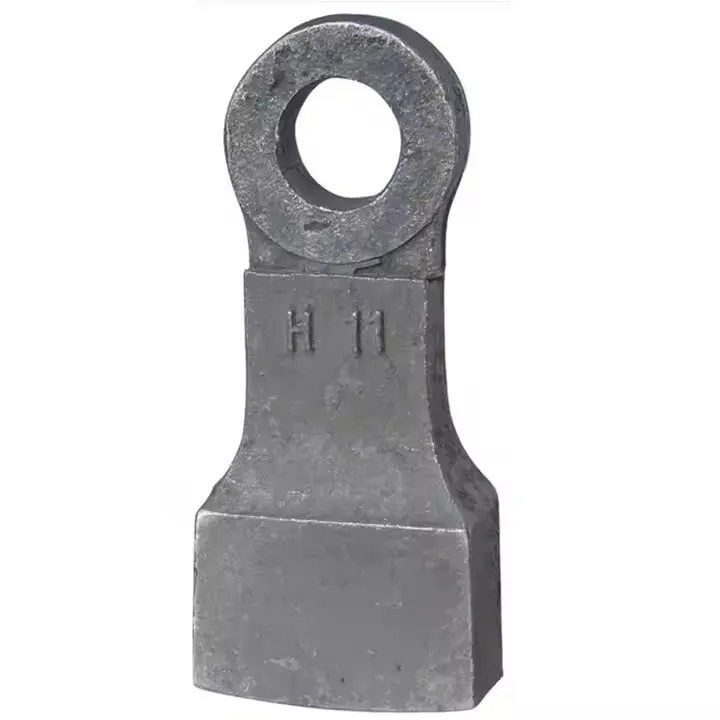


Crusher Hammer Head

Custom Crusher Hammer Head Manufacturing FAQs
Can SIMIS manufacture crusher hammer heads from our drawings or worn samples?
Yes. SIMIS supports drawing-based OEM manufacturing of custom crusher hammer head castings for mining, aggregate, cement and bulk-material processing equipment. We can review 2D drawings, 3D models or a measured sample together with the crusher model, operating conditions and purchasing quantity. The final alloy, casting route, machining scope and inspection requirements are agreed during technical review. A worn sample should be checked against the intended original dimensions before production.
Should I choose high manganese steel or high chromium cast iron for crusher hammers?
The choice depends on the actual wear mechanism. Austenitic high manganese cast steel is often considered where strong, repeated impact can promote surface work hardening. High chromium white cast iron is commonly evaluated where abrasive wear is dominant but impact severity is compatible with its lower fracture toughness. Alloy steel is another option when a different combination of strength, toughness and wear resistance is required. We do not recommend a grade based on hardness alone.
Can the hammer pin hole and mounting surfaces be finished to our tolerances?
Critical interfaces can be evaluated for CNC machining, grinding or other appropriate finishing methods. The required pin bore diameter, bore-to-body position, hole edge distance, contact surfaces and permissible weight variation should be identified on the drawing. Some hardened wear alloys are difficult to machine, so machining allowances and process sequence must be assessed before tooling is finalized.
Does every crusher hammer head need the same hardness or balancing test?
No. Hardness, material condition, casting soundness and mass variation depend on the alloy, hammer design and agreed acceptance plan. A matched hammer set may require individual mass checks or grouping to support the crusher manufacturer's rotor-balance requirements, but this is different from validating the dynamic balance of an assembled rotor. Test methods, acceptance limits and the party responsible for final assembly verification should be specified by the OEM.
What information is required for an OEM crusher hammer head quotation?
Please provide the hammer drawing or sample, required material grade, total dimensions, pin-hole specification, desired quantities, crusher type and model, feed material, approximate lump size, operating speed and service conditions where available. Existing wear patterns or failure photos can also help us evaluate manufacturing and material options. Include any required standards, inspection reports and packaging instructions.
OEM Crusher Hammer Head Castings Made to Your Drawings
Crusher hammer heads are replaceable impact-wear components that strike and fracture feed material in hammer crushers and hammer mills. They operate under a combination of repeated impact, sliding or gouging abrasion and localized stresses near the suspension or mounting features. A reliable replacement therefore needs more than a hard working surface: material toughness, casting design, installation fit and consistent dimensions must be considered together.
SIMIS supports custom metal wear-part manufacturing rather than retail supply of universal replacement hammers. Depending on your drawing and material specification, a project may require high manganese steel casting, high-chromium iron casting, alloy steel casting and selected precision machining. We review the geometry and application before recommending a feasible manufacturing sequence.
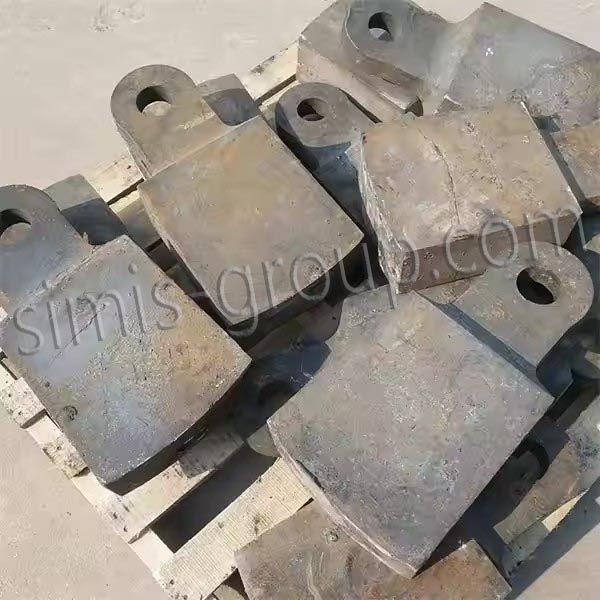
Choose Crusher Hammer Materials by Impact and Abrasion Conditions
Wear-resistant alloys behave differently under load. A hammer working against large, hard rock may have very different failure risks from one processing smaller, abrasive coal or clinker. Material evaluation should consider feed size, mineral hardness, impact energy, temperature, the mounting design and whether existing hammers wear down or fracture.
| Material option | Relevant behavior | Selection considerations |
|---|---|---|
| High manganese cast steel (e.g., customer-specified Mn13/Mn18) | Austenitic manganese steel can work-harden at the surface under sufficient repeated deformation while retaining a relatively tough core. | Often worth evaluating for severe impact or impact-abrasion. Work hardening depends on the actual loading; the grade is not automatically the best choice in low-impact service. |
| High chromium white cast iron | Hard carbide-containing microstructures can offer strong resistance to certain abrasive wear mechanisms. | Often considered for abrasion-dominant service when the geometry and impact level do not create an excessive cracking risk. |
| Cast alloy steel | Properties can be tailored by alloy grade and the specified metallurgical condition. | Consider for hammers requiring a project-specific strength, toughness and abrasion-resistance balance. |
| Alternative or composite designs | Different alloys or wear-zone concepts may be considered in special designs. | Requires evaluation of joint integrity, geometry, process capability and customer approval; not a standard assumption for every hammer. |
Where a formal material specification is required, ASTM A128/A128M may be relevant for specified austenitic manganese steel castings and ASTM A532/A532M for specified abrasion-resistant cast irons. The applicable grade, edition, delivery condition and any supplementary testing must be identified in the purchase documents; mentioning a standard here does not constitute product certification.

Casting and Machining Options for Crusher Hammer Heads
Sand Casting for Large and Heavy Wear Parts
Sand casting is a common candidate for medium and large crusher hammer castings, including substantial bodies with cast-in features. Pattern and mold design must account for wall thickness, hot spots, feeding, contraction, stress concentration around pin bosses and any machining allowance. The mold arrangement and casting route are selected according to the alloy and component dimensions rather than from part weight alone.
Investment Casting for Smaller, Detailed Designs
For smaller, more intricate hammer designs, investment casting can be evaluated when alloy, size and batch economics are suitable. It may help reproduce detailed external geometry, but precision-cast dimensions still require drawing-based acceptance criteria. A tight pin-hole tolerance should never be assumed achievable solely from an as-cast surface.
Alloy-Specific Processing and Critical Machining
Manganese steel, high-chromium white iron and alloy steel require different metallurgical processing to achieve their specified structures and properties. The appropriate heat-treatment cycle, hardness targets and any post-treatment machining must be matched to the grade and section thickness. Where feasible, CNC machining can be used for pin holes, locating faces or other critical interfaces. Highly wear-resistant materials may call for alternative cutting or finishing strategies, so process planning should precede the quote.
For other industrial alloy steel component examples, see custom alloy steel castings; the manufacturing route for an impact-wear hammer must still be assessed separately.
Hammer Geometry, Mounting Fit and Wear Pattern
A small dimensional difference can change how a crusher hammer swings, seats on its pin or interacts with adjacent parts. These geometric features should be reviewed alongside the selected wear alloy:
Pin-hole diameter and position: required clearance, positional tolerance and allowable wear around the suspended connection.
Working face and hammer profile: leading-edge shape, thickness, local section changes and permitted wear allowance.
Hammer mass and center of gravity: any OEM-defined mass tolerance or set-matching requirements, particularly for multiple hammers on one rotor.
Body thickness, boss and fillet transitions: avoid sharp changes that may increase local casting or impact stresses.
Interchangeability: confirm the crusher model, mating components, fixing method and whether original parts must be replaced as a balanced set.
Not all equipment described as an impact crusher uses a pivoting hammer head. Impact-crusher blow bars and vertical-shaft impactor wear tips have different mounting and loading conditions; these designs require their own drawings rather than being treated as interchangeable with hammer-mill hammers.
Inspection Requirements for OEM Mining Crusher Hammer Heads
Manufacturing verification should follow the part drawing, material specification and service-critical features. Different cast alloys can also require different examination techniques, so an inspection method must be assessed for its suitability before being offered as part of a project.
Material identification and chemistry: review of heat or batch records against the approved alloy designation.
Hardness and metallurgical condition: specified hardness testing and, if required, metallographic or mechanical evaluation appropriate to the grade.
Dimensional measurement: overall profile, pin bore, mounting geometry, wear face, important radii and per-part mass where specified.
Casting discontinuities: visual examination and selected non-destructive methods when technically suitable and contractually required.
Sample and batch acceptance: confirm the agreed inspection frequency, acceptance criteria, traceability and report format.
Inspection can reduce manufacturing risk but cannot establish a guaranteed number of operating hours or prevent every in-service fracture. Machine setup, feed characteristics, maintenance practices and operating loads remain important. The crusher OEM is responsible for validating suitability in its full machine system.
Mining, Quarrying, Cement and Coal Crushing Applications
Custom crusher hammer heads can be considered for equipment used to process ore, rock, limestone, coal, coke, clinker, slag and other bulk materials. The same nominal hammer geometry may experience different damage mechanisms in different plants; a preferred alloy in one installation may not perform equally in another.
| Application | Typical wear or loading question | What the OEM should specify |
|---|---|---|
| Mining and ore processing | Are repeated large impacts, mineral abrasion or edge chipping dominant? | Ore characteristics, crusher type, feed lump size, previous hammer failures and design drawing. |
| Aggregate and quarrying | Does the hammer face wear gradually or fail at its suspension point? | Rock type, operating conditions, mounting dimensions and desired replacement interval. |
| Cement and clinker processing | Are elevated temperatures, abrasion and intermittent impact involved? | Feed and operating temperature, material specifications and wear pattern. |
| Coal and power generation | Is abrasion or erosion dominant at the selected mill speed? | Coal characteristics, operating speed, hammer configuration and required mass matching. |
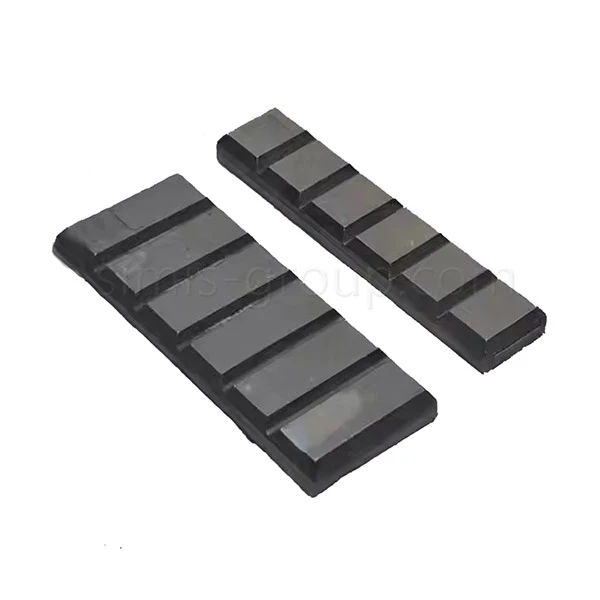
Customers sourcing several wear components can also explore our custom chocky wear bars and blocks and custom ball mill liners pages. Our broader mining metal parts manufacturing category covers other drawing-based components for mining and materials handling equipment.
Request a Quote for Custom Crusher Hammer Head Castings
SIMIS supports OEM purchasing teams that need hammer castings made to their own dimensions, material specifications and acceptance criteria. The objective is to establish a manufacturable scope and a suitable inspection plan before tooling and batch production—not to offer an unsupported universal wear-life guarantee.
Send the drawing: PDF/DWG and, where available, STEP/IGES models; identify all controlled dimensions and pin-hole tolerances.
Describe the service: machine model, feed material, impact conditions, wear pattern, existing part failures and any replacement target.
Confirm material and quality needs: required alloy, standard, heat-treatment condition, hardness or mechanical tests, and inspection documents.
Provide purchasing details: target quantity, annual demand, sample requirements, shipping destination and desired schedule.

For custom manganese steel, high-chromium iron or alloy steel crusher hammer castings, contact SIMIS or send your drawings to info@simis-group.com for a manufacturing feasibility review and quotation.