Custom Pressure Vessel Heads & End Cap Manufacturer
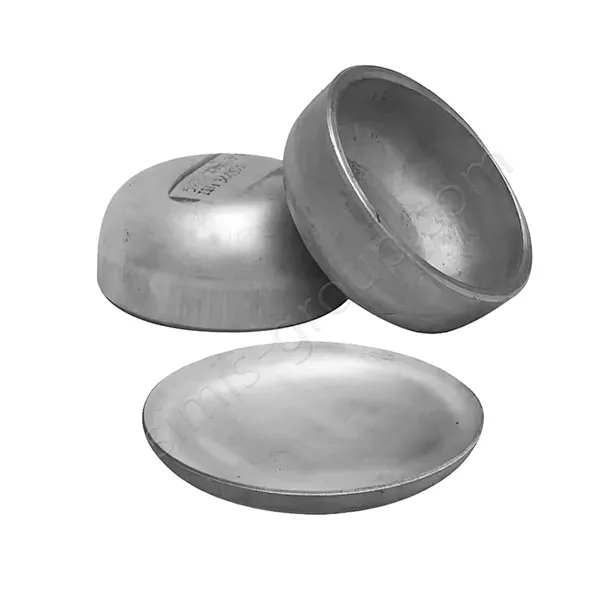


Pressure Vessel Heads & End Cap

Custom Pressure Vessel Heads & End Caps Manufacturing FAQs
1. Can SIMIS manufacture pressure vessel heads and end caps from our drawings?
SIMIS supports drawing-based OEM metal pressure vessel heads, dished ends and selected end-cap components. We review the approved head profile, diameter, material specification, required thickness after forming, weld preparation, quantity and documentation requirements before recommending a suitable production route. Whether the order covers a formed head, forged cap, special cast component or fully machined part must be established during quotation.
2. Which is more suitable: pressing, spinning, forging or casting?
Press forming and spinning are common approaches for dished heads made from plate, including selected ellipsoidal and torispherical geometries. Forging may be evaluated for thick-section caps, integral flanged shapes or other designs that suit forged stock. Casting is a separate option for certain special end pieces only when the material, geometry and governing design specification permit it. The process must follow the approved design; a casting is not automatically interchangeable with a formed pressure-vessel head.
3. What dimensions are critical on a custom dished end?
Key characteristics include the inside or outside diameter, head depth, crown radius, knuckle radius, straight-flange length, nominal plate thickness and the minimum finished thickness. The drawing should also establish allowable out-of-roundness, profile deviation, edge preparation and fit-up dimensions. Thinning during forming, especially around a knuckle region, must be assessed against the approved design requirements.
4. Are custom pressure vessel heads automatically ASME or PED certified?
No. A manufactured head is a component, and code applicability, material documentation, inspection, third-party involvement and certification depend on the governing specification and contractual scope. ASME BPVC Section VIII and the EU Pressure Equipment Directive may be relevant to particular projects, but no general claim of ASME stamping, PED conformity or complete vessel certification should be inferred from component manufacture alone. Please identify the required code, edition and documentation before quotation.
5. What information is needed to quote a custom vessel head or end cap?
Please send a dimensioned drawing and, where available, a 3D model; head type and diameter; material grade and delivery condition; nominal and minimum required finished thickness; vessel design pressure, temperature and service medium; weld-edge requirements; order quantity; and any forming records, material traceability, non-destructive examination or code documentation needed by the responsible vessel manufacturer.
OEM Pressure Vessel Heads, Dished Ends and Metal End Caps
A pressure vessel head closes the end of a cylindrical shell or forms part of a transition in a tank or process vessel. Unlike a standard protective cover, a pressure-retaining head may be a critical part of the pressure boundary. The shape, material and final thickness must therefore match the vessel designer’s calculations, fabrication details and applicable rules.
SIMIS works with OEM drawings for custom metal heads and end-cap components. Depending on project requirements, the proposed manufacturing scope may involve formed steel plate, a forged preform, a special casting or a machined end component. We focus on manufacturing feasibility and the ordered component—not on claiming design approval or certification for a complete pressure vessel without a separately agreed, documented scope.

Common Pressure Vessel Head Shapes and Their Manufacturing Requirements
The geometry of a vessel head affects forming complexity, available space, mating dimensions and code design calculations. A vessel designer should select the profile, while the manufacturing review confirms how the specified geometry can be produced and inspected.
| Head or end-cap type | Typical geometry | Manufacturing points to review |
|---|---|---|
| Ellipsoidal / elliptical head | A dished profile often specified as a 2:1 ellipsoidal head. | Major/minor shape, diameter, dish depth, edge fit-up and finished thickness across the profile. |
| Torispherical / flanged-and-dished head | Spherical crown joined to a cylindrical flange by a toroidal knuckle. | Crown and knuckle radii, thinning at the knuckle, shape tolerances and straight-flange dimensions. |
| Hemispherical head | Approximately half-spherical pressure-boundary closure. | Forming route, depth, segment or plate thickness and welding interfaces on large designs. |
| Conical or toriconical section | Tapered closure or transition between different vessel diameters. | Cone angle, transition or knuckle design, local reinforcement where required and edge geometry. |
| Flat or thick forged end cap | A flat or special-profile closure, sometimes incorporating an integral flange. | Design-verified thickness, attachment detail, forged-stock feasibility and machining datums. |
A flat cap and a dished end are not interchangeable without engineering approval. Where a customer requests a non-standard profile, the final shape and thickness must be governed by the approved drawing and relevant design rules rather than by a generic catalog dimension.
Manufacturing Process Selection for Custom Vessel Heads
Plate Press Forming and Spinning for Dished Ends
Hot or cold pressing and metal spinning may be evaluated for plate-based dished ends. These routes can produce curved profiles without treating a large head as an ordinary casting. The choice depends on grade, plate thickness, overall diameter, shape complexity and production volume. Forming allowances, possible diameter growth, springback and local thinning should be planned before tooling is released. The available forming capacity and subcontract or production scope are confirmed for each enquiry.
Open-Die and Closed-Die Forging for Suitable End Caps
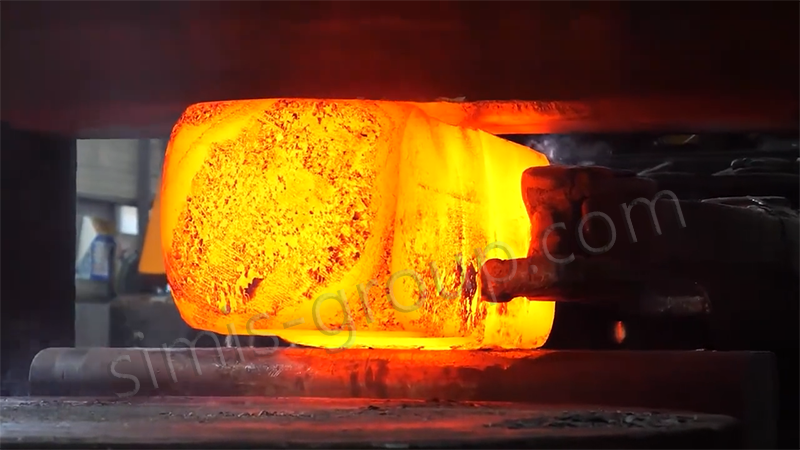
Open-die forging may be considered for suitable thick steel discs, blocks or near-net preforms that will subsequently be machined into an approved cap geometry. Closed-die forging can be evaluated for more repeatable smaller geometries where tooling investment is justified. Forging does not independently establish a permissible pressure rating; material condition, design geometry and examination requirements still control acceptance.
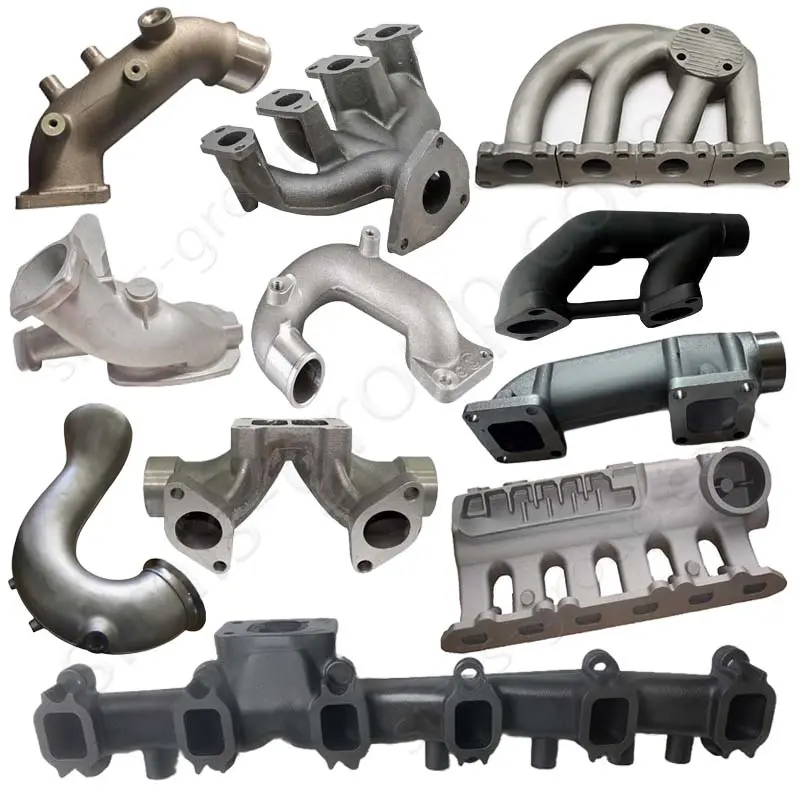
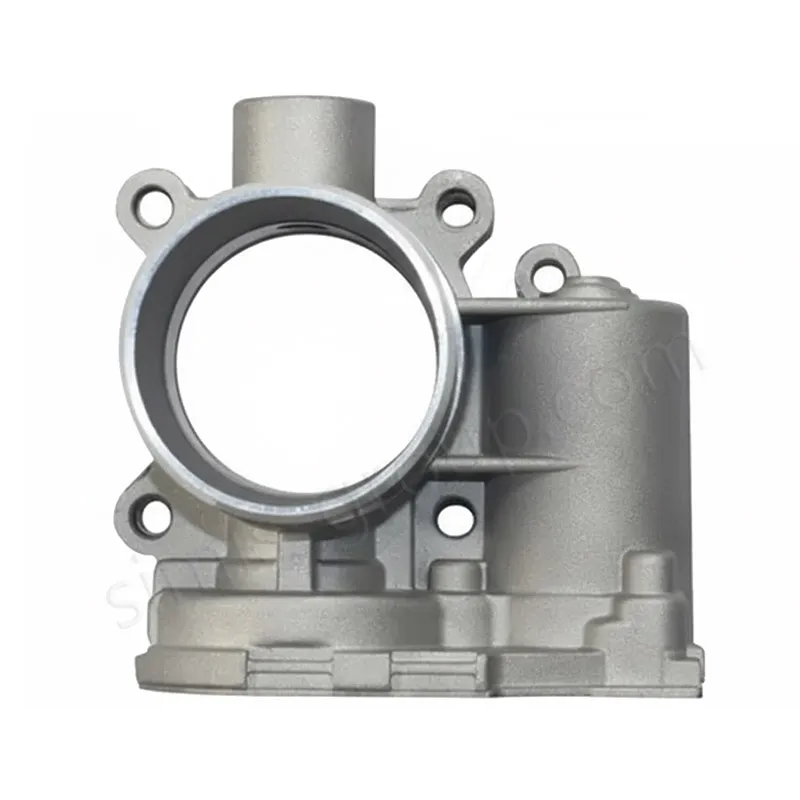
Special Cast End Components Where the Design Permits
Sand casting or investment casting may be considered for specialized end components or integrated shapes if the drawing and governing specification allow an approved cast material. Casting suitability must be reviewed particularly carefully for pressure-boundary service, including material designation, section transitions, internal soundness and the examination required by the purchaser. Conventional plate-formed heads should not be described as cast simply because SIMIS offers foundry services.
Machining for Mating Edges and Functional Features
CNC machining may be used for weld-edge preparation, flange faces, bolt patterns, locating diameters and other specified interfaces. Where the head is intended for circumferential welding to a shell, fit-up dimensions and the weld-preparation profile must agree with the vessel fabricator’s drawings. Machining of a critical interface is specified because the assembly requires it, not as a universal operation on every formed head.

Pressure Vessel Head Materials and Grade Selection
Materials must be selected using the customer’s applicable design code, approved grade and operating requirements. Design temperature, corrosion, cyclic conditions, welding procedure, forming behavior, supply condition and inspection records can all affect the choice. The following are examples for engineering review rather than interchangeable grades or blanket availability commitments.
| Material category | Typical project considerations | Specify before production |
|---|---|---|
| Pressure-vessel carbon steel plate | Common for many fabricated vessels where the grade and service conditions are appropriate. | Exact plate specification (for example a specified SA/ASTM grade), thickness, temperature and required documents. |
| Stainless steel, including specified 304L or 316L grades | Used when corrosion, cleanliness or process chemistry justify a stainless grade. | Correct product form and standard, media compatibility, weld requirements and surface condition. |
| Low-alloy / Cr-Mo steel | Potential option for certain elevated-temperature or more demanding services. | Approved alloy, strength and toughness requirements, qualified fabrication route and records. |
| Aluminum alloys | May be considered for specially engineered lightweight vessel applications. | Alloy and product form permitted by the governing design, pressure/temperature limits and joining requirements. |
| Approved forged or cast steel grades | For special caps or end pieces where the design permits that manufacturing route. | Exact forging or casting specification, examination category and acceptance criteria. |
For steel material and manufacturing options, see SIMIS steel casting and forging service pages. The selected product form—plate, forging or casting—must match the pressure-component design; simply naming the same alloy family is not enough.
Critical Dimensions, Inspection and Code Documentation
Head Profile, Thickness and Weld-End Geometry
The drawing should identify the head’s specified diameter, depth, profile, crown radius, knuckle radius, straight flange and weld-edge dimensions. For formed plate heads, the minimum thickness after forming is a critical acceptance point: a nominal plate thickness alone does not prove the finished part meets the approved design. Thickness measurements and profile checks should follow defined measurement locations and tolerances.
Material Identification and Examination Requirements
A project inspection plan may include material certificates, traceability, formed-profile measurements, dimensional reports, ultrasonic thickness checks, surface examination or additional non-destructive testing. The method, examination coverage, sampling frequency, acceptance criteria and responsible inspection party must be agreed for the actual code and purchase order. UT, MT, PT or radiography should not be described as universally mandatory for every vessel head.
ASME, PED and Responsibility for the Complete Vessel
ASME BPVC Section VIII contains rules for applicable pressure-vessel design and construction, while the EU Pressure Equipment Directive 2014/68/EU addresses defined pressure equipment and its conformity assessment within its scope. For an OEM head purchase, the buyer should specify the governing code, edition, design calculations, authorized-inspection arrangements where relevant, and whether particular certificates or approval records are required from the component supplier.
Component acceptance is not the same as complete vessel certification. A head may be supplied with agreed manufacturing and inspection records, but pressure testing of the assembled vessel, regulatory conformity, final code stamping or CE marking (when applicable) remains within the properly assigned project responsibilities. SIMIS does not claim a universal code authorization or certification for every custom head.

Industrial Applications for Custom Dished Ends and End Caps
Pressure-vessel heads may be specified in oil and gas process equipment, chemical vessels, industrial air receivers, storage or separation vessels, heat exchangers, power-industry equipment and food-processing tanks. The correct design and material depend on whether the equipment sees internal or external pressure, thermal cycles, aggressive fluids or hygienic cleaning requirements.
Chemical and oil & gas equipment: specified metal end closures for process vessels, separation equipment or reactors, subject to the approved design.
Energy and power equipment: special end sections, caps and fabricated-vessel components with project-specific temperature and examination requirements.
Food and pharmaceutical processing: stainless components whose material grade, finish and cleaning interfaces must match the customer’s sanitary design.
Industrial machinery: custom metal end pieces, vessel closures or related fabricated components requiring controlled assembly dimensions.
Explore SIMIS energy and power-generation metal parts and industrial machinery components for other drawing-based OEM manufacturing applications.
Request a Quote for Custom Pressure Vessel Heads & End Caps
To assess your project efficiently, please define whether the requested deliverable is a formed dished end, a forged or cast cap, a machined component, or a more complete fabricated assembly. Include the following information with your RFQ:
Geometry: 2D dimensioned drawing and 3D model if available; head type, inside/outside diameter, depth, radii, straight flange, edge preparation and dimensional tolerance.
Material: exact material standard and grade, initial stock form, finished-thickness requirement and required delivery condition.
Design service: specified design and operating pressures and temperatures, service medium, corrosion allowance and other buyer-approved engineering requirements.
Code and documentation: applicable ASME or other design rules, PED requirements if relevant, material traceability, forming records, NDT scope, third-party inspection and documentation needed by the purchaser.
Commercial scope: annual or batch quantity, required manufacturing stage, sample requirements, packaging and delivery location.
For an OEM drawing review and quotation, contact SIMIS or email info@simis-group.com. Our team can review the feasible manufacturing route, required machining and agreed inspection deliverables against your submitted specification.