Custom Hydraulic Breaker Rod Pins Manufacturer
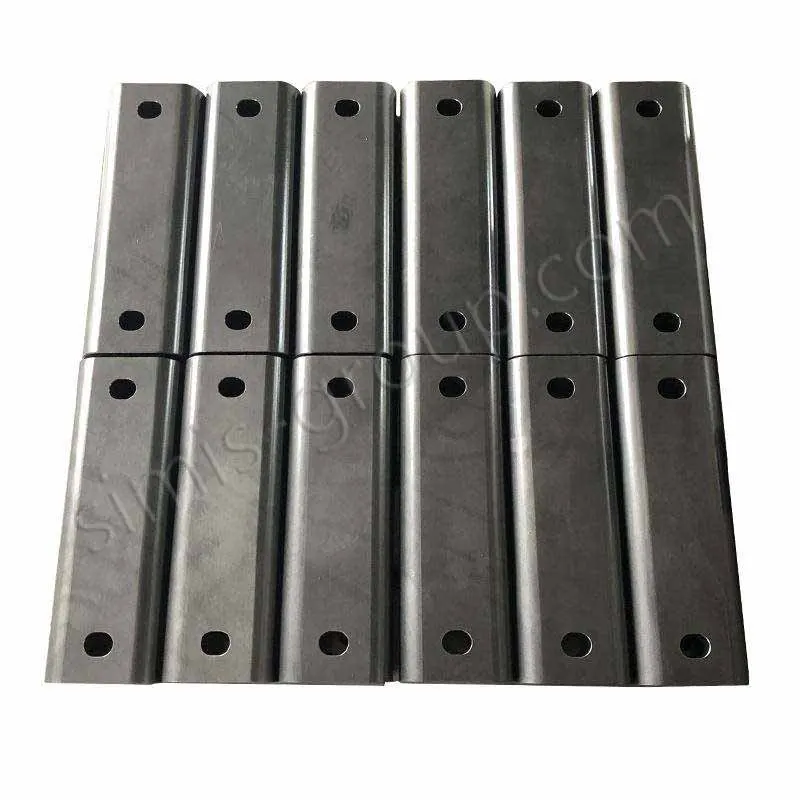


Hydraulic Breaker Rod Pins

Hydraulic Breaker Rod Pin Manufacturing FAQs
Can SIMIS manufacture hydraulic breaker retainer pins from our drawings?
Yes. SIMIS provides drawing-based OEM manufacturing for hydraulic breaker rod pins, retainer pins and stop pins. We review the pin profile, working clearances, steel grade, required mechanical properties and order quantity before proposing a forging or machining route. Parts are made to the approved drawing rather than offered as universal, ready-to-fit replacements.
Should a breaker rod pin be forged or machined from alloy steel bar?
Both routes can be considered. Forging is useful when the shape, production volume and mechanical requirements justify a near-net-shape blank. CNC machining from appropriately specified bar stock may be more practical for simple geometries or small batches. The correct choice depends on loading, section changes, tooling costs and inspection requirements, not on a claim that one process is always superior.
How are wear resistance and impact toughness balanced?
A retainer pin needs to resist repeated contact wear without becoming excessively brittle under impact. Steel chemistry, heat-treatment condition, local hardness requirements and transition radii must be evaluated together. Where a hardened contact zone is specified, the case depth, core properties and verification method should be agreed from the drawing and application requirements.
What details are needed for a custom rod pin quotation?
Please send a 2D drawing or 3D CAD model showing overall length, cross-section, grooves or holes, fit dimensions and tolerances. Include the breaker model or mating-part dimensions, material specification, desired hardness or heat-treatment condition, surface finish, inspection criteria and estimated annual quantity. A sample part may help identify an existing design, but critical dimensions should still be confirmed.
OEM Custom Hydraulic Breaker Rod Pins and Retainer Pins
Hydraulic breaker rod pins—also called retainer pins, stop pins or tool-retaining pins in some equipment designs—help retain the working tool within a hydraulic breaker assembly. Their geometry and contact surfaces are exposed to intermittent loading, vibration, sliding contact and abrasive debris. A good fit must therefore be considered together with wear resistance, toughness and serviceability.
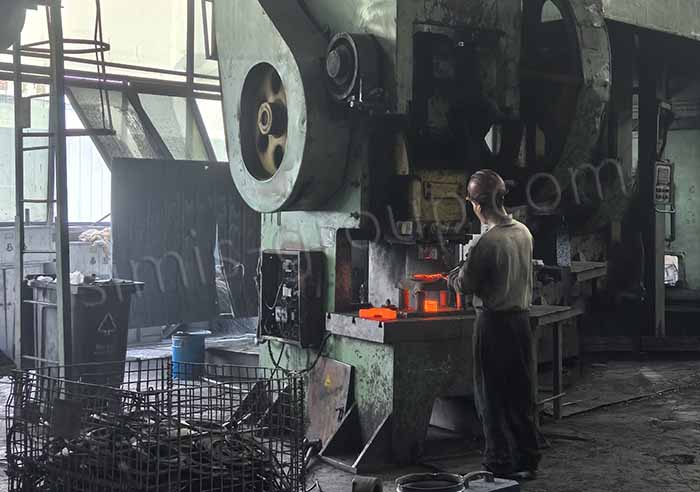
SIMIS works with OEMs and industrial buyers who require metal components manufactured to proprietary drawings. For breaker pins, the manufacturing plan may include closed-die steel forging, machining, controlled heat treatment and final dimensional inspection. The route is selected only after reviewing the component design and intended operating conditions.
Manufacturing should start by identifying the loaded contact regions, retention features and access needed for maintenance or pin replacement. For a non-cylindrical pin, the width, corner radii, slot positions and contact orientation may matter as much as the nominal overall length.
The component must be evaluated as part of the complete breaker-tool retention system. A manufacturer should not infer that an isolated pin drawing establishes the safe working load or service life of the assembled breaker.
Choosing a Manufacturing Route for Breaker Rod Pins
There is no single manufacturing process suitable for every hydraulic breaker pin. Shape complexity, available bar dimensions, production volume, intended heat treatment and acceptance requirements determine the most practical sequence.
| Manufacturing step | When it may be appropriate | Design / purchasing consideration |
|---|---|---|
| Forged alloy-steel blank | Near-net shapes, offset profiles, larger repeated orders or parts with demanding mechanical requirements. | Specify material, forging allowance and any required forging inspection; forging does not by itself guarantee defect-free parts. |
| CNC turning / milling / drilling | Round, stepped, grooved or flattened pins; precision holes and retaining features. | Control datum selection, hole/slot position and fit surfaces from the drawing. |
| Quenching and tempering | Where the application calls for defined strength and toughness throughout the section. | Specify hardness or mechanical-property range and account for dimensional change. |
| Selective surface hardening | Where local contact wear is a concern and the design permits a hardened case. | Specify the treatment zone, depth, core properties and verification method. |
| Grinding / deburring / finishing | Critical contact surfaces, edge condition and assembly clearances. | Define roughness, radius, burr limits and final dimensional acceptance criteria. |
SIMIS can coordinate this work with its CNC machining services. The goal is to use only the operations required by the drawing, instead of applying casting, forging and every finishing process indiscriminately.
Material Selection: Toughness, Hardenability and Wear
The material specified for a hydraulic breaker retainer pin must match the expected impact conditions, cross-section, contact pressures and desired treatment. Alloy-steel grades commonly considered in engineered pin applications include 42CrMo-family steels and higher-hardenability nickel-chromium-molybdenum steels. They are engineering candidates, not interchangeable grades or blanket SIMIS stock guarantees.
| Material family | Potential application consideration | What the drawing should define |
|---|---|---|
| 42CrMo / comparable Cr-Mo alloy steel | May offer a workable combination of strength, toughness and response to quench-and-temper treatment. | Exact standard/grade, heat-treatment condition and required hardness or mechanical properties. |
| Ni-Cr-Mo alloy steel | May be evaluated for greater hardenability or demanding section sizes. | Recognized national or international material standard and test requirements. |
| Case-hardening alloy steel | Can be considered if a specified wear-resistant case and tougher core are needed. | Case hardness, effective case depth, core condition and process acceptance criteria. |
The steel grade alone cannot establish the service life of a breaker pin. Contact geometry, retaining clearance, lubrication and contamination also affect wear. When an OEM specifies an existing grade, the priority is to manufacture and verify to that specification rather than silently substitute another alloy.
Critical Features for Drawing-Based Pin Manufacturing
For a pin used to retain a breaker chisel or tool, small changes to geometry can alter assembly fit and contact loading. A manufacturing review should focus on the dimensions that are functional, not merely on achieving an attractive surface finish.
Cross-section and working contact area: diameter, flats, width, thickness and local geometry that engage the tool-retaining feature.
Grooves, slots and cross-holes: position, size and edge distance relative to the installation datums.
Fillets, chamfers and transitions: transition shapes that affect seating, insertion and local stress concentration.
Dimensional fit: clearance or interference to mating bores, guides and retaining components as specified by the OEM.
Wear surfaces: surface texture and any specified hardened zones after final machining.
Serviceability: any extraction holes, removal features or orientation requirements used during maintenance.
For example, an h7 or h9 tolerance designation should never be adopted simply because it appears in another breaker pin description. The required fit depends on the assembly and should come from the approved engineering drawing. If a reference sample is provided, SIMIS can use it to support dimensional comparison, subject to agreed inspection scope.
Heat Treatment and Wear-Surface Engineering
Quench-and-temper processing may be selected to obtain a specified balance of strength and toughness. Local induction hardening or another engineered surface treatment may be considered for wear zones, but a high hardness value is not automatically better. An excessively brittle surface or inappropriate hardness transition can introduce cracking risk under repeated impact.
Important variables include the steel grade, section thickness, treatment location, target hardness, allowable distortion and final machining allowance. Buyers should provide any requirement for an effective hardened depth and a defined hardness-test location. Surface treatment options should be reviewed against the mating parts and maintenance conditions rather than offered as universal upgrades.

Inspection and Acceptance for Custom Breaker Pins
Reliable sourcing depends on agreed inspection criteria. SIMIS can discuss a documented inspection plan through its quality-control services; the applicable checks are defined by the customer specification, part criticality and manufacturing route.
| Characteristic | Typical verification approach | Why it matters |
|---|---|---|
| Overall profile, hole and groove positions | Dimensional gauges, calipers, micrometers or CMM as appropriate. | Assembly compatibility and positioning of retention features. |
| Material identity and condition | Material certificates and agreed grade/property verification. | Traceability and consistency with the specified steel. |
| Hardness and treated zone | Surface/core hardness checks and case-depth assessment where required. | Wear response and impact behavior. |
| Surface condition | Visual and surface-finish inspection; checks for damaging burrs or sharp edges. | Fit, handling and contact behavior. |
| Internal or surface discontinuities | Ultrasonic or magnetic-particle testing when specified and feasible. | Assessment of indications relevant to the approved acceptance criteria. |
Not every inspection method is suitable or necessary for every pin. Acceptance limits and sampling plans should be established in the purchase specification. No claim of guaranteed fatigue life, zero defects or full compliance with a particular breaker model should be made without supporting qualification data.
Applications in Construction, Quarrying and Mining Equipment
Hydraulic breaker retainer pins are used in applications where a working tool must remain located during repetitive impact duty. The requirements differ among equipment sizes, attachment designs and operating environments.
Construction and demolition: pins for excavation-mounted hydraulic breakers where replacement access and repeatable fit are practical priorities.
Quarrying and rock breaking: designs that must account for abrasive contamination, repeated tool movement and potentially demanding wear conditions.
Equipment maintenance and OEM spares: drawing-controlled pins made for a specified assembly or replacement program, subject to fit and traceability requirements.
Related equipment components and manufacturing information can be found under SIMIS mining machinery parts and industrial machinery components. For other load-carrying cylindrical parts, see the separate custom support shaft page; support shafts and breaker retaining pins have different functional requirements.
Design-for-Manufacturing Review and OEM Supply
A drawing-led review helps identify avoidable cost and quality risks before production. For example, an unnecessarily tight tolerance on a nonfunctional surface may add machining time without improving tool retention. Conversely, a poorly defined retaining groove, edge radius or heat-treated zone can create uncertainty during manufacture and inspection.
SIMIS can review machining access, blank selection, material availability, inspection datums and tooling needs. Larger repeat volumes may support dedicated forging tooling, while smaller orders may favor machining from suitable stock. Any proposed dimensional or material changes should be approved by the buyer before manufacture.
If the project involves a forged blank, see SIMIS steel forging capabilities and closed-die forging processes for related manufacturing information.
Request a Quote for Custom Hydraulic Breaker Rod Pins
For a manufacturing feasibility review and quotation, send SIMIS your part drawing or CAD file and the known service requirements. The more clearly the critical dimensions and acceptance criteria are specified, the more useful the process and cost assessment can be.
Geometry: 2D drawing or 3D model, nominal dimensions, tolerances and retaining features.
Assembly information: mating-part dimensions, intended breaker type and relevant load or wear conditions, where available.
Material and treatment: required steel standard, mechanical properties, hardness, case depth or coating specification.
Inspection: dimensional, material, hardness, traceability and NDT requirements as applicable.
Commercial details: prototype or production quantity, annual demand, delivery destination and target schedule.
Send your RFQ to info@simis-group.com or use the inquiry form below. SIMIS can evaluate an appropriate combination of forging, machining, heat treatment and inspection for your OEM hydraulic breaker pin project.