Custom Spur Gear Manufacturer
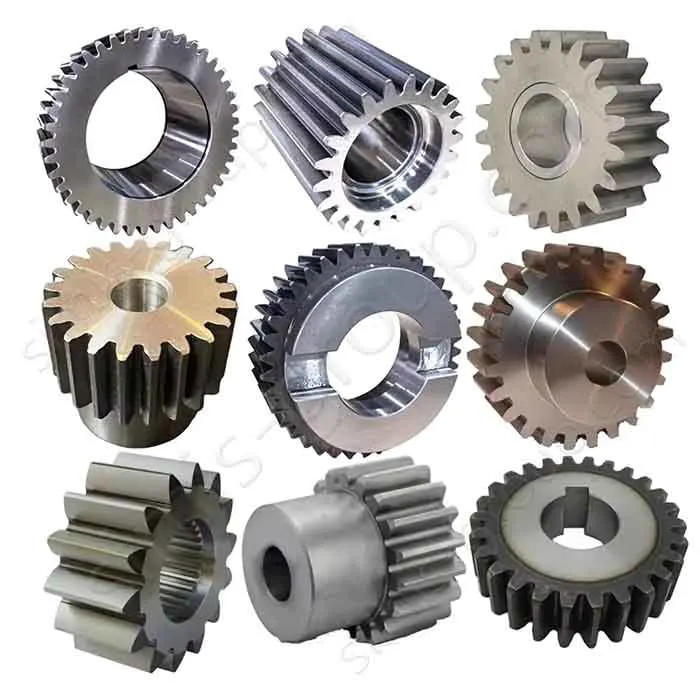


Spur Gear

Custom Spur Gear Manufacturing FAQs
Can SIMIS manufacture custom spur gears from our 2D drawings or 3D CAD models?
Yes. SIMIS accepts drawing-based OEM inquiries for external spur gears, pinions, hub gears and related transmission components. We review the gear geometry, specified material, operating requirements, dimensions and order quantity to assess suitable forging, casting and machining routes. The agreed manufacturing scope may cover a gear blank, a cut-tooth gear or a more fully finished component, depending on the drawing.
Should my spur gear start as a forging, casting or machined blank?
A forged steel blank is often considered for compact or heavily loaded gears, while cast steel or suitable cast iron may be evaluated for certain larger, lower-speed designs where the specified properties allow it. Machining from wrought stock may be practical for prototypes or suitable small batches. The decision is based on tooth load, part size, material specification, quantity, blank shape and total manufacturing cost—not on one process being best for every spur gear.
What gear specifications are needed to manufacture a matching spur gear?
Key information includes module or diametral pitch, tooth count, pressure angle, face width, bore or shaft details, tooth thickness or backlash requirements, and the required accuracy class. Spur gears use straight teeth parallel to the shaft axis; their helix angle is zero. If your design uses profile shift, a special addendum or a mating gear set, please include those details so the correct geometry can be checked.
How do you control gear-tooth accuracy and the fit of the central bore?
Gear production combines properly established machining datums with suitable tooth generation, such as hobbing or shaping where applicable. Important inspection characteristics may include tooth profile, pitch variation, tooth-to-bore runout, bore size and mounting-face perpendicularity. The method, tolerances and any ISO or AGMA accuracy requirements should be agreed from the customer drawing before quotation or production.
What should I send for an OEM spur gear quotation?
Please provide a 2D drawing and, if available, a 3D model; material grade; module or DP; tooth count; pressure angle; face width; bore/keyway details; target quantity; and any hardness, finishing or inspection specifications. If you have only an existing gear sample, let us know the available measurements and whether it is intended for replacement or a new design. A quotation can then be prepared for the confirmed supply scope.
OEM Custom Spur Gear Manufacturing for Industrial Power Transmission
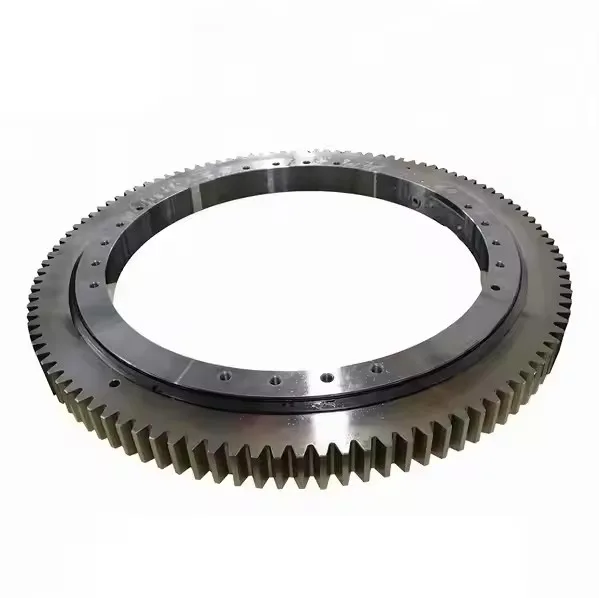
SIMIS provides manufacturing services for custom metal spur gears and related gear components based on OEM drawings. Spur gears have straight external teeth and transfer rotation between parallel shafts. They are used in industrial reducers, agricultural machines, conveying equipment, mechanical drives and selected vehicle transmission mechanisms.
A useful gear page should explain more than the definition of spur gearing. For buyers, the important questions are whether the selected material can withstand the required duty, which blank-making process is economical, how tooth and mounting geometry will be produced, and what inspection evidence is needed. SIMIS evaluates these matters as part of drawing-based manufacturing inquiries instead of offering a fixed retail gear specification.
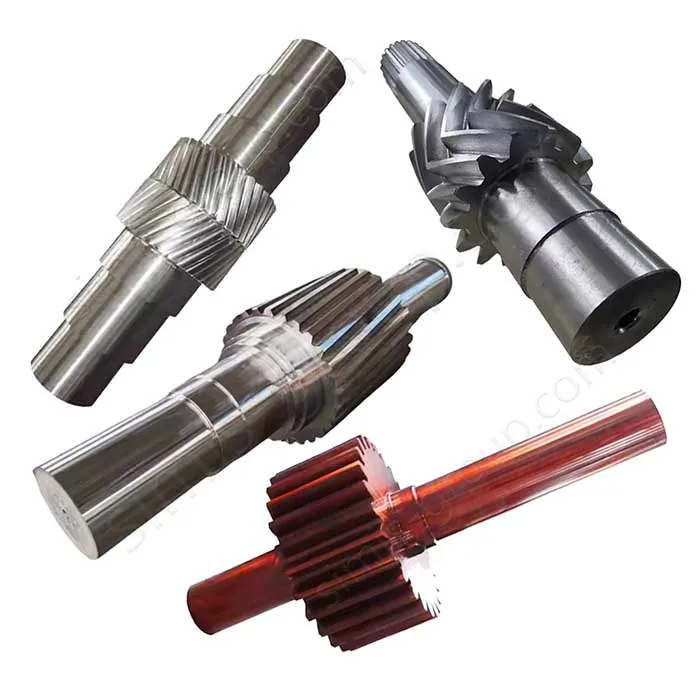
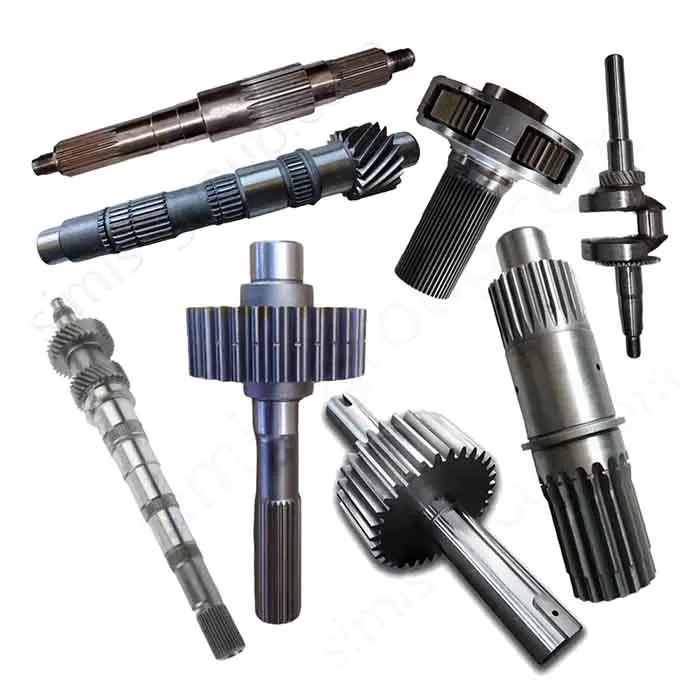
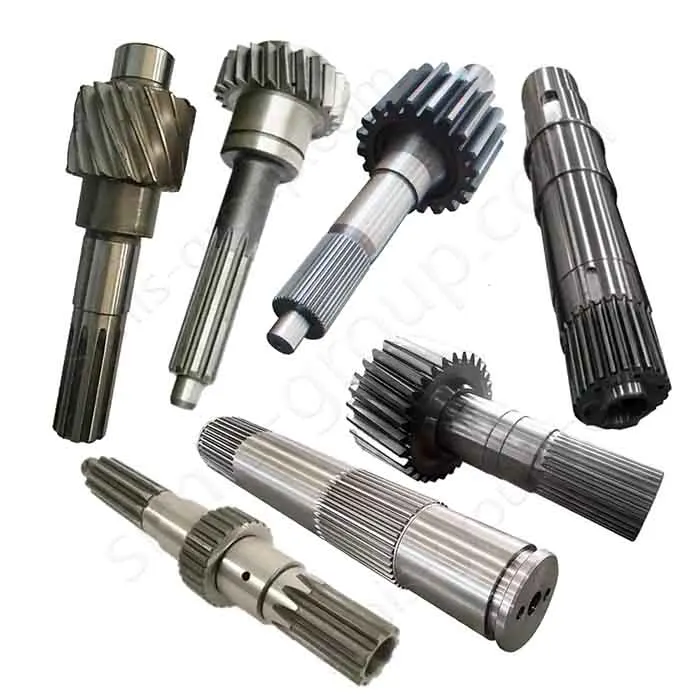
We can discuss custom external spur gears, small pinions, large industrial gear blanks and related parts such as integral gear rotary shafts. For applications requiring angled teeth rather than straight teeth, see our custom helical gears page.

Spur Gear Types and Design Features
Not all spur gears are simple flat discs. OEM designs may combine an external tooth ring with a hub, shoulder, web, flange, keyway, spline or integral shaft. These features influence how the blank is formed and how the gear is held during machining.
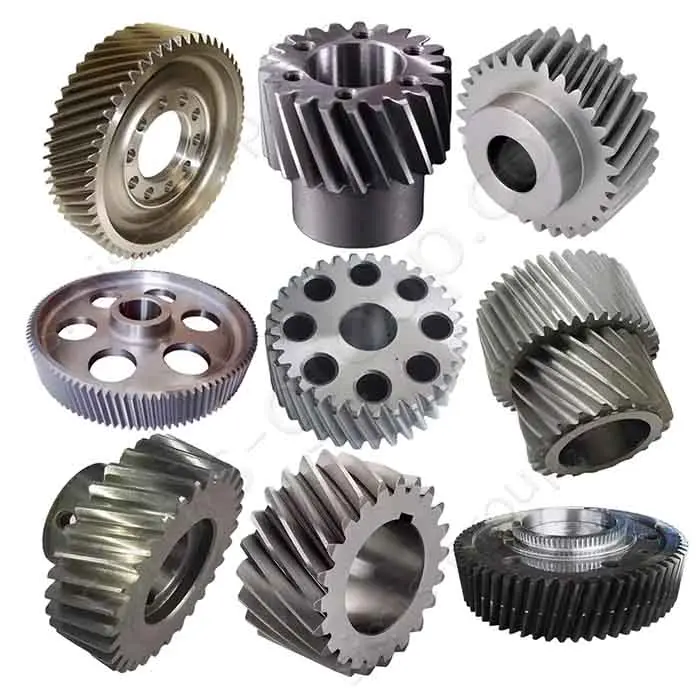
External spur gears: straight teeth on the outside diameter for parallel-axis transmission, made to the customer's module, pressure angle and tooth count.
Spur pinions: smaller driving or driven gears, sometimes integral with a shaft to manage concentricity and load transfer.
Hub or web spur gears: gears with mounting hubs, reduced-mass webs or bolt patterns, where the bore and locating faces are important assembly datums.
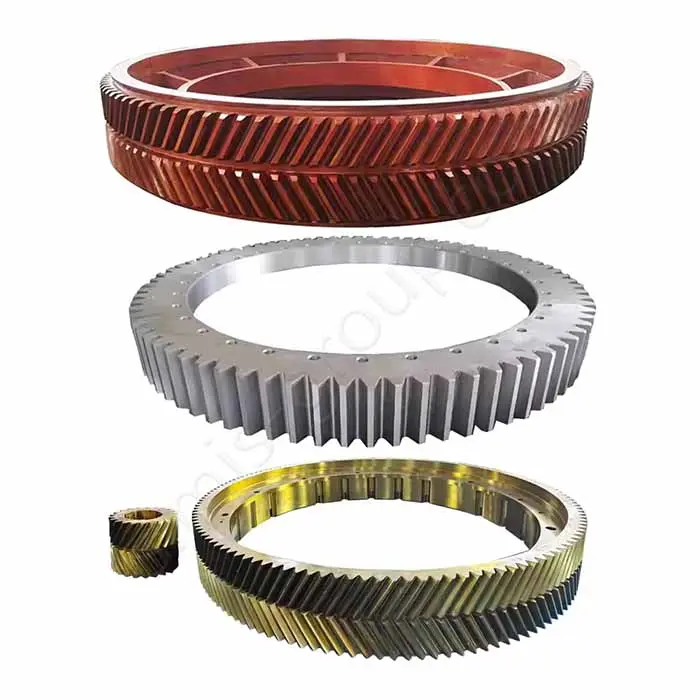
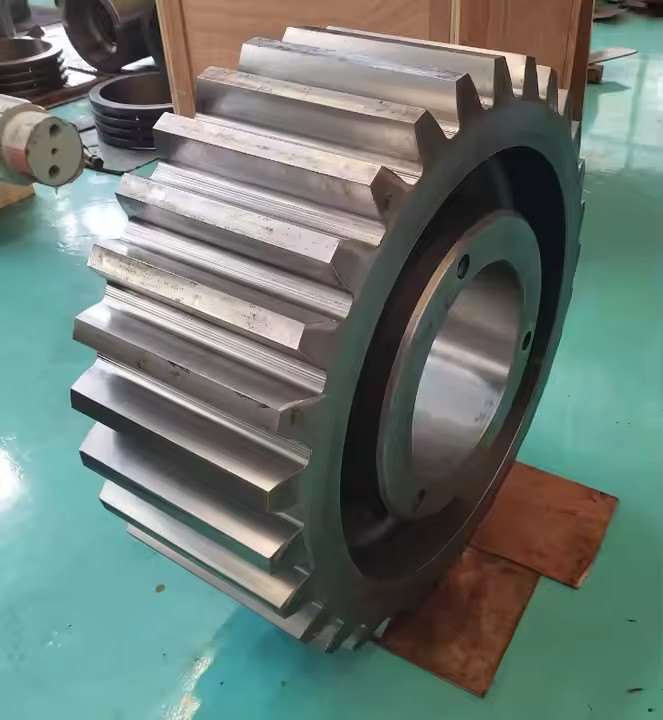
Large industrial spur gears: larger-diameter gears that may use a forged or suitable cast blank before gear-tooth machining.
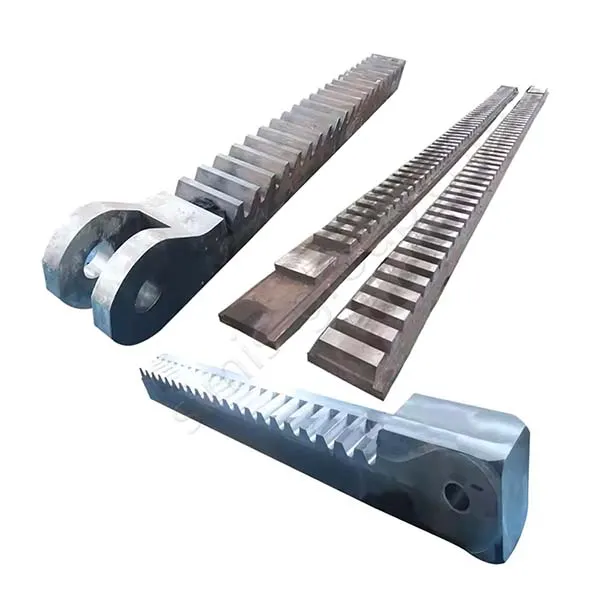
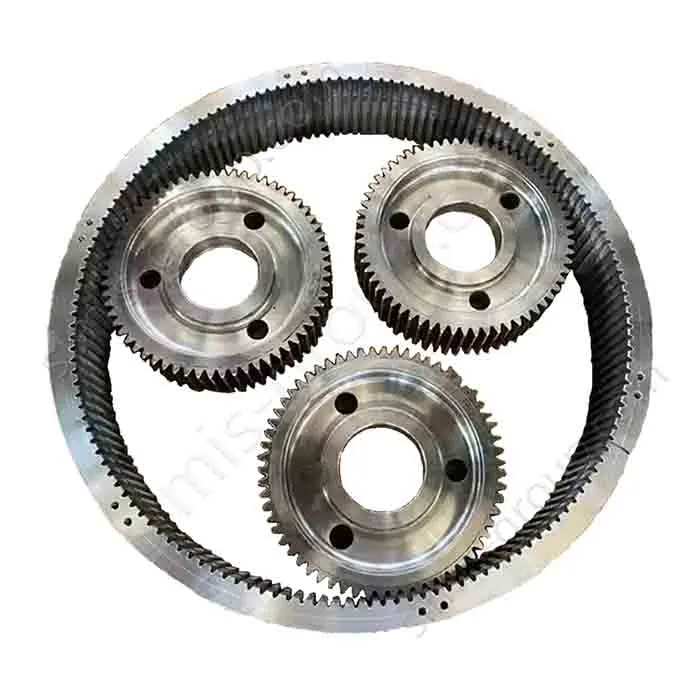
Related gear components: systems may also use ring gears, planetary gear components and gear racks, which require different mating geometry and should not be treated as identical spur-gear designs.
The exact requirements must come from the assembly drawing. For example, a replaceable pinion may need a controlled shaft fit and matching backlash, while a large reducer gear may prioritize bore alignment, mounting stiffness and tooth-root strength.
Choosing Forged, Cast or Machined Gear Blanks
The starting blank is selected according to the gear's design, material and production volume. A near-net-shape blank can reduce unnecessary stock removal, but it also adds tooling and process requirements. Below are common manufacturing options to evaluate.
| Blank or production route | Potential application | Important selection factors |
|---|---|---|
| Closed-die steel forging | Compatible small and medium steel gear blanks produced in repeat batches | Load requirement, material, forging die investment, batch volume and machining allowance |
| Open-die forging | Larger steel blanks and heavy industrial gear forms | Overall dimensions, required internal soundness, reduction ratio and subsequent machining |
| Ring forging | Selected large annular gear blanks with suitable geometry | Ring size, wall section, forging feasibility and tooth/mounting layout |
| Sand casting | Customer-approved cast iron or cast steel gears, especially suitable larger or complex forms | Operating duty, casting soundness, wall transitions, pattern/core requirements and finishing allowance |
| Machining from bar or plate stock | Suitable prototypes, smaller quantities and accurately machined blanks | Available stock size, material removal, lead time and final tooth-processing needs |
Forging and casting generally form the gear blank rather than the complete involute tooth geometry. Teeth, precision bores, keyways and locating surfaces normally require appropriate machining. For strongly loaded transmission gears, the selected material grade, mechanical-property requirements and any subsequent hardening process should be defined by the customer's engineering specification.

Materials for Custom Spur Gears
The right material depends on transmitted torque, speed, lubrication, shock loading, corrosion conditions and expected gear life. SIMIS discusses material options according to the actual drawing and mechanical requirements rather than applying one universal alloy to every gear.
| Material family | Where it may be considered | Selection notes |
|---|---|---|
| Carburizing alloy steel, e.g. AISI 8620 or specified equivalent | Selected loaded gear teeth requiring a hard wear surface and tough core | Define the exact grade, required properties and case specification if applicable |
| Chromium-molybdenum alloy steel, e.g. AISI 4140 / 42CrMo | Heavy-duty industrial spur gears and selected forged gear blanks | Core strength, section size and specified hardness condition matter |
| Medium-carbon steel, e.g. AISI 1045 | General machinery or moderate-duty steel gears | Assess tooth loading, wear requirements and production route |
| Ductile or gray cast iron | Selected industrial gears where casting properties suit the operating duty | Check fatigue loads, casting class and allowable service conditions |
| Stainless steel or specified copper alloys | Applications with special corrosion or material compatibility needs | Confirm actual alloy, contact conditions and wear/lubrication demands |
The material descriptions above are engineering examples, not a guarantee that every alloy or heat-treatment condition is available for every gear geometry. Final approval depends on the OEM specification and a feasibility review.

Spur Gear Cutting, Tooth Accuracy and Critical Fits
Once the blank is approved, the gear must be produced to the specified relationship between its teeth and mounting datums. Tooth generation may use hobbing for suitable external gears or gear shaping where the geometry or access requires it. Gear grinding or other finishing may be specified for demanding tolerances, but it is not automatically required for every spur gear.
Gear Geometry: Module, Pitch and Involute Profile
The module or diametral pitch, pressure angle, number of teeth, pitch geometry, face width and any profile modification establish the gear tooth design. The exact mating gear and specified center distance should also be known when backlash, interchangeability or replacement fit is important. For spur gears, the tooth trace is straight and the nominal helix angle is zero.
Bore, Keyway, Runout and Mounting Datums
The central bore, keyway or spline, hub face and shaft shoulders determine how the gear is located and transmits torque. Tooth-to-bore concentricity and gear-face runout can affect meshing performance even when the nominal tooth dimensions are correct. These functional datums should be clearly identified on the drawing.
Inspecting the Specified Gear Accuracy
Depending on the gear, checks may include tooth profile deviation, pitch variation, radial runout, tooth thickness, bore size and surface condition. If the customer specifies an ISO 1328 or relevant AGMA accuracy grade, the exact edition, grade and verification scope should be confirmed. Any hardness measurement, crack inspection or other testing is applied according to the contractually agreed requirements—not presumed mandatory for every gear.

Industrial Applications and Manufacturing Priorities
Spur gears are widely used because straight teeth provide a direct, readily manufactured means of transmitting power between parallel shafts. Their suitability, however, depends on the machine's torque, operating speed, lubrication, alignment and noise expectations.
Industrial reducers and machine tools: shaft alignment, backlash, load distribution and tooth accuracy are important.
Agricultural and construction equipment: shock resistance, contamination exposure and practical serviceability may influence material and blank selection.
Mining and heavy machinery: substantial transmitted torque and gear size may require special attention to blank integrity, tooth-root bending stress and mounting stiffness.
Automotive and mechanical drives: available space, cycle loading, noise limits and consistent assembly dimensions may drive the manufacturing specification.
Spur gears can be less suitable than helical gears in some high-speed, noise-sensitive transmissions because of their more abrupt tooth engagement. This trade-off is worth discussing at the design stage rather than assuming a straight-tooth gear is best for every industrial drive.
From OEM Gear Drawing to Manufacturing Quotation
SIMIS approaches custom spur-gear inquiries as manufacturing projects. The design owner sets the required performance and interface dimensions; the manufacturer reviews material and production options before committing to tooling, processing and inspection scope.
1. Supply the gear design: send drawings and any CAD model, module/DP, tooth count, pressure angle, face width, bore/shaft interface and mating-gear information.
2. Define service requirements: note loads, speed, lubrication, duty cycle, material grade, target accuracy and any required surface or hardness condition.
3. Review the proposed route: evaluate forged, cast or machined blanks and the tooth-cutting/finishing operations that fit the order quantity.
4. Agree on acceptance criteria: confirm critical dimensions, any ISO/AGMA grading, inspection reports, samples and agreed production stages.
5. Request a quotation: clarify tooling where applicable, quantity, manufacturing feasibility, indicative lead time and delivery requirements.
Request a Quote for Custom Spur Gears
Are you sourcing OEM spur gears, gear blanks or pinions manufactured to your drawings? Send SIMIS your part drawings, material requirements and expected order quantity. Our team can review possible blank-forming and machining methods and discuss an appropriate quotation for your project.
Email info@simis-group.com or use our contact form to share your technical requirements.