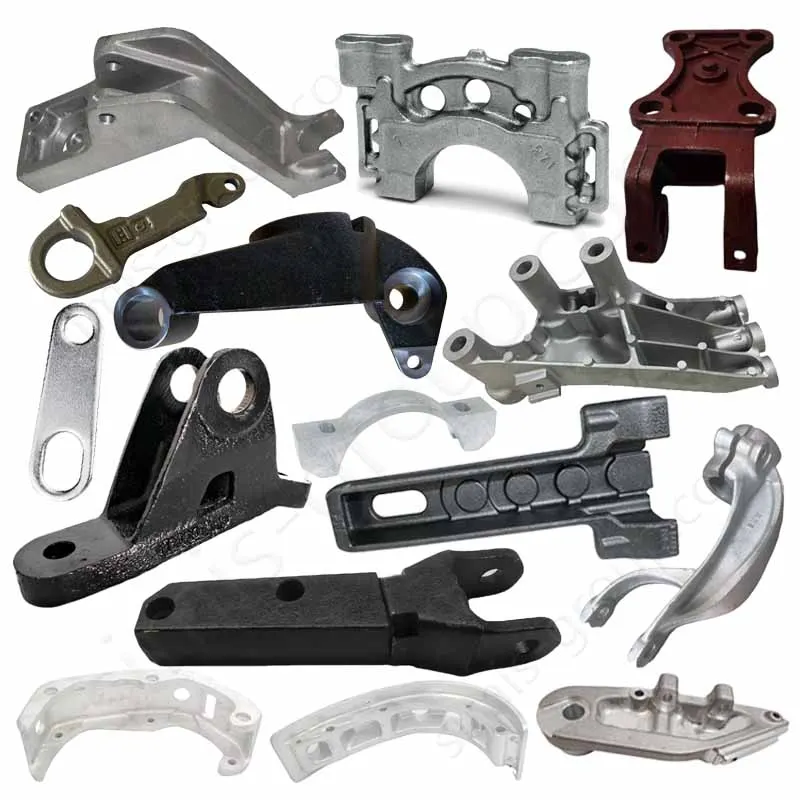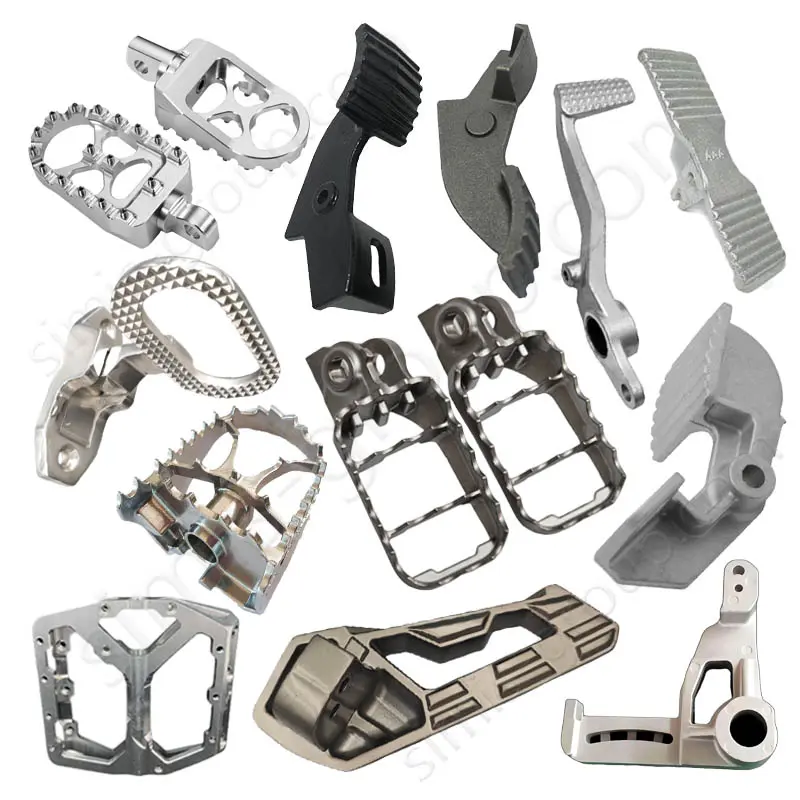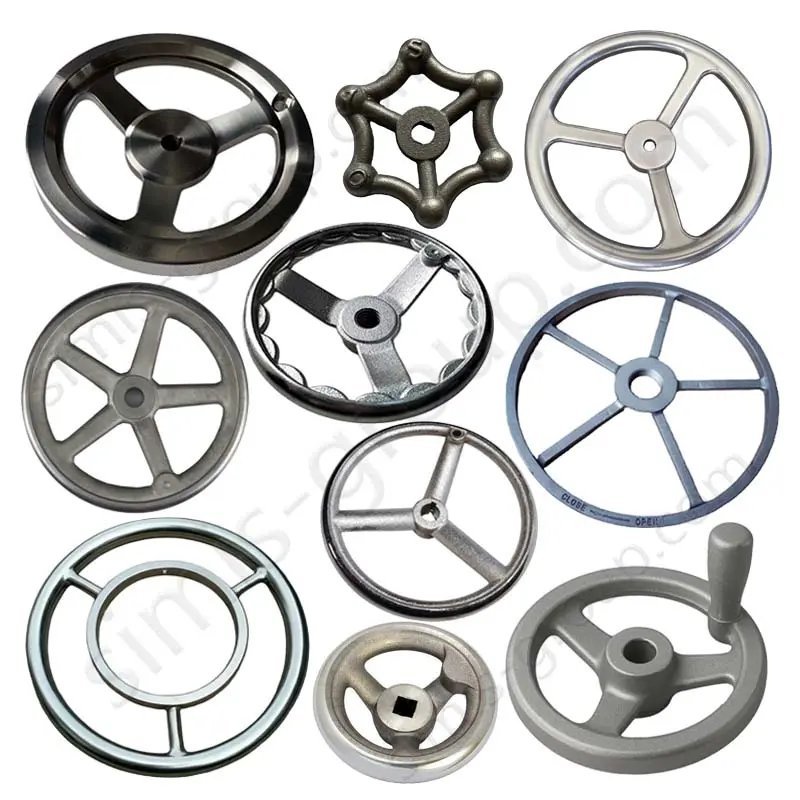
Custom Caster Wheels & Forks Manufacturer


Caster Wheels & Forks

Custom Metal Caster Wheels and Forks: OEM Manufacturing FAQs
Can SIMIS manufacture custom caster wheels and fork brackets from our drawings?
Yes. SIMIS supports drawing-based OEM manufacturing of metal caster wheels, rigid caster forks, swivel fork components and related mounting brackets. Depending on the design, production may involve cast iron or steel casting, steel forging, sheet metal fabrication, CNC machining, heat treatment and protective finishing. Customers can submit wheel drawings, fork drawings or complete caster assembly specifications for a manufacturing feasibility review.
Which materials are suitable for heavy-duty metal caster wheels?
Gray iron, ductile iron, carbon steel, alloy steel, stainless steel and selected aluminum alloys may be considered. Material selection depends on wheel load, rolling speed, contact surface, shock loading, operating temperature and corrosion exposure. A steel wheel is not automatically suitable for every floor, and a stainless steel fork does not make the complete caster corrosion-proof.
Can SIMIS manufacture both rigid and swivel caster forks?
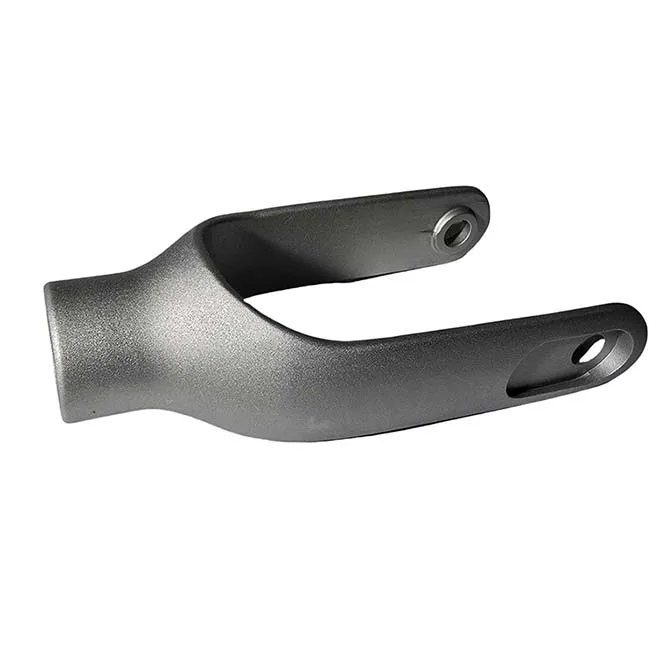
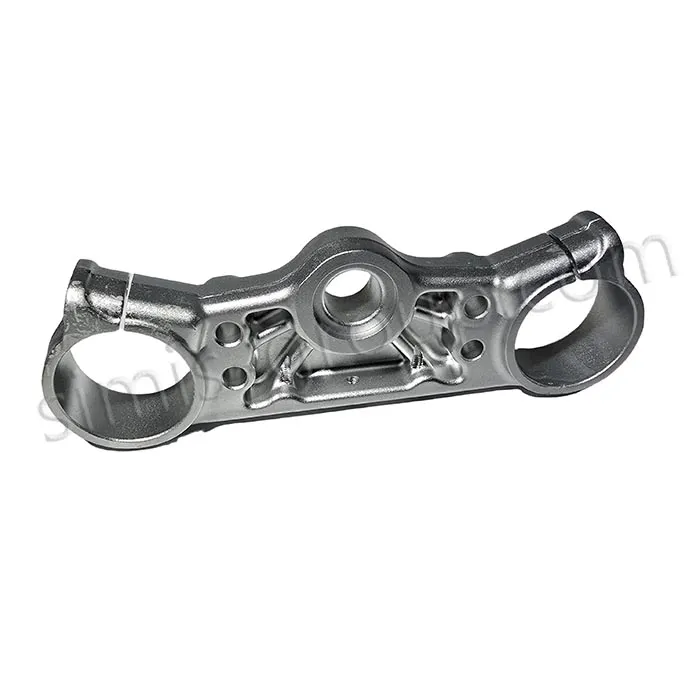
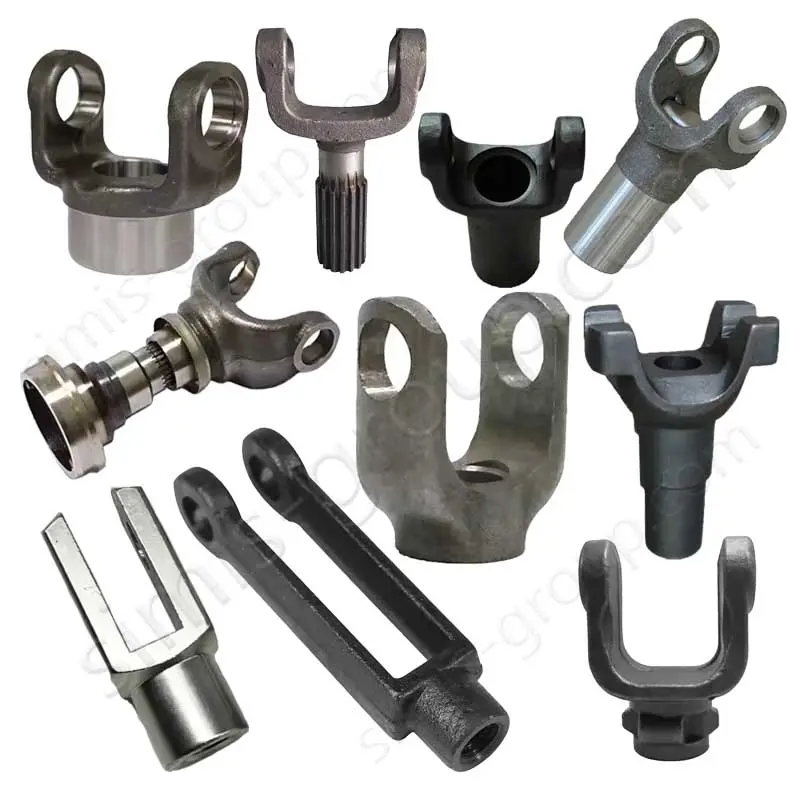
SIMIS can review custom fixed forks, swivel fork components, top plates, fork legs and axle mounting features. Manufacturing may use formed and welded steel plate, suitable forgings or cast components. The required wheel clearance, fork-leg spacing, axle diameter, swivel offset and raceway design must be established by the customer's drawings. Where a complete caster assembly is required, the bearings, fasteners and retention system also need to be specified.
How is the load capacity of a caster wheel and fork determined?
Caster load capacity depends on the complete assembly, including the wheel, bearing, axle, fork, swivel mechanism, mounting connection and operating conditions. Static loads, moving loads, shocks, floor joints and travel speed may require different evaluations. The weakest applicable component can limit the assembly rating. No universal capacity should be assigned solely from wheel material or diameter; rated performance requires agreed testing or other appropriate verification.
What information is needed for a custom caster quotation?
Please provide 2D drawings and available 3D models, wheel diameter and tread width, hub or bearing dimensions, fork geometry, mounting configuration, material grade and expected order quantity. Also identify the intended load per caster, travel speed, duty cycle, floor or track material, operating temperature, corrosion exposure and required inspection documents. These details help distinguish a wheel-only casting project from a fully specified caster assembly.
OEM Custom Metal Caster Wheels and Fork Assemblies
Industrial caster systems use wheels and supporting forks to move equipment, carts, machinery and material-handling platforms. A metal caster wheel may be selected when a particular load, temperature or operating environment makes a conventional elastomer wheel unsuitable. However, metal treads also have different floor-contact, noise and shock characteristics, so the correct choice depends on the complete application.
The wheel and fork perform different functions. The wheel supports rolling contact and transmits forces through its hub or bearing. The fork positions the wheel axle and transfers loads into the mounting plate or swivel mechanism. When the caster changes direction, swivel geometry and the interaction between wheel, floor and fork also affect maneuverability.
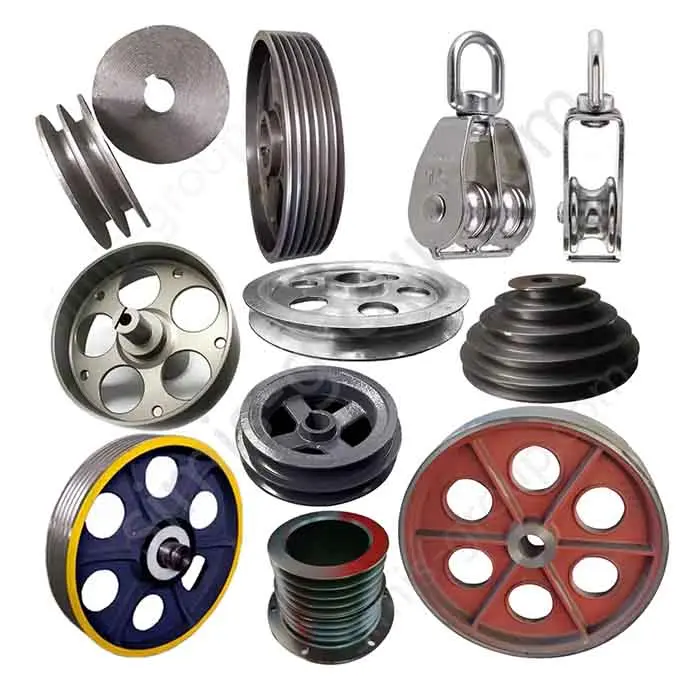
SIMIS provides custom manufacturing of metal wheel blanks, machined wheels, fork components and drawing-defined metal assemblies. Typical designs include solid-tread cast wheels, recessed-hub wheels, flanged wheels, track-guided wheels, rigid caster yokes and swivel mounting components. The manufacturing plan is developed around the customer's approved geometry and performance requirements.

Manufacturing Processes for Caster Wheels and Forks
Different caster components require different manufacturing methods. Casting can be suitable for wheels with substantial hubs and near-net-shape rims. Forging may be considered for selected heavily loaded steel components. Forming and welding can be practical for steel fork legs and mounting plates. The final choice depends on material, load path, geometry, tooling cost and production volume.
Sand casting for cast iron caster wheels
Sand casting is a candidate for custom cast iron wheels with integral hubs, recessed centers, thick running surfaces or other non-standard shapes. Pattern development should consider rim thickness, feeding, parting lines, draft and the machining allowance around the bore and tread. SIMIS can evaluate suitable designs through its sand casting foundry.
Shell mold casting for suitable repeat-production wheels
For appropriate smaller or medium-sized wheel designs, shell mold casting may provide repeatable mold geometry and defined external features. The process must still account for hub soundness, material structure and final tread machining. Tooling economics and part dimensions should be reviewed before selecting this route.
Forged steel wheels and heavy-duty fork components
Selected steel wheel blanks, fork components or mounting elements may be manufactured through an appropriate forging process. Forging can support specific strength and deformation requirements when the material, geometry and process are correctly designed. It does not make a component indestructible or eliminate the need for inspection. SIMIS can discuss applicable closed-die forging routes for suitable repeat-production components.
Stamped, bent and welded steel caster forks
Fork assemblies can use cut and bent steel plate, formed side legs, axle bosses and welded or mechanically fastened top-plate connections. The fork material, plate thickness, bend radii, weld access and fixture arrangement should be established from the loading and dimensional requirements. SIMIS can review sheet metal fabrication and welded assembly options for these components.
| Process | Potential Component | Engineering Considerations |
|---|---|---|
| Sand Casting | Cast iron wheels and substantial hubs | Casting soundness, section transitions and machining stock |
| Shell Mold Casting | Suitable repeat-production metal wheels | Tooling cost, size and repeatability |
| Steel Forging | Selected wheel blanks and loaded steel components | Material grade, deformation, heat treatment and inspection |
| Steel Fabrication | Fork legs, mounting plates and welded supports | Bend geometry, weld design, distortion and axle alignment |
| CNC Machining | Treads, bores, bearing seats and axle holes | Datums, bore fit, roundness and runout |


Selecting Metal Materials for Wheels and Caster Forks
A caster wheel and its fork do not necessarily need the same material. The wheel's rolling-contact conditions may favor one grade, while the fork's bending, joining and corrosion requirements favor another. Material choice should therefore be made separately for each functional component.
| Material | Potential Use | Selection Notes |
|---|---|---|
| Gray Cast Iron | Industrial wheels for specified rolling loads | Castability and machinability; limited ductility under shock or concentrated tensile loading |
| Ductile Iron | Wheels with different strength and elongation requirements | Grade, graphite nodularity and local casting quality |
| Carbon or Alloy Steel | Machined or forged wheels, axles and structural fork parts | Heat treatment, wear, toughness, weldability and machining |
| Stainless Steel | Specified corrosive or washdown environments | Grade-specific corrosion resistance, galling, strength and cleaning requirements |
| Aluminum Alloy | Selected lower-mass components or non-standard wheel designs | Contact wear, alloy, bearing interface, operating load and temperature |
Gray iron can be attractive for suitable machined wheels, but its brittle fracture behavior must be considered for impact-prone use. See SIMIS custom gray iron parts for material-related manufacturing information. Where a wheel requires a different combination of specified strength and ductility, ductile iron castings may be evaluated.
Metal wheels can concentrate loads on hard floors and may cause marking, noise or localized wear. Their use on sensitive finished concrete, tile or coated surfaces should be assessed with the equipment manufacturer. No material can be described as guaranteeing floor protection under every load condition.

CNC Machining of Wheel Treads, Hub Bores and Axle Interfaces
The wheel's as-cast or forged shape is not always its final functional geometry. Turning, boring, drilling and other machining operations may be required to obtain the correct running surface and bearing interface. SIMIS supports CNC machining of casting and forging components according to the customer's drawing.
Flat, crowned and grooved metal treads
Flat treads can be used on specified hard surfaces, while crowned profiles may be considered for selected steering or contact arrangements. V-groove or U-groove wheels require a matching rail or track geometry. Tread width, profile radius, edge condition and wheel diameter should be defined by the intended running surface rather than by appearance alone.
Bearing bores and bushings
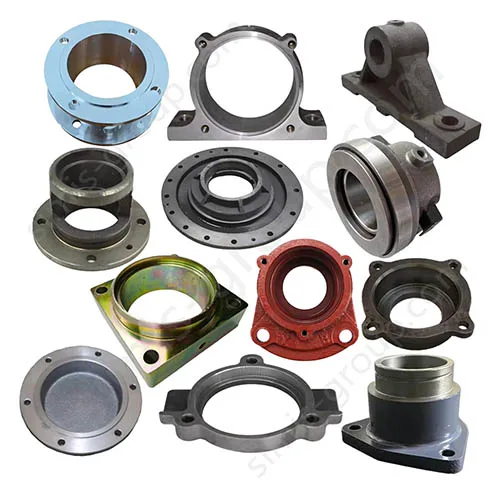
Wheel hubs may contain rolling bearings, plain bushings or a simple axle bore, depending on the design. The specified fit, shoulder width, bearing retention and lubrication access affect assembly. Bearing seats should be machined and inspected using functional datums. SIMIS also manufactures related custom bearing seats and supports for industrial applications.
Bore-to-tread runout and hub alignment
Radial runout, wheel-face geometry and the relationship between the bearing bore and tread may be critical for smooth rolling. The required tolerances depend on wheel diameter, operating speed and bearing arrangement. Accurate machining can reduce geometric variation, but does not independently guarantee low rolling resistance or extended bearing life in the installed equipment.

Rigid and Swivel Caster Fork Design
The caster fork supports the wheel axle and transfers loads to the mounting structure. Rigid forks are used where the wheel direction remains fixed. Swivel forks permit the caster to change orientation around a vertical pivot or raceway. The choice affects maneuverability, stability, installation height and the loads on individual components.
Rigid forks and axle-hole alignment
A rigid fork may consist of two formed or fabricated legs with an axle between them. Fork spacing, axle-hole diameter, side-leg alignment and clearance around the rotating wheel should be specified. Where the fork is welded, fixturing and any subsequent finish machining must address possible welding distortion.
Swivel forks with a kingpin
Some swivel caster designs use a central kingpin together with a bearing or raceway arrangement. The kingpin, top plate, fork and retention components must be evaluated together for vertical loads, lateral loads and moments during turning. Bolt or pin size alone is insufficient to establish the caster's load rating.
Kingpinless swivel arrangements
Kingpinless designs use an alternative swivel-bearing and retention arrangement rather than a conventional central kingpin. They may be considered for specific heavy-duty configurations, but their actual performance depends on raceway geometry, bearing elements, component stiffness and assembly construction. Removing a conventional kingpin does not automatically make a caster immune to impact or fatigue failure.
Swivel offset, fork clearance and dual wheels
Swivel offset is the horizontal distance between the swivel axis and wheel contact or axle geometry as defined for the design. It affects steering forces and maneuverability. Dual-wheel casters may distribute a load across two wheels, but the distribution is not necessarily equal under all floor and turning conditions. Fork dimensions and swivel offset should be confirmed through the equipment design and, where required, functional tests.
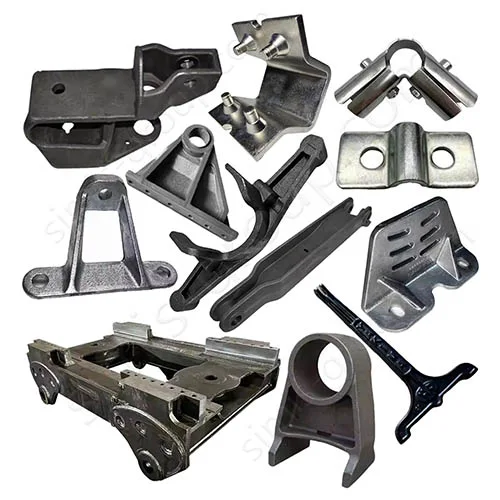
Custom metal fork and mounting structures can also be reviewed alongside SIMIS brackets and connectors capabilities, particularly where special attachment patterns or welded structural features are required.

Caster Load Rating, Rolling Conditions and Floor Compatibility
Caster capacity must be assessed as an assembly-level requirement. The operating load is transferred through multiple components and can change as equipment accelerates, turns, crosses a floor joint or moves over uneven ground. A wheel material's nominal strength is only one part of this assessment.
Static and dynamic loads
A stationary cart may apply a different load pattern from a cart being towed or pushed over floor joints. Dynamic effects depend on speed, wheel diameter, equipment mass, suspension if present and surface condition. Required allowable loads should therefore specify the intended operating conditions and whether the rating applies to the wheel, fork or complete caster assembly.
Load distribution across multiple casters
Dividing a cart's total weight equally by four is not always a sufficient design method. Uneven floors, frame deflection and an offset center of gravity can cause some casters to carry more than others. The equipment designer should establish the design load per caster, including applicable margins and transient operating conditions.
Contact pressure and floor damage risk
Metal caster wheels can create concentrated contact stresses, especially on hard or narrow treads. Floor coating, concrete condition, tile, embedded tracks and local debris affect the outcome. A suitable wheel geometry can be proposed for an application, but floor protection and rolling effort cannot be guaranteed without adequate information and verification.
Track-guided V-groove caster wheels
A V-groove wheel may be used with a corresponding angle-iron track where the system is engineered for that contact. Groove angle, depth, track dimensions, tread loading and alignment must be matched. A standard V-groove wheel should not be assumed suitable for every rail or guided material-handling arrangement.
High-Temperature Operation, Corrosion and Lubrication
Metal caster wheels may be considered for equipment operating near industrial ovens, furnaces, heat-treatment lines or other elevated-temperature environments. However, the wheel, bearing, fork, lubricant, seal and mounting components may have different thermal limits. The assembly can only be evaluated against the lowest applicable operating limit and the actual duty cycle.
Bearing and lubrication selection
High-temperature operation can affect rolling bearing clearances, grease stability, seals and surrounding material properties. A metal wheel that tolerates heating does not establish the temperature rating of its bearing assembly. Bearing type, exposure duration, duty cycle and lubrication method must be confirmed with the customer and relevant component specifications.
Surface protection for carbon steel forks
Steel forks may require plating, painting or another compatible protective finish. Finish selection should account for outdoor exposure, cleaning chemicals, temperature and abrasion. Surface treatments can affect mounting dimensions and bearing interfaces, making masking or specified post-treatment operations necessary. SIMIS can evaluate metal surface treatment options.
Stainless steel and washdown applications
Stainless steel fork components may be considered for wet or chemically exposed environments, but grade selection, crevices, fasteners and lubrication remain important. Stainless steel is not completely immune to corrosion, and an exposed metal caster assembly should not automatically be described as food-grade or suitable for a pharmaceutical cleanroom without the applicable project requirements and verification.
Where material properties require adjustment, project-specific heat treatment can be reviewed for selected steel or iron components. Heat treatment cannot replace an appropriate bearing specification or a validated high-temperature assembly design.

Quality Inspection and Performance Testing for Metal Casters
Inspection should distinguish individual manufactured parts from an assembled caster's operating performance. Dimensional accuracy, material properties and surface condition can be checked at component level. Load capacity, steering behavior, rolling resistance and service life require separate assembly-level evaluation where specified.
| Inspection Area | Project-Defined Verification |
|---|---|
| Wheel Material | Specified material grade, chemistry, hardness or mechanical properties |
| Wheel Geometry | Outside diameter, tread profile, width, bearing bore and runout |
| Fork Dimensions | Fork-leg spacing, axle-hole alignment, mounting pattern and clearances |
| Casting or Forging Integrity | Visual examination and specified NDT with defined acceptance criteria |
| Surface Finish | Coating thickness, appearance and other agreed finish requirements |
| Static Load | Specified proof-loading arrangement and permanent-deformation criteria |
| Rolling and Swivel Performance | Project-defined rolling, swivel, impact or endurance testing where applicable |
| Environmental Performance | Specified thermal cycling or corrosion testing where required |
| Documentation | First-article reports, batch records and traceability as agreed |
Dimensional and first-article inspection
Wheel diameters, bores, treads and fork mounting features can be checked using appropriate gauges, micrometers, CMM equipment or fixtures. Important geometric relationships should be measured from the functional datums defined in the engineering drawing. First-article reporting may be specified for new tooling or revised designs.
Material testing and non-destructive examination
Material verification may include chemical analysis, hardness or grade-specific mechanical testing. Magnetic-particle, penetrant, ultrasonic or other NDT methods may be used where suitable and specified. Each method has limitations, and examination must follow an agreed scope and acceptance standard. Inspection does not establish that a component is completely defect-free.
Load, endurance and temperature testing
Where the OEM requires a rated caster assembly, the test plan should identify load, speed, travel distance or duration, floor condition, turning pattern and failure criteria. Thermal testing may require a separately specified exposure schedule. No universal 10-ton rating, operating temperature or endurance result should be inferred from the manufacturing process or the appearance of an individual wheel.
SIMIS can review component inspection and agreed documentation through its quality control processes. Any complete-caster qualification requirements should be established before production and verified using the applicable test arrangement.

Applications of Custom Metal Caster Wheels and Forks
Foundry carts and industrial material handling
Foundry carts, material-transfer platforms and heavy industrial equipment may use metal wheels for particular rolling loads or environmental requirements. The wheel material, axle system and available floor condition must be evaluated together. A wheel suitable for a short-distance transfer cart may not be appropriate for continuous high-speed towing.
Oven, coating-line and thermal-process trolleys
Selected industrial baking, painting or heat-processing trolleys require caster components that tolerate a defined temperature exposure. Material grade, bearing type, seal selection and lubrication must all be checked against the actual thermal cycle. The suitability of the complete trolley cannot be determined from the wheel metal alone.
Track-guided industrial carts
Guided transfer carts may use V-groove or other profiled metal wheels to follow specified rails. Track geometry, wheel spacing, flange clearance and alignment should be provided with the drawing. Rail-guided caster systems may need different structural and inspection requirements from free-rolling warehouse casters.
Washdown equipment and specialized machinery
Stainless steel and appropriately protected metal components may be considered for wet or corrosive settings. Suitable construction depends on the specific chemicals, cleaning method, bearing protection and operational loads. Equipment intended for hygienic or controlled environments requires verification against its applicable cleanliness and material requirements.
Request a Quote for Custom Caster Wheels and Forks
SIMIS supports OEM manufacturing of metal caster wheels, fork components and related industrial hardware based on approved drawings. We can review the proposed casting, forging or fabrication route, CNC machining requirements, specified material, protective finishing and inspection scope.
For a detailed RFQ, please provide: 2D technical drawings and STEP or other available 3D models; whether the project covers wheels, forks or complete casters; wheel diameter and tread profile; hub, bearing and axle dimensions; fork mounting pattern and swivel geometry; specified material grades; static and dynamic loads; intended travel speed and duty cycle; floor or track conditions; operating temperature; corrosion requirements; expected order quantities; and required inspection documents.
For complete caster assemblies, please identify any bearings, bushings, fasteners, seals, brakes or swivel-retention components included in the purchasing scope. Where a load-rated or safety-related assembly is required, the applicable performance specification and validation responsibilities should be confirmed before production.
Send your custom caster wheel and fork drawings to info@simis-group.com for a manufacturing feasibility review and quotation.