Custom Railway Bogie Side Frame Manufacturer
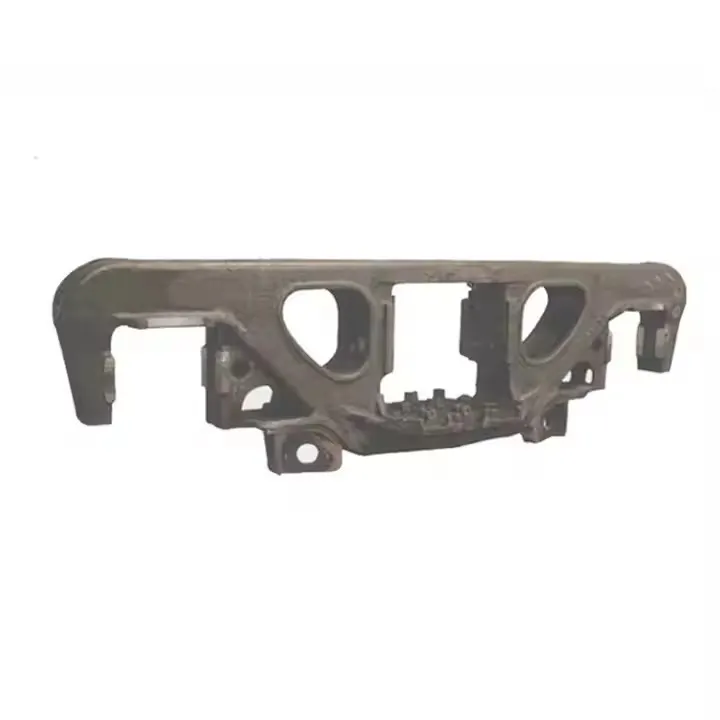
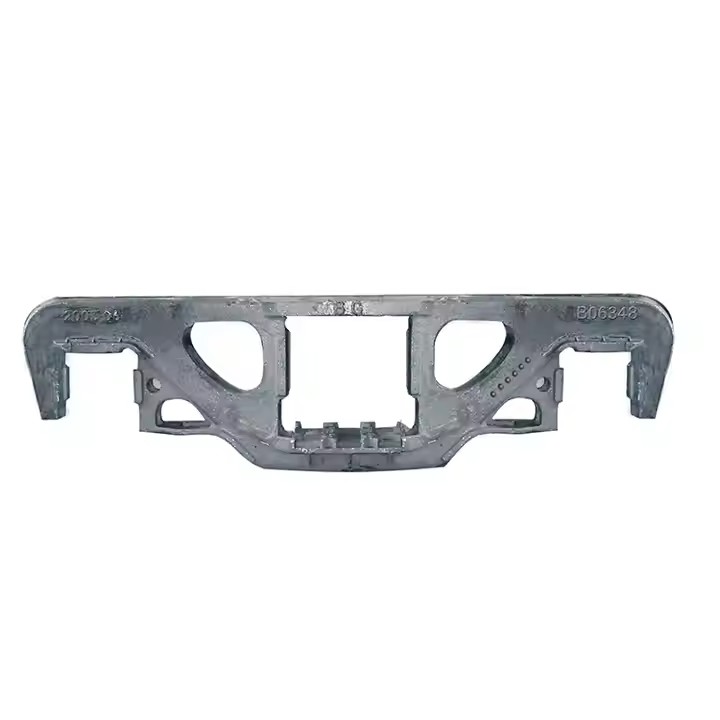
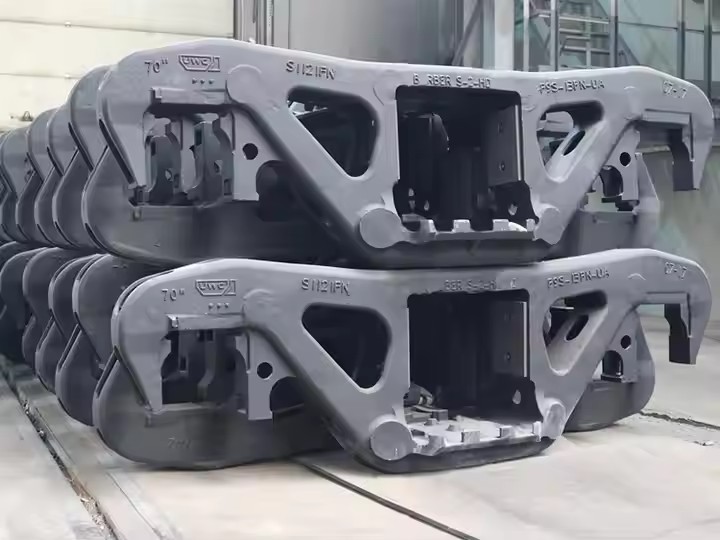
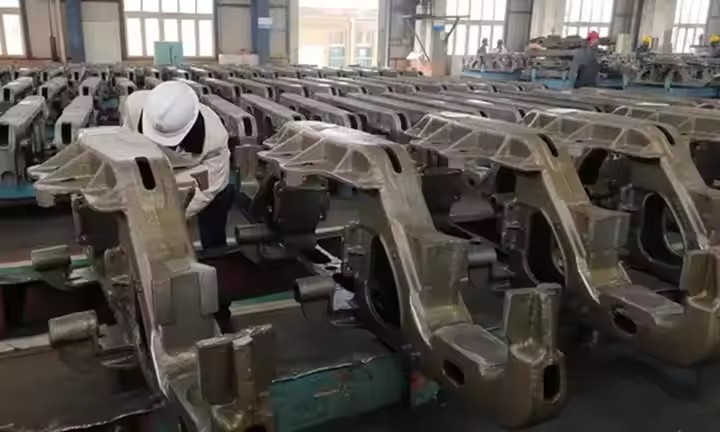
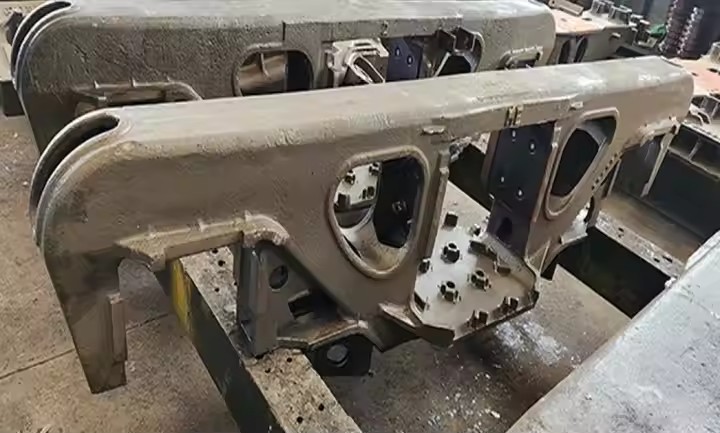
Railway Bogie Side Frame

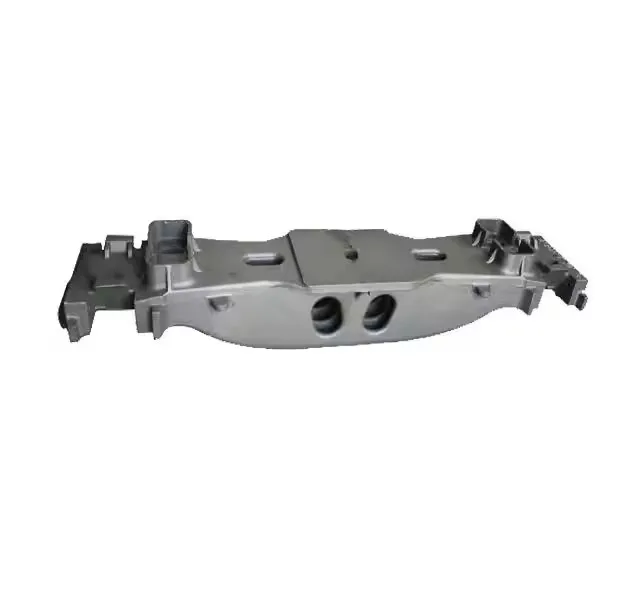
Railway bogie frame is an important part of railway vehicles, mainly used to bear the weight of the train body and provide stable steering function. It connects the body to the wheels to ensure that the train can turn smoothly during operation and withstand various forces from the track. Bogie frame is usually made of high-strength steel, ductile iron or cast steel and other materials, with good compression resistance, wear resistance and toughness. According to different train types, bogie frame can be divided into standard bogie frame, heavy-load bogie frame and high-speed bogie frame, etc. Each type is optimized according to load, speed and operating environment requirements. Railway bogie frame not only affects the running safety of the train, but also determines the stability, comfort and durability of the train. It is one of the most important components in the railway transportation system.
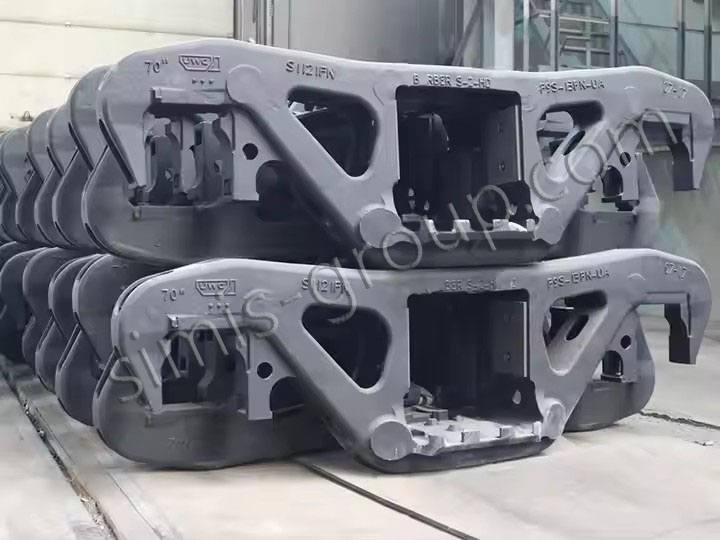
Simis is a professional OEM custom manufacturer that provides high-precision railway bogie side frame customization services. According to the different needs of customers for trains, Simis can provide precise design, material selection and production process. Whether it is a high-speed train, a heavy-load train, or a special application train, Simis can customize a bogie frame that meets the standards to ensure that the product meets high requirements in terms of strength, toughness, stability, etc. Through rigorous quality control and a number of advanced manufacturing processes, Simis provides customers with one-stop services from design, production to after-sales, ensuring that each batch of bogie frames has excellent performance and reliable safety. Choosing Simis to customize the railway bogie frame will make your railway project more competitive and ensure the safety and stability of train operation.
1.The role of the railway bogie frame
Wheel guidance function:
The bogie frame realizes the steering function of the train on the track through the connection between the wheel and the car body, ensuring the smooth running of the train.
Load bearing function:
The bogie frame is the main carrier of the train weight. It effectively distributes the weight of the train to the track to keep the train running stably.
Improve comfort:
The bogie frame reduces the vibration and noise generated during the train's travel and improves passenger comfort through the design of shock absorption and buffer systems.
Improve safety:
Through reasonable design, the bogie frame can enhance the safety of the train when it is traveling at high speed or on curves, and reduce the risk of accidents.
2. Classification of railway bogie frames
Standard bogie frame:
Bogies suitable for conventional trains, with simple design and manufacturing processes and relatively standardized structures.
Heavy-duty bogie frame:
Mainly used for freight trains or some special trains with heavy loads. Its design must take into account the requirements of heavy load bearing, earthquake resistance and high strength. High-strength steel or ductile iron materials are usually used.
High-speed bogie frame:
Designed specifically for high-speed trains, it has higher stability, shock absorption and dynamic response performance, and requires more precise processing and high-strength materials.
Dual-mode bogie frame:
Mainly used for dual-mode trains that need to run under different track standards, requiring more flexible design and adaptability to multiple working modes.
3. Material of railway bogie frame
The railway bogie frame is an important structural part in railway vehicles that carries the weight of the vehicle body and transmits power between wheels. The choice of its material directly affects its safety, stability and durability. Commonly used materials are:
High-strength steel:
High-strength steel has good tensile strength, impact resistance and high wear resistance, and is a common material for producing bogie frames. It is mainly used for high-speed trains and heavy-load trains because it can withstand large pressure and dynamic loads.
Gray iron:
Gray cast iron is often used for bogie frames of low-load and low-speed trains, mainly for freight trains or light trains. It has good compressive strength, but its toughness is poorer than high-strength steel.
Ductile cast iron:
Because ductile cast iron has good strength, toughness and wear resistance, it is widely used in train bogie frames that require high strength and high toughness, especially for medium and high load transportation.
4. Application fields of railway bogie frames
High-speed trains:
High-speed trains need to have higher stability and shock absorption performance, so their bogie frames are made of high-strength steel and have good dynamic and static performance.
Heavy-load trains:
For freight trains that transport heavy loads, the bogie frame must be designed and manufactured to withstand huge load pressure.
Light passenger cars and subways:
Light passenger cars and subways require lighter bogie frames, usually made of cast iron or ductile iron to reduce weight and cost.
Special application trains:
Such as dual-mode trains, low-floor trains, etc., the bogie frame design of these trains is more complex and needs to meet different operating environments and track standards.
5. Manufacturing process of railway bogie frames
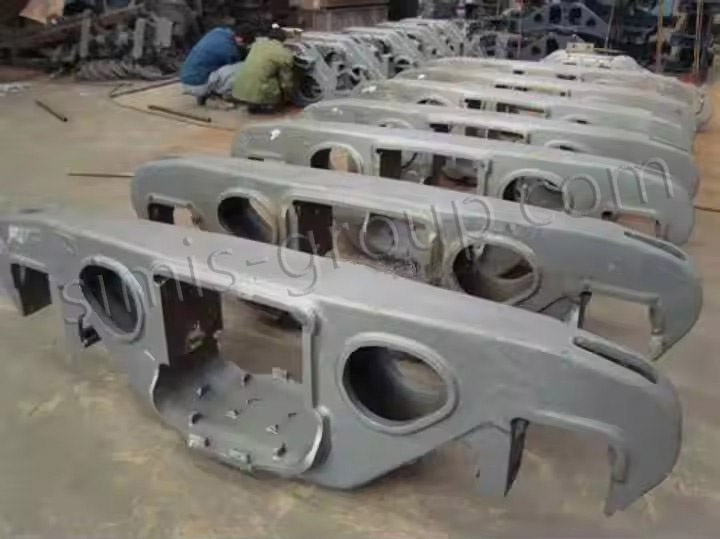
Casting:
Casting is the most commonly used manufacturing process for bogie frames, especially for cast iron or ductile iron frames. High-precision parts are produced using sand casting or precision casting processes.
Welding:
For steel frames, welding processes are crucial to ensure the firmness and durability of the structure. The choice of welding process needs to take into account the working environment and stress conditions of the bogie frame.
Heat treatment:
Through heat treatment, such as annealing and quenching, the strength, toughness and wear resistance of steel or cast iron are improved to ensure the stability and service life of the bogie frame.
Surface treatment:
To improve corrosion resistance and wear resistance, the bogie frame is usually subjected to surface treatment such as spraying, galvanizing or electrophoretic coating to ensure that there will be no rust or wear during long-term use.
6. Advantages of OEM customization of railway bogie frames
Tailor-made:
According to the customer's needs for trains, provide precise design and customization services to ensure that the bogie frame meets various operating environments, load requirements and special performance requirements.
High strength and stability:
Customized material selection and structural design ensure that the bogie frame can still provide excellent stability and load-bearing capacity under high load and extreme environments.
Optimize production:
Through precise process control and customized production processes, product quality consistency is guaranteed, the risks brought by large-scale production are reduced, and overproduction and inventory pressure are reduced.
Improve performance:
According to the application requirements of different trains, the shock absorption, pressure resistance and wear resistance of the bogie frame are optimized to improve the running stability and safety of the train.
Precise process control:
From material selection to casting, welding, and then to later heat treatment and surface treatment, customized products can be refined according to customer requirements to ensure high standards for each batch.
Simis Company is a professional OEM customization manufacturer dedicated to providing high-quality railway bogie frame customization services to the global railway industry. With advanced manufacturing technology, strict quality control and rich industry experience, we can customize various types of bogie frames according to customer needs to meet the performance requirements of different trains.